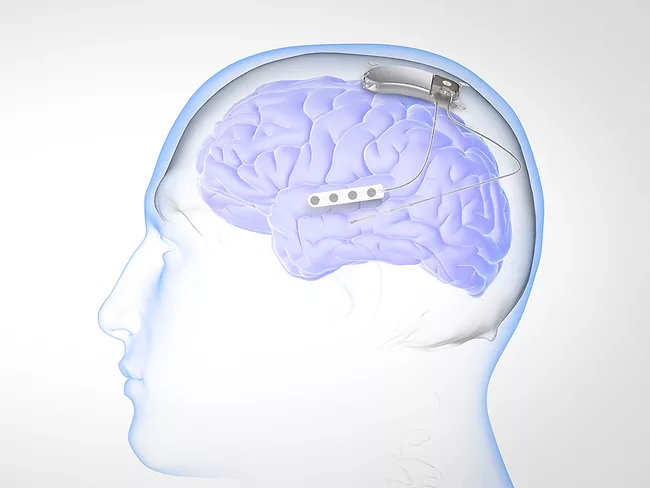
People with drug-resistant epilepsy have had few other options, but Neuropace Inc. appears on target to provide an alternative. The Nautilus trial of its responsive neurostimulation system for individuals with drug-resistant idiopathic generalized epilepsy showed a 77% reduction in generalized tonic-clonic seizures sustained over 18 months.
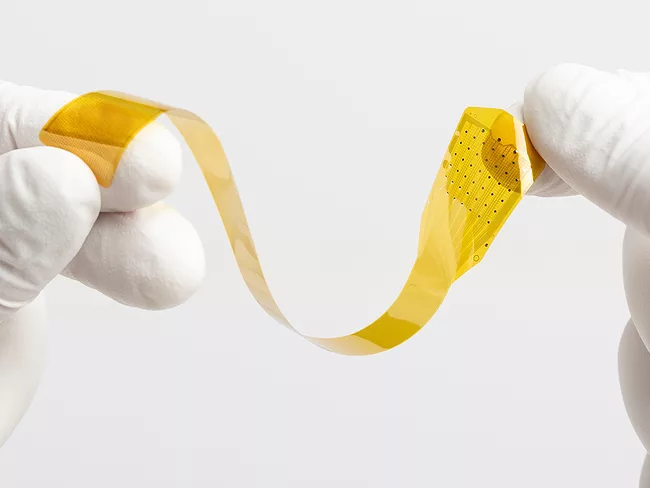
The brain-computer interface (BCI) system being developed by Precision Neuroscience Corp. is capable of capturing high-resolution brain signals and stimulating areas without damaging the cortical surface, according to a study published in Nature Biomedical Engineering.
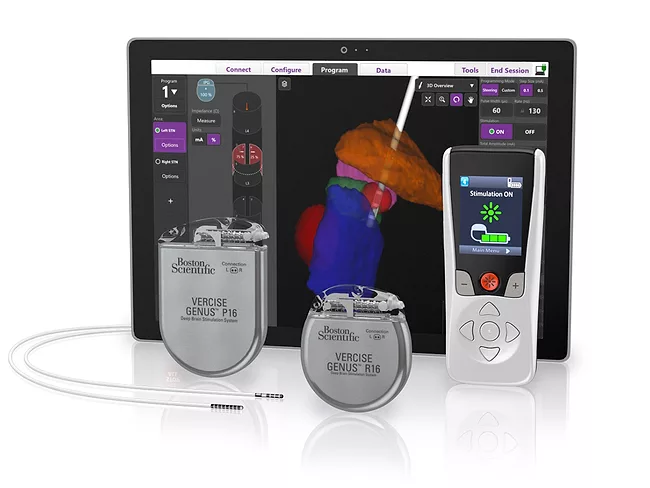
Medtronic plc’s Brainsense adaptive deep brain stimulation system has been shown to be tolerable, effective and safe for long-term use at home in people with Parkinson’s disease. A study published in the Journal of the American Medical Association (JAMA) Neurology found that the majority of participants who received aDBS with the Percept neurostimulator achieved good ‘on-time’ without troublesome dyskinesia compared to standard continuous DBS therapy.
Researchers from the Albert Einstein College of Medicine filed for protection of the development of a lateral geniculate nucleus (LGN) visual prosthetic device with implantable electrode arrays that stimulate the LGN and restore vision.
The Vivani Medical Inc. combination appears to be over less than three years since its inception after the company reported plans to spin off Cortigent, the division that develops brain implants. Vivani said it plans to create two focused companies dedicated to driving current and future value in their respective therapeutic areas.
The Vivani Medical Inc. combination appears to be over less than three years since its inception after the company reported plans to spin off Cortigent, the division that develops brain implants.
Medtronic plc secured CE mark approval under the EU Medical Device Regulation for its Brainsense adaptive deep brain stimulation system. The technology represents a major advancement in the treatment of Parkinson’s disease as it provides real-time, self-adjusting brain stimulation based on the patient’s brain activity, offering a more personalized therapy.
New research confirmed long-term efficacy and safety of a novel minimally invasive procedure with Insightec Inc.’s Exablate transcanial magnetic resonance-guided focused ultrasound system to alleviate symptoms of severe obsessive-compulsive disorder.
The U.S. FDA recently granted Medtronic plc approval for its deep brain stimulation (DBS) system to be used to treat Parkinson’s disease or essential tremor while a patient is asleep, under general anesthesia. The approval gives patients another option for DBS therapy which can transform their quality of life, Amaza Reitmeier, vice president and general manager for Medtronic brain modulation, told BioWorld in an interview.
As new treatment options are being continually investigated and trialed against Parkinson’s disease, the possibilities offered by deep brain stimulation (DBS) risk being overlooked. Though not a cure, the therapy could vastly improve the quality of life for patients with the disease.
 RSS
RSS