ADEL Inc. closed a year-end licensing deal worth up to $1.04 billion with Sanofi SA for ADEL-Y01, a specific tau-targeting Alzheimer’s disease drug candidate in a U.S. phase I study.
Two large deals and an acquisition, totaling about $4.64 billion in all, are helping wrap up what’s turning out to be a strong year. Through the first 11 months of 2025, biopharma dealmaking was robust with a collective value of $261.14 billion, the highest January through November total of the past seven years and well above 2024’s $201.35 billion. These three December deals helped revive the surge in dealmaking that had cooled in November.
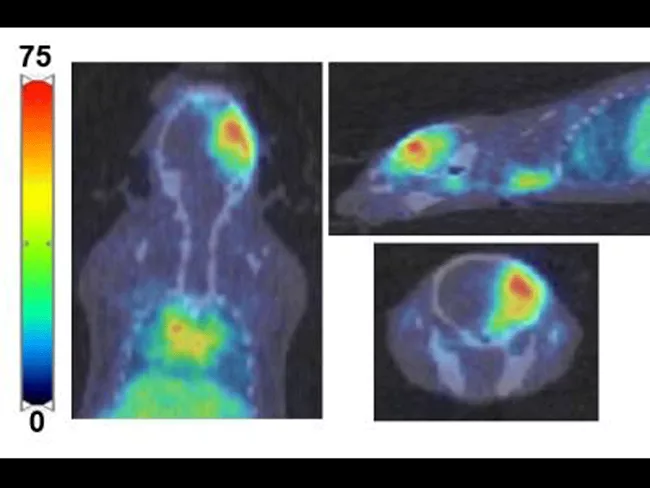
Radiopharm Theranostics Ltd.’s radiotracer RAD-101 met the primary endpoint in 92% of patients in the phase IIb imaging trial in brain metastases, according to interim results. To date, 11 of the 12 patients treated with RAD-101 (F18-Pivalate) achieved concordance with MRI (the primary endpoint) as assessed by PET imaging of brain metastases. The results showed significant and selective tumor uptake, and images confirm metabolic activity in brain metastases compared to equivocal MRI findings.
Experience gained in the Asia-Pacific region is helping shape the Menarini Group’s global strategy as the Italian pharmaceutical company looks to emerging markets to drive long-term, sustainable growth.
D3 Bio Inc. secured $108 million in a series B financing round Dec. 9 to support its planned phase III program of lead oral KRAS G12C inhibitor, elisrasib (D3S-001).
Formation Bio Inc. acquired ex-China rights to Lynk Pharmaceuticals Co. Ltd.’s oral TYK2-inhibitor, LNK-01006, for up to $605 million. The phase I-ready central nervous system (CNS) candidate will be developed at Formation’s newly formed subsidiary, Bleecker Bio.
China unveiled its first Commercial Health Insurance Innovative Drug List (CIIDL), reimbursing 19 high-value innovative drugs, including all five domestically developed CAR T therapies as well as treatments for rare diseases and Alzheimer's disease.
China’s clinical trial volume has surged to nearly U.S. scale and now tops Europe, sitting at about 80% of U.S. levels and roughly 10% above the EU in 2024.
China’s clinical trial volume has surged to nearly U.S. scale and now tops Europe, sitting at about 80% of U.S. levels and roughly 10% above the EU in 2024.
Experience gained in the Asia-Pacific region is helping shape the Menarini Group’s global strategy as the Italian pharmaceutical company looks to emerging markets to drive long-term, sustainable growth.
 RSS
RSS