Starpharma Holdings Ltd.’s stock shot up 73% on the news that it is outlicensing its dendrimer enhanced product drug delivery technology to Roche Holding AG subsidiary Genentech Inc. in a deal worth more than $569 million.
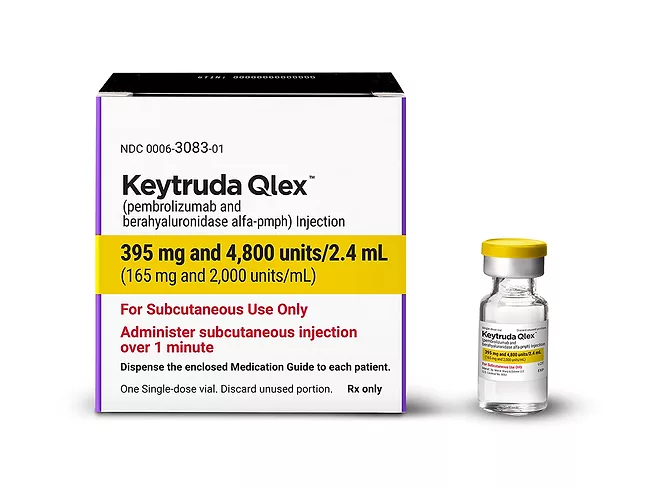
The U.S. FDA approved Merck & Co. Inc.’s Keytruda Qlex (pembrolizumab and berahyaluronidase alfa-pmph) injection on Sept. 19, making it the first and only subcutaneously (SC)-administered immune checkpoint inhibitor that can be administered in about a minute.
Genfleet Therapeutics (Shanghai) Inc. debuted on the Hong Kong Stock Exchange on its second attempt at an IPO, raising HK$1.819 billion (US$234 million). Genfleet’s shares (HKEX:2595) rose to HK$44.00 at the opening bell on Sept. 19 and closed at HK$42.10, about 106% higher than the listing price.
Beijing QL Biopharmaceutical Co. Ltd.’s once-monthly GLP-1 receptor agonist, zovaglutide (ZT-002), met its primary and secondary endpoints in a phase II obesity trial, and QL Biopharm will now advance the GLP-1 to a pivotal phase III study.
As is the case with the Made in China 2025 initiative, the Make in India program has at least a decade of history to look back on, with some benefits accruing to the nation’s med-tech sector. All the same, Gunjan Bagla, CEO of Los Angeles-based Amritt Inc., told BioWorld that the initiative could be more successful if the legislature would tweak the laws to create a more helpful environment for industry.
“The comment I hear a lot from scientists … is that science has no borders,” Arif Noorani, partner at Sidley Austin LLP, said while addressing the panel audience at Asia Bio 2025 in Singapore. “I agree, but the reality is, we do have a lot of borders.”
Mabwell Bioscience Co. Ltd. and Aditum Bio Management Co. LLC announced, in after-market hours Sept. 17, an agreement to forge a new company called Kalexo Bio Inc. and load the biotech with a preclinical dyslipidemia asset via a potential $1 billion global license deal.
Patients with relapsed/refractory multiple myeloma (r/r MM) treated with Carsgen Therapeutics Holdings Ltd.’s CAR T therapy, zevorcabtagene autoleucel (zevor-cel, CT-053), have shown durable responses lasting nearly five years.
China’s National Medical Products Administration is arguably more active than regulatory agencies in many nations in advancing guidance for AI in medical technology, but Chang-Hong Whitney, President/CEO of Whitney Consulting Ltd., told BioWorld that the premarket review process still carries some unpredictability.
Alimetry Ltd. is making waves far beyond its home market with its first-in-class wearable Gastric Alimetry device that measures gut function – an area long considered a black box in gastroenterology.
 RSS
RSS