Mabwell (Shanghai) Bioscience Co. Ltd. on May 30 gained Chinese approval of Mailisheng (albipagrastim alfa; 8MW-0511) as a subcutaneous injection to treat febrile neutropenia induced by myelosuppressive anticancer treatment, such as radiotherapy and chemotherapy.
Asian health care-focused private equity firm Quadria Capital announced the final close of its Fund III with $1.07 billion in total commitments to transform health care across Asia, which is expected to drive 40% of global health care growth by 2030.
In yet another China antibody-drug conjugate (ADC) deal, Astellas Pharma Inc. is inlicensing a phase I/II ADC targeting Claudin 18.2 from Evopoint Biosciences Co. Ltd. for up to $1.34 billion.
CSPC Pharmaceutical Group Ltd. on May 30 disclosed that the company was engaged in ongoing negotiations with unnamed, independent third parties regarding three license deals and collaborations that could total up to $5 billion combined.
Nibec Co. Ltd. announced May 28 the signing of a potential $435 million license deal for NP-201, its phase II-ready peptide-based pulmonary fibrosis therapy candidate, with an undisclosed U.S.-based biotech company.
Asian health care-focused private equity firm Quadria Capital announced the final close of its Fund III with $1.07 billion in total commitments to transform health care across Asia, which is expected to drive 40% of global health care growth by 2030.
EBR Systems Inc. raised AU$55.9 million (US$36 million) to commercialize its Wise cardiac resynchronization therapy system following U.S. FDA approval in April of the wireless, endocardial pacing system to stimulate the heart’s left ventricle.
The U.S. FDA issued general correspondence letters to two device testing labs located in China. This is the latest in a series of moves by the agency to crack down on falsified or otherwise invalid device testing data.
GC Genome Corp. priced a Kosdaq offering of 4 million shares at ₩10,500 per share May 27, entailing a gross ₩42 billion (US$30.5 million) raise in early June. The Yongin, South Korea-based genomics subsidiary of GC Biopharma Corp. fixed its shares price to the top of its ₩9,000 to ₩15,000 price band May 27 after conducting demand forecasting on domestic and international institutional investors from May 19 to May 23.
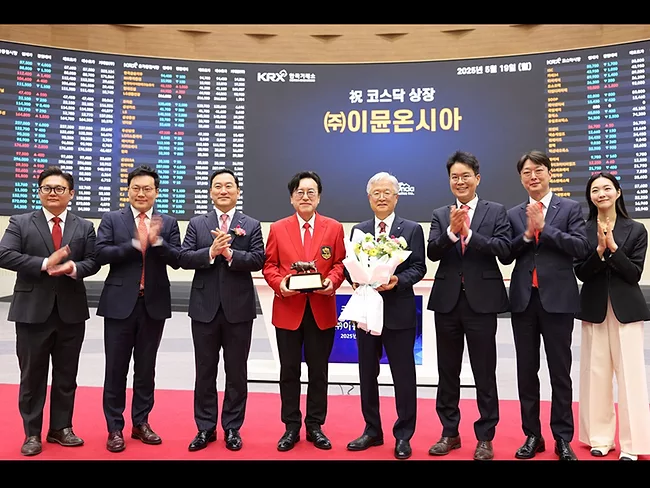
Immuneoncia Therapeutics Inc. raised ₩33.9 billion (US$24 million) from its Kosdaq listing May 19. Shares closed at ₩7,500 – 108% higher than its offering price of ₩3,600 per share. Immuneoncia, a joint venture founded in 2016 between Seoul, South Korea-based Yuhan Corp. and San Diego-based Sorrento Therapeutics Inc., noted that the funds will support R&D operations until 2026.

 RSS
RSS