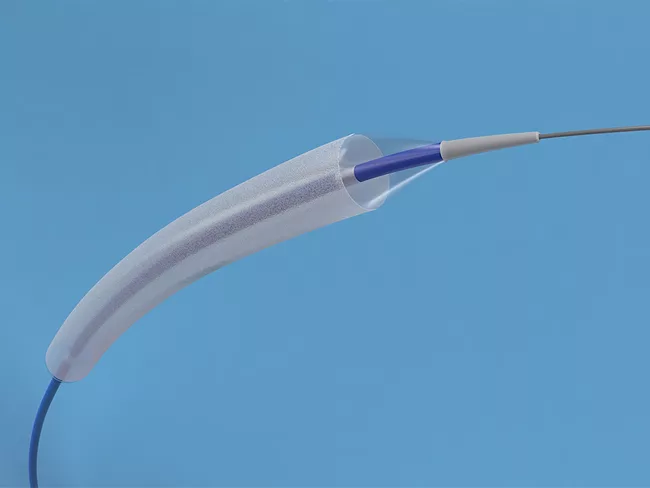
Medalliance SA reported completion of patient enrollment in the SAVE clinical trial with its Selution SLR 018 drug-eluting balloon. Eighty-four subjects have been recruited for this prospective multi-center, single-blinded, randomized controlled trial. These patients received either standard high-pressure balloon angioplasty followed by local application of Selution SLR, or else high-pressure balloon angioplasty with no further lesion treatment.
Abcam plc closed out a three-month whirlwind of activity on August 28 with an agreement to sell the medical consumables company to Danaher Corp. for a purchase price of $24 per share in cash, a 2.7% premium over the previous closing price, and assumption of approximately $200 million in debt. The deal, which has an enterprise value of $5.7 billion, is expected to close in mid-2024.
Cochlear Ltd. and Sensorion SA have published encouraging results on the combination of a molecule with a cochlear implant. Their proof-of-concept phase 2a study involved the combination of an orphan drug recognized in both Europe and the U.S. with cutting edge hearing aid implants to enhance the auditory capabilities of hearing aid users.
The European Commission has granted CE mark approval to Medtronic plc for its Inceptiv closed-loop rechargeable spinal cord stimulator (SCS). The device is the first Medtronic SCS to sense an individual’s biological cues and make adjustments in real time to control pain all day long. Dublin-based Medtronic plans to launch Inceptiv in Europe in the coming months.
The European Commission’s (EC’s) Directorate-General for Health and Food Safety recently published a survey of notified bodies. This was conducted between April and May 2023, eliciting responses from all 39 notified bodies designated under the Medical Devices Regulation (MDR) and 10 Notified bodies designated under the In Vitro Diagnostic Regulation (IVDR).
Safe Orthopaedics SAS reported results from a biomechanical study comparing its new surgical technique Sycamore – a pedicle-anchored implant – with standalone balloon kyphoplasty. The results published in summer 2023 in the Journal of Experimental Orthopaedics showed a “significant increase” in compression strength with patients using Sycamore.
Tandem Diabetes Care Inc. obtained reimbursement in France for its Control-IQ technology, an advanced hybrid closed loop system for patients with type 1 diabetes that uses an algorithm to automatically adjust insulin in response to predicted glucose levels.
Fractus SA reported that it has successfully transferred its wireless implantable device technology to improve the way doctors monitor patients remotely, thereby boosting the adoption of implantable health care services by leveraging wireless connectivity.
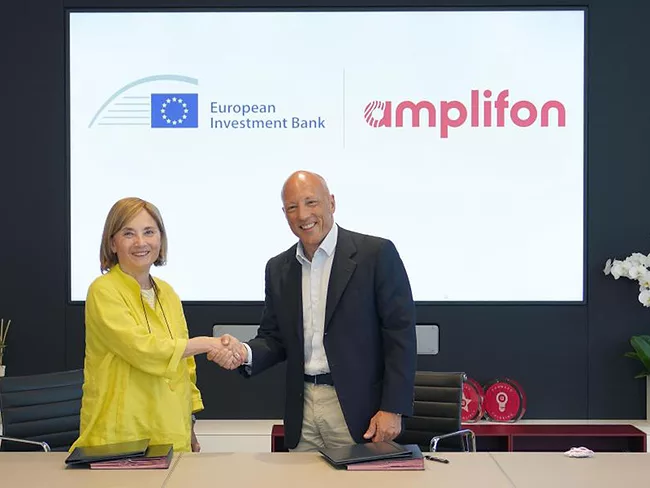
Amplifon SpA has secured $380 million from the EU-backed European Investment Bank (EIB) to accelerate its innovation and digitalization process for its advanced hearing aid technology. “This loan guarantee confirms that we are on the right path towards innovation and digital transformation, which has Italy and the European Union as its starting point,” said Enrico Vita, CEO of Amplifon SpA.
Neckepur SAS signed a licensing agreement with Assistance Publique-Hôpitaux de Paris (AP-HP) to develop an in vitro diagnostic technology to optimize the medical devices used in extracorporeal circulation. The agreement covers the rights to use a patent for a method of evaluating and optimizing the doses of drugs administered to patients admitted to the intensive care unit (ICU) who are undergoing treatment with devices such as hemofiltration, extracorporeal membrane oxygenation (ECMO), continuous hemodiafiltration, and adsorbent column circuits.
 RSS
RSS