IA Medical SAS raised $1.5 million to accelerate the development of its Alix chatbot, designed to support and make life easier for caregivers of patients suffering from Alzheimer's disease. The Klesia GIE investment fund, which depends on Agirc-Arrco GIE, the administrator of the French private-sector pension scheme, and the French sovereign bank BPIFrance SA contributed 46.42% of the financing. More than half of this financing corresponds to an opening of IA Medical SAS's capital to individual partners, including doctors.
The French government is officially launching a major national program for digital health. This priority research program and equipment (PEPR) in digital health is being piloted by two major government research bodies, the National Institute for Health and Medical Research (INSERM) and the National Institute for Research in Digital Science and Technology (INRIA). It has a budget of $65 million over seven years
Negotiations over the text of the EU’s Artificial Intelligence Act (AI Act) are drawing to a close, but stakeholders are concerned about several key aspects of the legislation, such as how the term “artificial intelligence” is defined. However, Medtech Europe and other groups, including medical professional societies, are also concerned that the provisions for governance of data would seem to exclude real-world data as a source of evidence, an oversight they say will diminish the utility of AI software in health care.
Gamma imaging is about to move out of the centralized nuclear medicine department and to the point of care, with the start of a U.S. study of a portable device Seracam, under development by Serac Imaging Systems Ltd. The study, at Ohio State University, will compare the performance of Seracam to its larger, fixed, counterpart in imaging the same patients, on the same day.
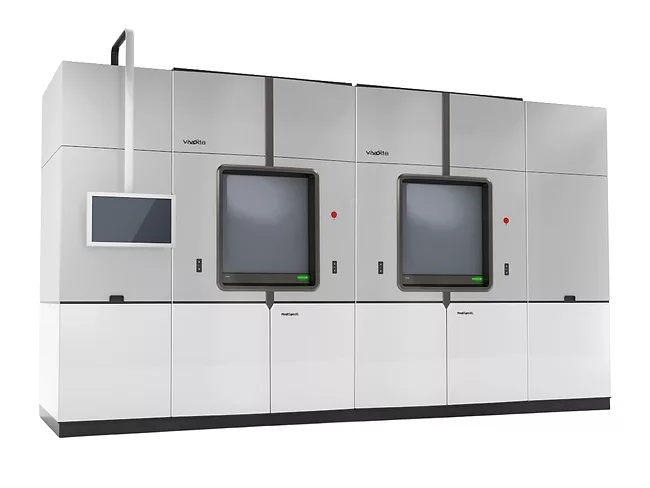
Vivolta BV raised €7 million ($US7.56 million) in new financing from existing shareholders and the Dutch government to expand its Medispin platform, an automated medical electrospinning production system, for high-throughput manufacturing of tubular electrospun products such as vascular stent grafts and prosthetic heart valves. The funds will also allow the company to continue to evolve into a medical electrospinning contract development and manufacturing organization as it transitions away from an equipment manufacturer.
Another brick in the ambitious Human Cell Atlas initiative has been put into place with the publication of the largest and most comprehensive cell map of the human lung. The open and freely available atlas catalogs the diversity of cells in the lung, including rare and previously undescribed cell types.
The French national authority for health (HAS) has provisionally set up CEDiag, a committee for assessing diagnostic, prognostic or predictive health technologies. This new national committee will cover the field of clinical procedures, including radiology, clinical biology and anatomo-cytopathology examinations, diagnostic drugs such as contrast agents used in medical imaging and radiopharmaceutical drugs, as well as medical devices such as self-testing kits.
There is a growing body of evidence showing prescription digital therapeutics (DTx) are effective, but slow progress in agreeing reimbursement and integrating them into care pathways is limiting access for patients and holding back commercial development in Europe.
Novo Nordisk A/S has entered into exclusive negotiations for a controlling stake in Biocorp SA, suppliers of Mallya, a Bluetooth-enabled smart add-on device for insulin pen injectors. The takeover will be phased over several stages. Novo Nordisk has initially negotiated with Bio Jag SAS, Biocorp’s principal shareholder, to purchase its entire stake in Biocorp, representing 45.3% of the share capital and 62.19% of the voting rights. Certain minority shareholders, including Nyenburgh Holding BV, Greenstock EIG and Vatel Capital SAS, who together account for 19% of Biocorp’s shares, have agreed to transfer their shares to Novo Nordisk once acquisition of the Bio Jag stake is complete.
The EMA and the European Center for Disease Control have said COVID-19 vaccine manufacturers should ditch the existing formulations and adapt their products to target the omicron-descendant XBB.1.5, to protect against SARS-CoV-2 in the winter of 2023–2024.
 RSS
RSS