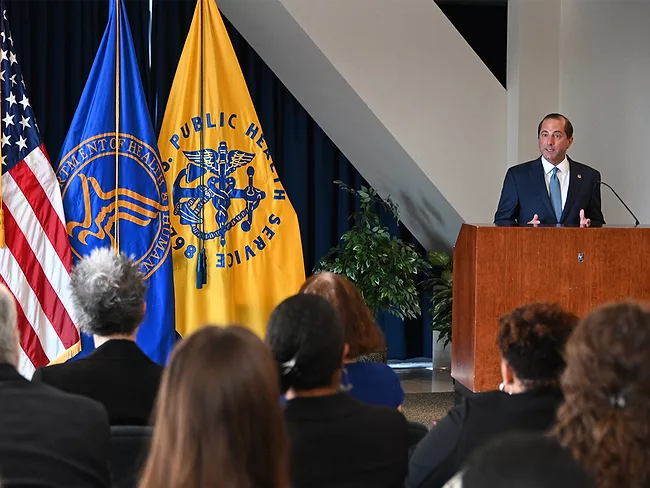
The U.S. Department of Health and Human Services has declared a public health emergency in the U.S. over the coronavirus in part because a government diagnostic for the virus yields inconsistent results, a fact that may spur the life sciences to provide a solution.
Despite pressure from several lawmakers to declare the new coronavirus a U.S. public health emergency, Health and Human Services (HHS) Secretary Alex Azar said such a declaration isn’t needed, at least not yet.
The U.S. Centers for Medicare and Medicaid Services (CMS) has significantly relaxed the national restrictions on coverage of next-generation sequencing for cancer, affirming that early-stage breast and ovarian cancer patients will be covered. However, Medicare administrative contractors can cover tests that have not been reviewed by the FDA, a move that should also significantly boost utilization for makers of next-generation sequencing systems in clinical labs.
The patent subject matter eligibility problem has rattled the world of diagnostics for several years, but the U.S. Senate has been silent about legislation in recent months. Patent attorney Michael Borella, of McDonnell Boehnen Hulbert & Berghoff LLP (MBHB), said he does not expect Congress to provide any legislative fix to the problem any time soon.
Combination products with digital interfaces. Antibody-drug conjugates. Complex drugs. Synthetic biologics. They’re all examples of how technology is expanding the ambit of what’s considered a drug beyond the current U.S. binary regulatory system of small molecules and biologics.
SANTA CLARA, Calif. – Just as it does with treatments, the National Comprehensive Cancer Network (NCCN) offers detailed guidelines on genomic testing by cancer type. These are key in determining what physicians can prescribe routinely and what insurers will cover. But those guidelines aren’t followed regularly outside a major research hospital setting, thereby obviating access to tumor genetic information that could help to better guide treatment. Even if current guidelines are followed, physicians and patients can get information back from the tests that neither party is prepared to process.
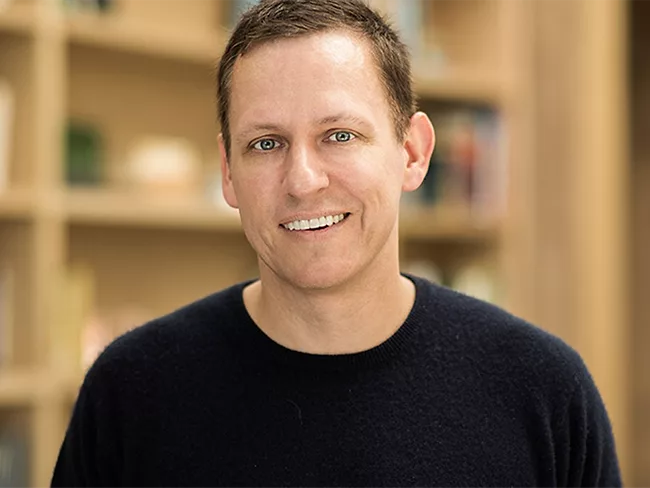
SANTA CLARA, Calif. – Peter Thiel is not a fan of incremental science. The high-profile venture capital investor, who invests across technology and the life sciences via various vehicles, including the Founders Fund, suggested that as academic and government bureaucracies have scaled up and rigidified over the last 50 or 60 years, that has eroded the ability of researchers to pursue innovative science.
Time will tell whether what the Trump administration is calling a “historic” and “landmark” trade agreement with China will better enable drug and device companies to more fairly compete in the Chinese market without having to sacrifice their intellectual property (IP) and technology.
In the final debate before the Iowa caucuses, the six leading contenders to be the Democratic presidential candidate had an opportunity to lay out how they would deal with U.S. prescription drug prices.
SAN FRANCISCO – Guardant Health Inc. has set the standard for liquid biopsy. That success has catapulted the Redwood City, Calif.-based company from an IPO in the fall of 2018 to a current valuation in excess of $7 billion. It has made its name – and much of its revenue – with its Guardant360 test, a molecular diagnostic test that assesses 74 cancer-related genes from the circulating tumor DNA to aid in designing the best treatment for advanced cancer patients with solid tumors.
 RSS
RSS