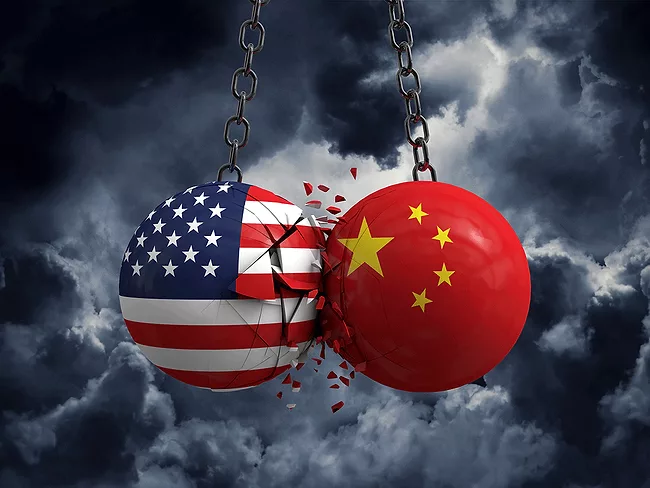
The U.S. Senate Finance Committee held the first of its two hearings on the supply chains for a variety of products vital to the response to the COVID-19 pandemic. While electoral politics were on full display during the hearing, a recurrent theme was the need to bring supply chains back to the Western Hemisphere as a solution to the fraudulent products shipped to the U.S. from Hong Kong and China.
CYBERSPACE – Data presented at the virtual 2020 Alzheimer's Association International Conference (AAIC) and reported in the July 28, 2020, online issue of the Journal of the American Medical Association (JAMA) demonstrated that blood levels of phosphorylated tau-217 (Ptau-217) did as well as cerebrospinal (CSF)- and PET-based biomarkers, and significantly better than other blood-based biomarkers, at discriminating individuals with Alzheimer’s disease (AD) from those with other neurodegenerative disorders.
“Nothing to see here” seems to be the general reaction to the four executive orders President Donald Trump signed Friday in an effort to reduce U.S. prescription drug prices. Two of the orders – one on importing drugs from Canada and the other on kicking the safe harbor out from under the rebates pharmacy benefit managers (PBMs) get from drug companies – instruct Health and Human Services (HHS) to continue, or resume, rulemaking on those measures.
The U.S. government has charged two citizens of China with cybercrime in connection with purported hacking of research into vaccines for the SARS-CoV-2 virus, but more than one speaker on a July 22 webinar said scientists involved in basic life science research at universities fail to appreciate the need for cybersecurity, a problem they may take with them to the private sector.
The U.S. government will pay $1.95 billion to Pfizer Inc. and Biontech SE for the first 100 million doses of their jointly developed mRNA-based COVID-19 vaccine once Pfizer manufactures it and receives the FDA’s approval or emergency use authorization. The two companies agreed, as part of Operation Warp Speed, to begin delivering 300 million doses of a COVID-19 vaccine in 2021.
The alleged activities of two Chinese hackers outlined in a federal indictment unsealed Tuesday offer “concrete examples of two concerning trends,” U.S. Assistant Attorney General John Demers said, as U.S.-China relations further soured with the news of the charges.
A safe, effective COVID-19 vaccine may be available by the end of the year or early next year, as will the supplies needed to deliver and administer hundreds of millions of doses. That’s the message five biopharma executives delivered to a House subcommittee July 21 as they updated U.S. lawmakers on the progress their companies are making on the vaccine front.
In its first fully virtual markup session, the House Energy and Commerce Committee Wednesday set aside politics to approve a bill that would make the U.S. Strategic National Stockpile (SNS) a better emergency resource – at least for the next few years.
Two subcommittees of the U.S. House Appropriations Committee have moved their respective appropriations proposals for the FDA and the NIH, restarting a process that has worked smoothly over the past couple of years. Still, Republicans in both committees objected to the use of emergency funding mechanisms in lieu of more routine appropriations.
The question of prices for a COVID-19 vaccine have raged in recent days. Gary Disbrow, acting director of the Biomedical Advanced Research and Development Authority (BARDA), told members of a Senate committee that vaccines developed with the help of taxpayer funding will come with an appropriate reduction in price. However, CDC Director Robert Redfield emphasized that the cold-chain distribution system for those products requires the same kind of at-risk investment that is used for vaccine development.
 RSS
RSS