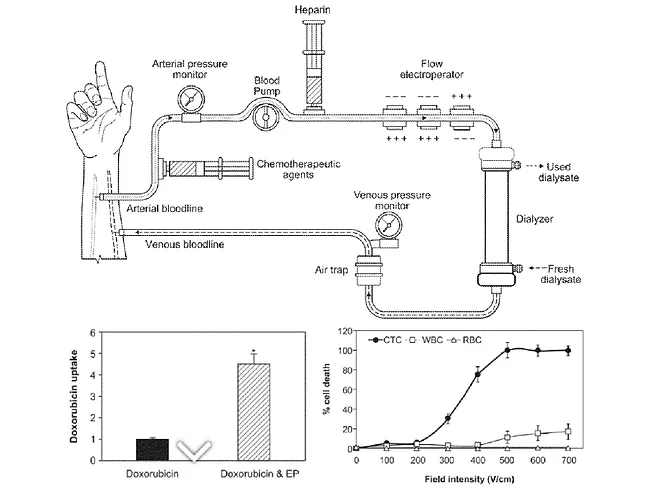
U.S. researchers reported seeking patent protection for methods to neutralize circulating tumor cells (CTCs) during hemodialysis to prevent cancer metastasis and reduce cancer-related deaths.
The fungus Candida auris has become an urgent clinical problem at a shocking speed. It was not even mentioned in the U.S. CDC’s 2013 reports on antimicrobial threats, but was one of five pathogens on the agency’s 2019 top-tier Urgent Threat List.
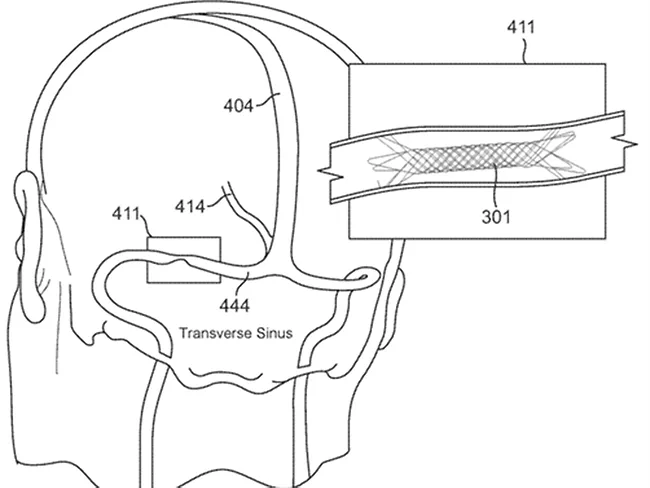
The latest patent application from Sonorous NV Inc. described novel self-expanding braided stents with variable radial force for treating pulsatile tinnitus in patients under conscious sedation by altering pressure gradients in their sinuses/vessels.
The Advanced Research Projects Agency for Health (ARPA-H) reported the opening of a series of regional offices that focus on both administrative and research assignments, a development that may bolster cures and treatments for tough-to-treat conditions. However, the U.S. House and Senate have different ideas about how much money the agency will receive in 2024, casting a cloud of uncertainty over how many projects the agency will be able to finance in the twelve months that will start on Oct. 1, 2023.
The U.S. Securities and Exchange Commission (SEC) has issued the final order concluding an action against Baxter International Inc. over the company’s use of accounting mechanisms to produce gains by manipulating foreign exchange transactions. While these activities are said to have been undertaken entirely at the behest of only two employees, the agreement will cost Baxter $18 million and serves as a cautionary tale about a lack of supervision of employees charged with managing company funds.
Ossdsign AB will abandon its 3D-printed cranial reconstructive implant business to focus on U.S. sales of its Ossdsign Catalyst, an off-the-shelf nanosynthetic bone graft that offers gross margins of 90% or better. The new strategy sharply reduces the capital required before the company projects achieving a cash-flow positive position.
The U.S. FDA recently convened an advisory hearing to discuss whether three in vitro diagnostics should be reclassified from class III to class II, including tests for the pathogens responsible for Hepatitis B and tuberculosis. The panel agreed that all three of the test types should be reshuffled to the lower-risk class II category, suggesting that test developers now have an opportunity to jump into a market with lower-cost tests that won’t need expensive and drawn-out clinical studies to obtain the FDA’s seal of approval.
Zig Therapeutics Inc. reported on new patented systems and methods for the remote diagnosis and treatment of a bacterial infection in individuals with chronic respiratory diseases experiencing acute respiratory exacerbations using automated color vision sputum analysis.
Enovis Corp. has agreed to acquire Limacorporate S.p.A. (Lima) from EQT Capital for €800 million (US$847 million) as part of its growth strategy that will see it achieve $2 billion in revenues by 2024. The transaction includes €700 million in cash and €100 million in shares of Enovis common stock, expected to be issued within 18 months after closing.
Femasys Inc. received U.S. FDA 510(k) clearance for Femaseed, an infertility treatment that delivers sperm directly to the fallopian tubes. Less invasive and more straightforward than in vitro fertilization, the procedure offers what the company said is a new and more affordable alternative to family building for couples encountering fertility issues.
 RSS
RSS