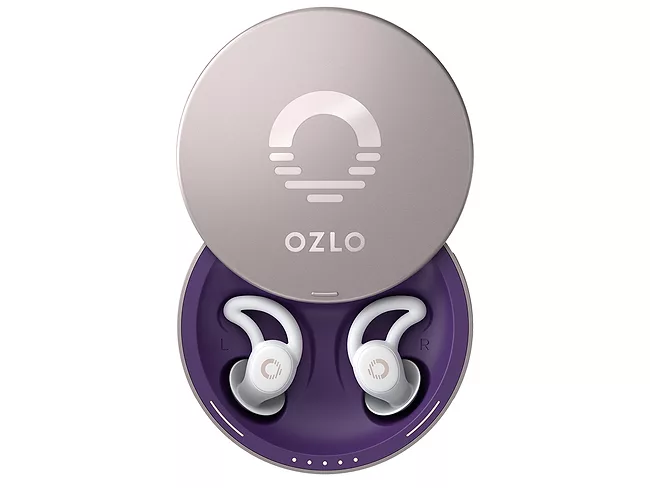
Three former employees of Bose Corp. are banking on their audio experience and Ozlo Sleepbuds helping the millions of people who struggle to sleep soundly each night. That prospect is music to the ears of investors Lifearc Ventures and Artis Ventures, who led Ozlo Sleep Inc.’s $10 million round to bring the wireless, in-ear headphones to market in the next few weeks.
The debate in the U.S. over the process by which the Medicare program covers new medical technologies has intensified over the past three years and the debate has now spilled onto the pages of the Journal of the American Medical Association. An article in JAMA asserts that only 44% of a group of 64 novel devices had achieved meaningful coverage and reimbursement milestones within a median of 5.7 years after FDA market authorization, adding yet more pressure on the legislative and executive branches to act to deal with what device makers characterize as the med-tech valley of death.
An estimated 10% to 20% of adolescents worldwide struggle with mental health issues. According to the CDC’s most recent Youth Risk Behavior Survey, nearly 60% of teen girls in the U.S. reported feeling sad every day for at least two weeks in the previous year and 22% of high school students considered taking their own lives. Yet despite these trends, the majority of mental health conditions in young people go undiagnosed and untreated.
The proposed $875 million acquisition of Cook Medical Inc.’s reproductive health business by the Coopercompanies Inc. has been scotched, a development lauded by the U.S. Federal Trade Commission in a statement describing the proposed transaction as anticompetitive. However, the FTC statement also pointed to cooperation from authorities in both the U.K. and Australia as critical in forcing the abandonment of the transaction, a signal that such cooperation is likely to grow in the future.
U.S. federal government agency recoveries under the False Claims Act (FCA) are down slightly in the first half of 2023 relative to the first half of 2022, but that doesn’t mean companies in the life sciences can afford to let their guard down. The Senate is examining two pieces of legislation that would significantly amplify the risk for device and drug makers, including a Senate bill that would eviscerate the materiality standard as set by the U.S. Supreme Court in Escobar.
The U.K. National Institute for Health and Care Excellence (NICE) is considering a coverage policy for stenting of the carotid arteries in asymptomatic patients, a change that could give these stents a significantly larger patient population in the U.K.
In game-changing news for parents of children with cerebral palsy, researchers demonstrated significant clinical improvement in the sensorimotor function of children who underwent sessions using Spinex Inc.’s Spinal Cord Innovation in Pediatrics (Scip) therapy. With current treatment options limited to physical therapy, medication and/or surgery, Parag Gad, co-founder and CEO of Spinex, told BioWorld he believes that Scip therapy “can be the new standard of care” for children with cerebral palsy.
The U.S. FDA recognized several new standards for sterilization of medical devices as part of an effort to reduce the use of ethylene oxide (EtO) for this purpose. While the recognition may stimulate adoption of alternative methods, Congress is applying yet more pressure on the EPA to act more decisively in regulating EtO, thus amplifying pressure on a system that device makers believe is already under stress.
With more drugs for Alzheimer’s disease (AD) gaining FDA approval and an aging population at increased risk of dementia, the need for AD diagnostics is only going to grow. An estimated 6.7 million Americans live with Alzheimer’s today, with that number projected to hit 14 million by 2060, according to the CDC.
 RSS
RSS