While U.S. politics continues to delay Senate confirmation of the NIH director, other crucial positions at the agency that don’t require Senate action are being filled. Acting NIH Director Lawrence Tabak announced Aug. 2 that he has named Jeanne Marrazzo as director of the agency’s National Institute of Allergy and Infectious Diseases (NIAID).
The European Union and the U.S. have wrapped up a data privacy framework that covers broad swaths of both economies, including the transmission of clinical trial data across the Atlantic Ocean. Drug and device makers that want to make use of this framework and thus jettison the contractual clause to ensure data privacy may find compliance with this new framework much more efficient in the long run, but will have to do a lot of compliance work on the front end to achieve those efficiencies.
Ultromics Ltd.’s Echogo Heart Failure system detects heart failure with preserved ejection fraction (HFpEF) from a single apical four-chamber video clip, according to a study published in JACC Advances. The study follows a consensus statement from American College of Cardiology which said that although there are now effective therapies to treat HFpEF, there is an increasing urgency for accurate diagnosis as the number of patients with HFpEF is on the rise, accounting for more than 50% of all heart failure cases.
A huge sigh of relief from the life sciences industry greeted U.S. President Joe Biden’s executive order that’s intended to shore up domestic manufacturing of products developed with taxpayer support. “It’s like the Titanic, [but] we just missed the iceberg,” Joseph Allen, executive director of the Bayh-Dole Coalition, told BioWorld. The fear for the past few years has been that the administration would follow in the wake of the Department of Energy, which broadly expanded the current Bayh-Dole U.S. manufacturing preference.
The first participants are being treated in a clinical trial assessing a neuromodulation system developed by Magnus Medical Inc. to treat depression. The system employs the recently FDA-cleared Saint neuromodulation technology that saw remarkable results in a clinical trial for treating major depressive disorder (MDD). The new Open Label Optimization (OLO) clinical trial is evaluating the effectiveness of this platform in conjunction with the medtech’s Magnus Neuromodulation System.
The U.S. Centers for Medicare & Medicaid Services (CMS) finalized the Medicare inpatient prospective payment system for fiscal year 2024 with a number of new and renewed new technology add-on payments (NTAPs) for the coming fiscal year. Controversially, however, the agency retained a proposal from the draft that requires that a product have received market authorization from the FDA by no later than May 1 of the prior fiscal year to qualify for NTAP payment, a provision that industry has blasted as exclusionary of products that merit an NTAP payment.
The FDA’s recent clearance of Ultrasight Inc.’s artificial intelligence (AI)-powered ultrasound guidance technology will allow for the widespread detection of heart diseases in the U.S. and ease bottlenecks in the healthcare system that currently restrict access for many people, Davidi Vortman, CEO of Ultrasight told BioWorld. Ultrasight’s software helps medical professionals without sonography experience acquire cardiac ultrasound images at the point of care in multiple settings.
Device recalls pop up with no regard to human appreciation for seasonality, and thus it was that recalls involving three major medical device makers emerged as the steamy month of July gave way to the arid, oppressive swelter of August. These recalls affected more than 7,500 units of the Trusignal pulse oximeter by GE Healthcare Technologies Inc., nearly 23,000 units of the Sigma Spectrum and Spectrum IQ infusion pumps by Baxter Healthcare Corp., and an unspecified number of units of the Carina ventilator by Drägerwerk AG, all of which adds a little more than the usual heat to the device industry’s dog days.
The U.S. FDA unveiled a proposal to once again reshuffle its operations, this time with a greater degree of emphasis on the function of the Office of Regulatory Affairs (ORA). Tim Philips, a consultant with Gardner Law and a former member of the FDA, told BioWorld that while these changes will likely yield some useful efficiencies, they might also dilute some of the more useful interaction between industry and FDA, a loss that may be keenly felt when it comes to matters such as FDA inspections.
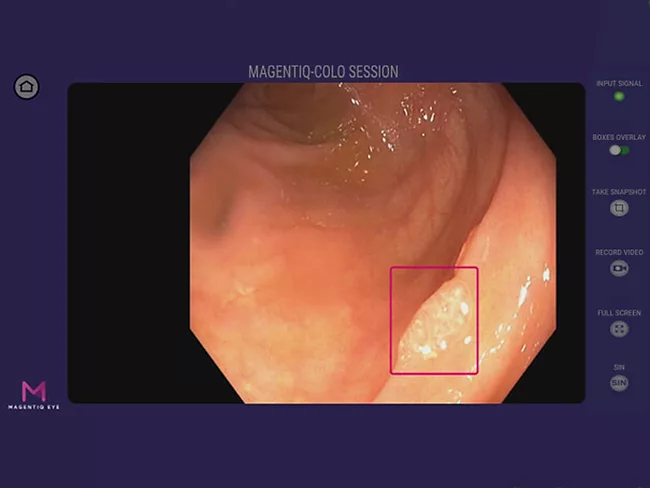
Magentiq-Eye Ltd. received U.S. FDA 510(k) clearance for its Magentiq-Colo, an artificial intelligence (AI) gastrointestinal software system that helps detect lesions in real time during colonoscopy procedures. With the rate of colorectal cancer expected to increase steadily through the decade, the company hopes that Magentiq-Colo will offer the gastroenterology community and its patients a significant increase in the adenoma detection rate.
 RSS
RSS