Device makers are often cited in U.S. FDA warning letters for making claims not seen in the approved labeling, but the authors of a recent review of artificial intelligence (AI) products cleared by the FDA suggest that FDA documents and marketing materials should disclose the presence of AI in these products. The authors of an article in the Journal of the American Medical Association said that only about 80.6% of the products were represented with accurate statements about the presence of AI, although FDA regulation does not require that marketing materials make such disclosures.
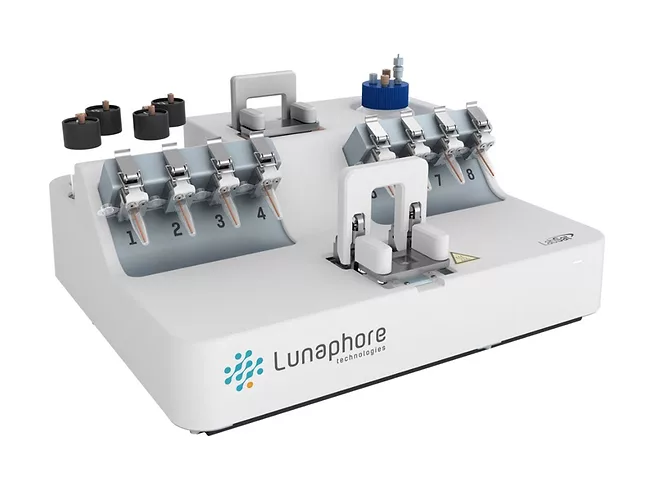
Five months after raising $45 million, Lunaphore Technologies SA reported its consent to be acquired by Bio-Techne Corp., a reagents and instruments manufacturer for the diagnostic market. This acquisition by the Nasdaq-listed bio-tech giant, “will enable us to begin a worldwide commercial rollout of our products and automated spatial biology technology,” Ata Tuna Ciftlik, co-founder and CEO of Lunaphore Technologies, told BioWorld. The amount of the transaction was not disclosed. This acquisition is expected to close in the third quarter of 2023.
The U.S. CMS posted a draft rule for home health payments for calendar year 2024, but the agency is not out of the woods yet with the established rule for CY 2023. The National Association for Homecare & Hospice (NAHC) announced July 6 that it has filed a lawsuit in the District Court for the District of Columbia seeking a reversal of rate cuts imposed by the agency for 2023, the results of which could spill over into the current round of rulemaking for home health payments.
The U.S. FDA granted Renalytix plc de novo marketing authorization for its prognostic test for chronic kidney disease (CKD). Kidneyintelx is an artificial intelligence-enabled prognostic testing platform to guide treatment decisions for adults with type 2 diabetes and diabetes-related early stage chronic kidney disease.
The U.S. FDA’s draft guidance for predetermined change control plans (PCCP) is a groundbreaking document for med-tech regulation, but stakeholders see a few holes in the draft version. One of the issues for device manufacturers is that the guidance seems to exclude any possibility of inclusion of a new intended use or indication for use in a PCCP, while others seek more detail on how this policy can be applied to the device component of a combination product, two elements that may prove complicated to address in the final guidance.
Rapid point-of-care diagnostics company Lumos Diagnostics Inc. saw its stock shoot up 327% on the news that it finally gained U.S. FDA 510(k) clearance for its Febridx rapid, point-of-care test for bacterial infections. Febridx is a finger prick blood test that can indicate if a person has a bacterial or viral acute respiratory infection within 10 minutes.
Leadless cardiac electrophysiology devices have been around for a while now, but Abbott Laboratories of Abbott Park, Ill., has managed to beat the competition in the market for dual chamber pacing via two leadless devices. The company reported July 5 that the U.S. FDA has approved the Aveir DR, a two-unit device configuration that provides pacing for both the right ventricle and the right atrium and which some analysts believe helps to make Abbott shares an underappreciated asset for investors.
The U.S. Office of Inspector General (OIG) reported June 28 that it had launched a series of enforcement actions against perpetrators of a variety of forms of health care fraud, including in the areas of telemedicine and opioid abuse. The 78 individuals arraigned in this crackdown are said to be responsible for $2.5 billion.
University of Chicago spinoff Flow Medical Inc. is finalizing its design of a multi-function catheter to diagnose and treat venous thromboembolic disease – boosted by a $1 million private investment to commercialize the device.
Sometimes a merger or acquisition brings a device that has a set of indications for use that cannot be practicably expanded, but Nathan Downing of Gardner Law of Stillwater, Minn., said this is not always the case. Downing said that preliminary conversations between the two parties to mergers and acquisitions can clarify a lot about whether a particular device has ample room to grow.
 RSS
RSS