If the Office of Inspector General (OIG) for the U.S. Department of Health and Human Services has its way, one of the casualties of the COVID-19 pandemic would be the in-person speaker programs many drug and device companies sponsor. The OIG issued a special fraud alert Nov. 16 questioning the need for such events in which health care professionals are often paid a hefty honorarium or fee to provide colleagues with information that’s readily available online and in the labeling of a drug or device.
Qiagen NV has started U.S. commercialization of a portable SARS-CoV-2 antigen testing device that can analyze up to 30 patient samples an hour. The Qiareach test features a portable hub device – smaller than a laptop – that can hold up to eight nasopharyngeal swab samples at a time. The test provides a digital readout of the results in two to 15 minutes – with strong positive results taking closer to two minutes and negative results coming back in 15 minutes.
Acutus Medical Inc. posted strong results for the third quarter of 2020, despite the ongoing uncertainties of the COVID-19 pandemic. Sales for the quarter totaled $3.2 million, up 180% sequentially and 391% when compared with the same period in 2019.
Regulation of the digital health space is in some respects fundamentally different from traditional hardware medical devices, a fact that was highlighted during a Nov. 12 webinar hosted by the U.S. FDA. Nonetheless, several participants in the webinar made the point that the twin problems of coverage and reimbursement are critical issues for digital health as well, a problem that some see as requiring more collaboration between the FDA and the Centers for Medicare & Medicaid Services (CMS).
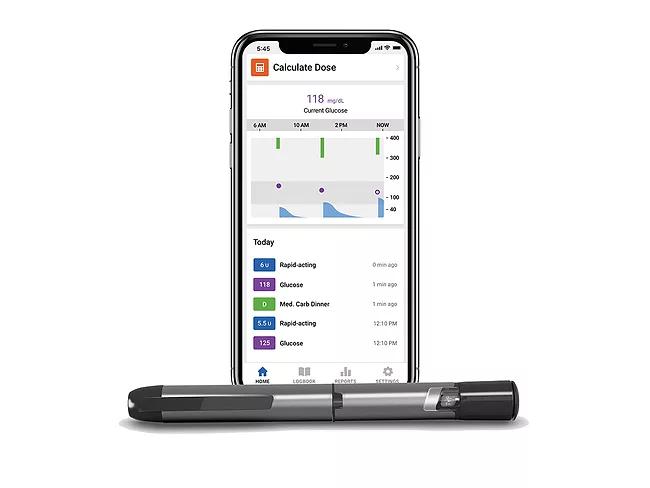
Medtronic plc has reported the launch of the Inpen integrated with real-time Guardian Connect continuous glucose monitoring (CGM) data. Inpen is the first U.S. FDA-cleared smart insulin pen on the market for people on multiple daily injections (MDI). With this integrated system, users will have real-time glucose readings alongside insulin dose information, giving them what they need to manage their diabetes in one view.
Dialysis maker Outset Medical Inc. tallied $13.8 million in revenue for the third quarter of 2020, up 423% from the prior year period – in its quarter as a publicly traded company. Of that, $10.8 million was product revenue, buoyed by COVID-19 tailwinds that drove demand for Tablo portable dialysis systems.
Researchers at the Feinstein Institutes for Medical Research, the research arm of New York-based Northwell Health, illuminated the precise pathway from the brainstem to the spleen that controls inflammation in a study published in the Proceedings of the National Academy of Sciences of the United States of America (PNAS). Essentially, the work demonstrates how scientists could use the vagus nerve to hack the immune system, enabling them to turn down the excessive response that underlies autoimmune disease without the use of biologics or immunosuppressive drugs.
The U.S. FDA final guidance for microneedling devices is a product-specific guidance, but it raises questions about the agency’s perspective on how a manufacturer’s intended use is inferred. Despite concerns voiced by industry, the microneedling devices final guidance retains a feature of the draft that allows the agency to infer intended use from the manufacturer’s “expressions,” a provision that raises yet again the long-standing commercial speech problem.
Abbott Laboratories has seen the launch of the IonicRF Generator, which delivers a nonsurgical, minimally invasive treatment for the management of pain in the nervous system. The generator is a radiofrequency (RF) ablation device that uses heat to target specific nerves and block pain signals from reaching the brain. The launch of Abbott's IonicRF Generator looks to help the estimated 50 million people in the U.S. currently living with chronic pain.
Preparing for a Biden presidency in which COVID-19 will be a top priority, the Joe Biden-Kamala Harris transition team named a board of scientists and public health experts Nov. 9 to advise the team on how to respond to the surging pandemic in the U.S.

 RSS
RSS