Saudi Arabia, which last year made its first appearance on the U.S. Trade Representative’s (USTR) Priority Watch List, is back on the list this year and is being singled out for an out-of-cycle review due to what the USTR calls its “unfair commercial use” and “unauthorized disclosure” of proprietary data submitted for drug approvals.
The Trump administration has posted an update to its plan to reopen the U.S. economy, this time with a slightly different twist on testing. This plan not only calls on local governments to administer tests for the SARS-CoV-2 virus, but also calls for two antibody tests per person under some circumstances, an approach that should beef up both the positive and negative predictive values compared to a single antibody test.
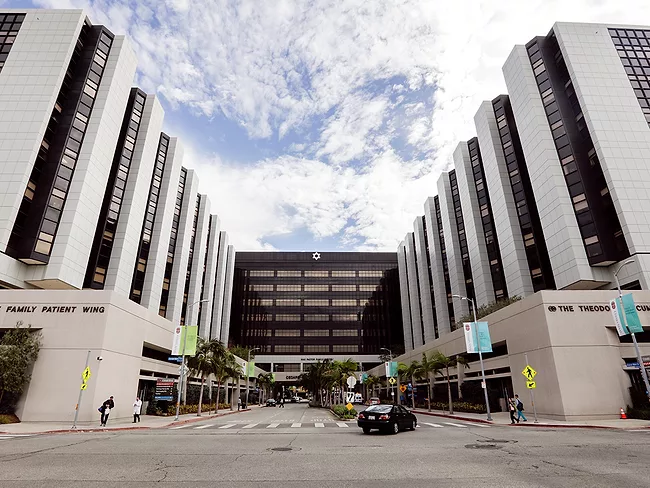
Ultraviolet (UV) light has a long-standing track record in use as an antimicrobial. But the primary limitation to using UV light in relation to the human body is that it can also potentially damage its cells. A group of researchers at the Cedars-Sinai Medical Center in Los Angeles, Calif., known as the Medically Associated Science and Technology (MAST) team, is now researching safe UV technology for use in COVID-19 treatment.
Armonk, N.Y.-based International Business Machines Corp. (IBM) launched the Rapid Supplier Connect network to help government agencies and health care organizations tap into new, non-traditional suppliers now producing devices and equipment needed to battle COVID-19. Membership in the blockchain-based network is free through Aug. 31, 2020, to qualified participants.
Hospitals may be providing patient care outside of normal clinical settings during the COVID-19 outbreak, but this raises the question of how to access patient data systems in these makeshift settings. Arthur Young, president and CEO of Interbit Data Inc., of Natick, Mass., told BioWorld that the company’s solution is to add Internet-based access to its Netsafe system.
Given all the public-private partnerships responding to the need for timely COVID-19 therapies, diagnostics and vaccines, the demands to forgo patents or exclusive licenses for coronavirus products and the clamor that industry shouldn’t “profit” from U.S. taxpayer-supported research are growing louder.
Assignor estoppel doesn’t enjoy the glamour of subject matter eligibility in the U.S. patent system, but a case heard recently at the Court of Appeals for the Federal Circuit has resurrected this relatively arcane bit of patent doctrine. The outcome of the case of Hologic v. Minerva addressed the less-than-princely sum of roughly $5 million, but Judge Kara Stoll of the Federal Circuit said this issue calls for a deeper examination by a 12-judge panel.
Molecular diagnostics firm Caris Life Sciences has launched a next-generation sequencing-based assay to analyze the whole exome of 22,000 DNA genes. Known as MI Exome, it builds on the existing whole transcriptome sequencing product MI Transcriptome that analyzes 22,000 RNA genes, as well as its microbiome analysis.
The U.S. Centers for Medicare and Medicaid Services (CMS) and the Office of the National Coordinator for Health Information Technology (ONC) said that they will offer enforcement discretion for their respective final rules for electronic health records (EHRs), a nod to the COVID-19 pandemic. The term of the delays of compliance for several of these rules is not uniform, ranging from “late 2020” to “spring 2021,” and vendors thus will have to be vigilant to ensure they do not cross any compliance tripwires.
Cytovale Inc., a San Francisco-based medical technology company, has snagged an additional $3.83 million in funding from the U.S. Department of Health and Human Services’ Biomedical Advanced Research and Development Authority (BARDA) to conduct a pilot study of its Rapid Sepsis Diagnostic System for patients with potential respiratory infections, including SARS-CoV-2, the novel coronavirus responsible for COVID-19. The patented technology, which can diagnose sepsis in less than 10 minutes, could speed up triaging and treatment of critically ill patients suspected of having the life-threatening condition.
 RSS
RSS