The U.S. Senate Finance Committee met for a second time in three days to address the supply of personal protective equipment (PPE) for the COVID-19 pandemic. While a witness said the Defense Production Act (DPA) is no panacea for production, one message emerging from the hearing is that producers need to hear from end users about demand just as much as users need to know about available inventories.
Hologic Inc. beat expectations for the third quarter of fiscal year 2020, posting net earnings of $137.9 million, or 53 cents a share, up 46.9% from the same period a year ago. Worldwide revenue declined 3.5% to $822.9 million, due to the divestiture of Cynosure Holdings Inc., but grew 7.7% organically (8.1% in constant currency), as demand for COVID-19 tests offset a slide in other businesses.
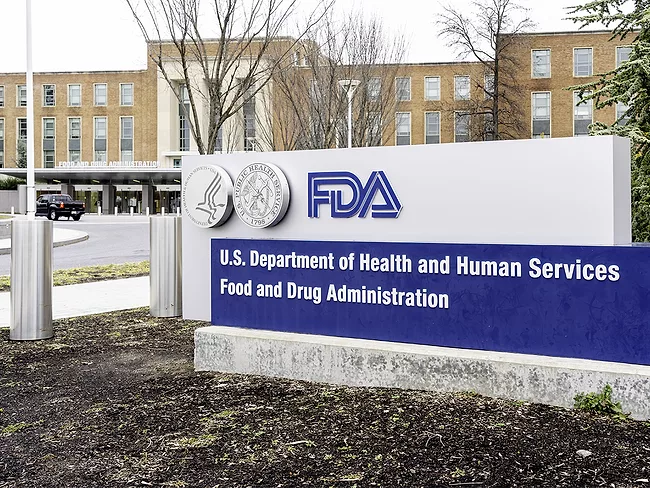
In a time when the FDA needs its best and brightest people onboard, nearly half the senior leadership at the agency will be eligible for retirement by Sept. 30.
Diagnostics testing company Laboratory Corp. of America Holdings Inc. (Labcorp) saw its second-quarter revenue decline by 4% to $2.8 billion, but that still beat the Street consensus of $2.5 billion. Diagnostics revenue fell 3.9% year over year to $1.7 billion, but that was offset by solid demand for the company’s COVID-19 tests.
The U.S. Senate Finance Committee held the first of its two hearings on the supply chains for a variety of products vital to the response to the COVID-19 pandemic. While electoral politics were on full display during the hearing, a recurrent theme was the need to bring supply chains back to the Western Hemisphere as a solution to the fraudulent products shipped to the U.S. from Hong Kong and China.
CYBERSPACE – Data presented at the virtual 2020 Alzheimer's Association International Conference (AAIC) and reported in the July 28, 2020, online issue of the Journal of the American Medical Association (JAMA) demonstrated that blood levels of phosphorylated tau-217 (Ptau-217) did as well as cerebrospinal (CSF)- and PET-based biomarkers, and significantly better than other blood-based biomarkers, at discriminating individuals with Alzheimer’s disease (AD) from those with other neurodegenerative disorders.
The question of screening for the COVID-19 pandemic continues to absorb the interest of both the U.S. FDA and test developers, and Tim Stenzel, director of the FDA’s Office of In Vitro Diagnostics and Radiological Health (OIR), said in a July 22 webinar that the FDA is “very interested” in a fingerstick test at the point of care for screening purposes, adding that the agency sees any such applications as a priority.
Edwards Lifesciences Corp. reported better-than-expected results when it released its second quarter earnings late July 23, with revenue down 15% to $924 million, from $1.1 billion in the same period of 2019. The results beat Wall Street consensus of $797.5 million, and reflected an uptick in surgical procedures that had been delayed by the COVID-19 pandemic. The Irvine, Calif.-based company sustained a net loss of $121.9 million, or $0.20 per share, based on generally accepted accounting principles (GAAP), a sharp drop from $242.3 million, or $0.38 per share, in the same quarter last year. However, adjusted earnings looked brighter at $0.34 per share.
Cancer treatment has been transformed, at its root, by a transformational change in how it is classified. Those successes have not escaped the notice of researchers in other areas of biomedicine, and diseases including heart failure, asthma and polycystic ovarian syndrome are being looked at with an eye to subdividing them in ways that brings diagnostics into the molecular era.
The support for permanent changes to Medicare coverage of telehealth has risen drastically in the months since the COVID-19 pandemic began, but Krista Drobac of Sirona Strategies said on a July 23 webinar that stakeholders will have to help make the case that telehealth is cost effective. That cost effectiveness argument may be absolutely crucial if any of the related legislative proposals are to stand up to budget scoring in a time of skyrocketing U.S. budget deficits, she said.
 RSS
RSS