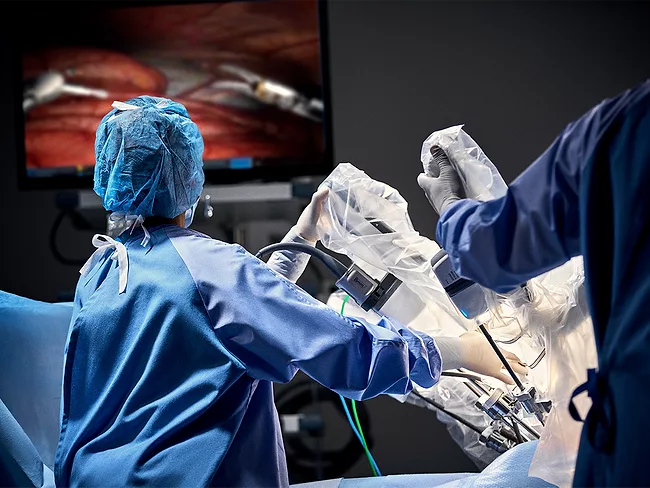
Robotic-assisted surgery-focused Intuitive Surgical Inc. revealed its second-quarter results late July 21, with worldwide Da Vinci procedures falling about 19% vs. the same period of 2019. Driven by this decline, second quarter 2020 instruments and accessories (I&A) revenue fell by 20% to $461 million, vs. $579 million in the second quarter of 2019.
The alleged activities of two Chinese hackers outlined in a federal indictment unsealed Tuesday offer “concrete examples of two concerning trends,” U.S. Assistant Attorney General John Demers said, as U.S.-China relations further soured with the news of the charges.
The U.S. FDA has put a considerable amount of emphasis on patient perspectives regarding medical devices in recent years, the subject of a recent webinar hosted by the Medical Device Innovation Consortium (MDIC). One of the speakers on the webinar, Carrie Kuehn, of Evidation Health of San Mateo, Calif., said that not only do device makers have a trove of valuable data at their fingertips with patient preference data, but also that the FDA’s message is, “if patients say something, we want to hear about it.”
The U.S. FDA’s interest in harmonizing its regulations for medical devices with an international standard is a matter of record, but the agency has found this to be an enormously complicated task. Kim Trautman, executive vice president for medical device services at NSF International, of Ann Arbor, Mich., told BioWorld that the task of rewriting Part 820 to meet ISO 13485 in the middle is no mean feat, but also that it may be delayed again, this time because of the COVID-19 pandemic.
The next phase of testing for the COVID-19 pandemic will hopefully include the roll-out of tests for neutralizing antibodies for the SARS-CoV-2 virus, but there are some roadblocks. The FDA’s Tim Stenzel said the agency has a limited amount of information to offer regarding emergency use authorizations for these tests, a predicament that might not resolve until several applicants are in and the agency can see some information that will aid in development of performance and validation standards.
With COVID-19 causing deferments of medical procedures worldwide, Johnson & Johnson beat Wall Street estimates for the second quarter of 2020, with better than expected performance in its medical device segment. Worldwide sales for the unit totaled $4.29 billion, down 32.5% year over year on an adjusted operational basis vs. the Street’s projected 47% decline.
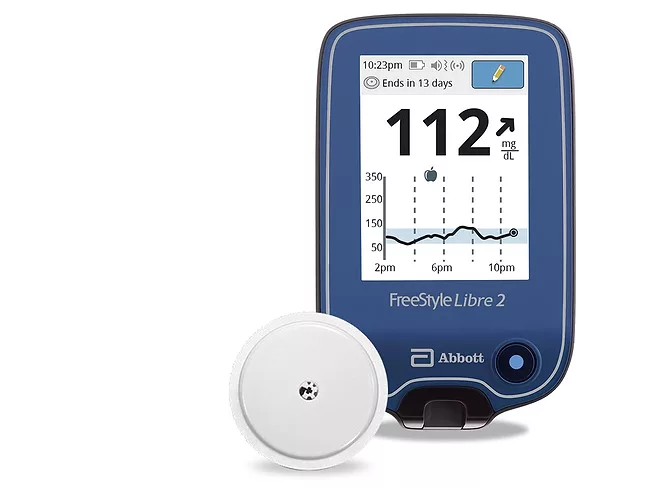
Diversified health care player Abbott Laboratories did better than expected when it reported second quarter earnings. The Abbott Park, Ill.-based company is one of the earliest to start reporting for this period, which in the U.S. was characterized by an initial heavy impact from the ongoing pandemic.
In its first fully virtual markup session, the House Energy and Commerce Committee Wednesday set aside politics to approve a bill that would make the U.S. Strategic National Stockpile (SNS) a better emergency resource – at least for the next few years.
The case of Fitbit Inc. v. Valencell Inc. has seen the usual number of twists and turns as it wended its way through Article III courts and an inter partes review (IPR), but a U.S. Supreme Court case that requires that all claims in an IPR be reviewed was decided during the Fitbit IPR.
Researchers around the globe are still struggling to understand the basic biology of COVID-19 infection, including how it works in the body and how to most effectively combat it. To aid them in their efforts under the weight of the ongoing pandemic, single-cell research tool company 10x Genomics Inc. has launched an updated version of its Chromium Single Cell Immune Profiling product.
 RSS
RSS