Thermo Fisher Scientific Inc. has launched a surveillance system that can detect SARS-CoV-2 in ambient air in indoor spaces, providing a potential complement to individual testing and other COVID-19 safety protocols. The system, called the Aerosolsense Sampler, works by capturing a sample of the ambient air on a cartridge using Thermo Fisher’s collection substrate.
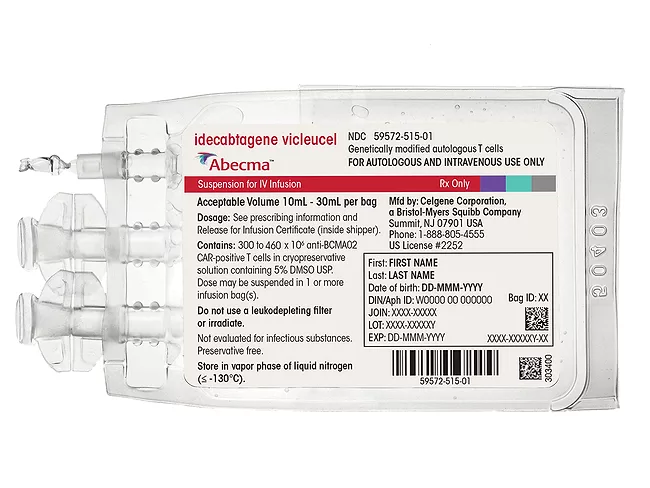
The first BCMA-targeted CAR T therapy, idecabtagene vicleucel, cleared FDA approval for use in adults with multiple myeloma (MM) who have received four or more prior lines of therapy. Developed by partners Bluebird Bio Inc. and Bristol Myers Squibb Co., the drug, branded Abecma, is also the first CAR T drug indicated for MM. It is designed for use as a one-time infusion, with a recommended dose range of 300 to 460 x 106 CAR-positive T cells. The personalized therapy will be produced at BMS’ cellular manufacturing facility in Summit, N.J. Bluebird developed the lentiviral vector used in Abecma.
The use of dermal fillers has spiked in recent years for a number of reasons, but so have the associated adverse events. An FDA advisory committee made several associated recommendations, including that a patient’s vision be prospectively evaluated prior to any peri-ocular treatment with fillers, but this could be a simple count-the-fingers check, something that should not appreciably increase procedure times or affect the volume of procedures.
If the March 25 vote from a joint FDA advisory committee meeting is anything to go by, the long and bumpy development road for Pfizer Inc.’s tanezumab, a nonopioid pain drug, may have just gotten longer and bumpier. In what was nearly a unanimous vote, the Arthritis Advisory Committee and Drug Safety and Risk Management Advisory Committee said the sponsor’s proposed risk evaluation and mitigation strategy (REMS) was not adequate to ensure the benefits of tanezumab in alleviating osteoarthritis pain outweigh its risks, which include further joint deterioration.
The FDA is becoming more amenable to screening and surveillance tests for the COVID-19 pandemic, although the distinction between test uses is not always clear. Toby Lowe, the associate director of the Office of In Vitro Diagnostics and Radiological Health (OIR), said on the agency’s weekly town hall that the difference between surveillance and screening tests is whether the individuals who are screened can act on the information thus derived.
The U.S. FDA has granted breakthrough device designation to Tempus Inc. for its ECG Analysis Platform. Developed in collaboration with Geisinger, the artificial intelligence (AI)-powered platform helps clinicians identify patients at increased risk of developing atrial fibrillation (AF) or atrial flutter.
The latest global regulatory news, changes and updates affecting medical devices and technologies, including: Evidence does not back hearing loss screening for asymptomatics; Boston Scientific settles on mesh marketing; FDA says approval phase for Barostim Neo was 240 days.
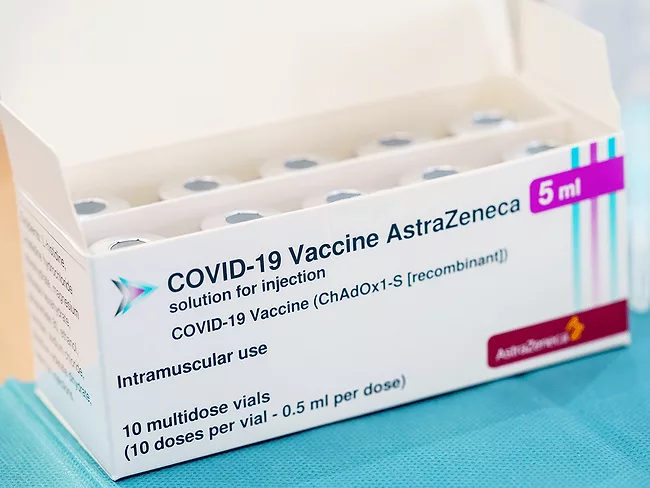
LONDON – Astrazeneca plc promised to publish the primary analysis of the phase III U.S. trial of its COVID-19 vaccine by the morning of March 25, after chastisement from the data safety monitoring board (DSMB) for using “outdated” information in the interim results published on March 22.
Although artificial intelligence (AI) seems to be making only incremental headway in the world of medical technology, Brainscope Co. Inc., continues to advance its AI offerings with the launch of the Concussion Index (CI). This algorithm, used with the company’s disposable headset, has been demonstrated to reduce the need for cranial CT scans by 30%, making this a double win for patients and for health care spending in the U.S.
If the biopharma industry thought its round-the-clock efforts and considerable financial investments in tackling COVID-19 would earn it good will in the U.S. Congress, those hopes were dashed March 23 when both Democrats and Republicans serving on a Senate Health, Education, Labor and Pensions subcommittee reverted to blaming drug companies for much of what’s wrong with the U.S. health care system.
 RSS
RSS