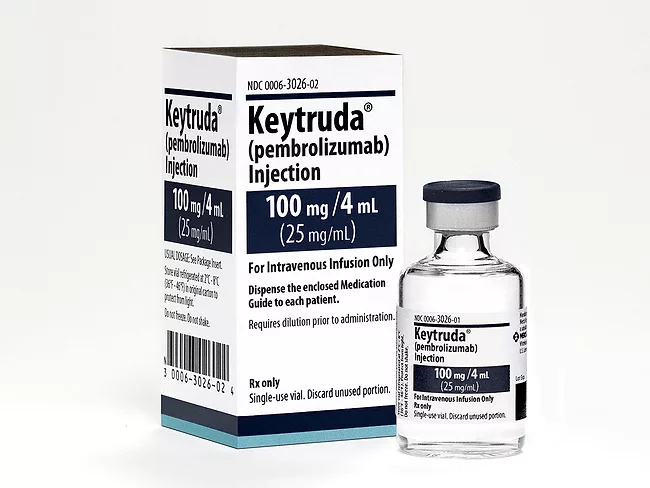
The FDA’s Oncologic Drugs Advisory Committee voted 6-2 April 29 to recommend withdrawing accelerated approval for Merck & Co. Inc.’s Keytruda (pembrolizumab) as a third-line treatment for a subgroup of patients with recurrent locally advanced or metastatic gastric or gastroesophageal junction cancer. The vote was based on FDA assurances that, if it withdrew the approval, it would work with Merck to delay the withdrawal or set up an access program to ensure the estimated 1,000 patients who are beyond first-line treatment could still get Keytruda.
In the final part of its three-day meeting on accelerated approvals granted to anti-PD-1/PD-L1 antibodies, the FDA’s Oncologic Drugs Advisory Committee (ODAC) voted unanimously to continue the accelerated approval for Merck & Co. Inc.’s Keytruda (pembrolizumab) as a therapy for patients with advanced hepatocellular carcinoma (HCC) who have been previously treated with sorafenib (Nexavar, Bayer AG).
Regulatory snapshots, including global drug submissions and approvals, clinical trial approvals and other regulatory decisions and designations: Biogen, CSL, Genentech, Lipac, Novartis.
Shares of Protalix Biotherapeutics Inc. (NYSE:PLX) fell 33% to $3.93 on April 28 after the company reported receiving an FDA complete response letter (CRL) in answer to its BLA for pegunigalsidase alfa, a galactosidase enzyme replacement therapy it has long advanced for the potential treatment of Fabry disease.
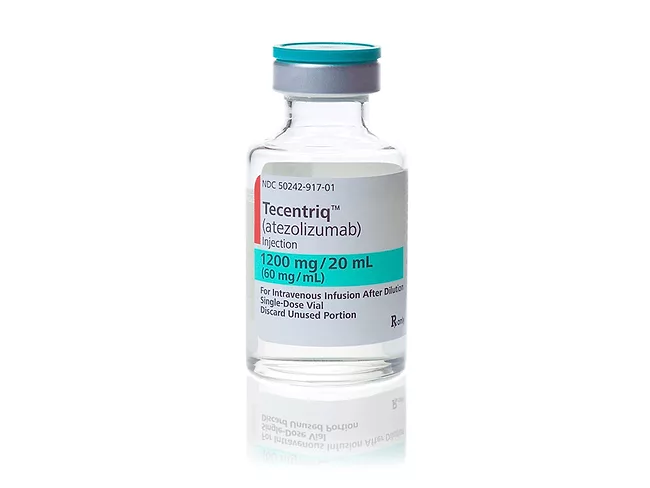
If the FDA follows the advice of its Oncologic Drugs Advisory Committee (ODAC), both Keytruda and Tecentriq will remain on the U.S. market, for the time being, with accelerated approval as first-line treatments for certain patients with advanced or metastatic urothelial carcinoma. The committee voted 5-3 April 28 to recommend continuing accelerated approval for Merck & Co. Inc.’s Keytruda (pembrolizumab) and 10-1 for maintaining the accelerated approval of the Roche Group’s Tecentriq (atezolizumab) until the final data come in from a confirmatory trial that’s expected to be completed next year.
Regulatory snapshots, including global drug submissions and approvals, clinical trial approvals and other regulatory decisions and designations: Akari, Amgen, Calliditas, Chiesi, Inmed, Nkarta, Protalix, Provention, Roche, Sorrento, Takeda, Tarus, Tetra, Vertex, Y-Mabs.
In a virtual meeting fraught with technical difficulties, the FDA’s Oncologic Drugs Advisory Committee (ODAC) voted 7-2 April 27 that the accelerated approval for Tecentriq (atezolizumab) in combination with nab-paclitaxel as a treatment for unresectable locally advanced or metastatic triple-negative breast cancer (mTNBC) in adults with PD-L1+ tumors should continue as additional trials are conducted or completed.
Astrazeneca plc’s saga of its COVID-19 vaccine continued this week with the European Commission (EC) deciding to begin legal action against the Cambridge, U.K.-based company, claiming it has failed to deliver doses in line with its contract.
The volume of phase I-III clinical trial data so far in 2021 is a full 26% more than it was by this point last year, yet the proportion of news focused on the COVID-19 pandemic continues at much the same rate.
 RSS
RSS