Reps. Diana DeGette (D-Colo.) and Fred Upton (R-Mich.) have reintroduced Cures 2.0, legislation they said will increase access to live-saving cures and treatments for a variety of diseases such as Alzheimer’s disease.
Artificial intelligence (AI) is quite the buzzword for med tech and regulators alike, but that doesn’t mean rules for AI are just over the horizon. Pat Baird, director of global software standards at Koninklijke Philips NV, said during a recent webinar that problems such as long-standing definitional issues virtually guarantee that regulatory agencies will struggle to enact regulations, a predicament that leaves software developers with the kind of uncertainty that investors in the life science industries abhor.
Peking Jabrehoo Med Tech Co. Ltd.’s genetic testing kit won marketing approval from China’s NMPA. It is the first preimplantation genetic testing for aneuploidy (PGT-A) that uses the reversible termination sequencing method in China, according to the company.
Regulatory snapshots, including global submissions and approvals, clinical trial approvals and other regulatory decisions and designations: Advantis Medical, GE Healthcare, Royal Philips.
The U.S. Centers for Medicare & Medicaid Services (CMS) finally laid to rest the rule for Medicare Coverage of Innovative Technology (MCIT), a policy proposal that found favor with industry and with several patient groups. However, the news comes shortly after a bipartisan group of 10 senators had penned a letter to the agency to reissue the rule, reinforcing the prospect that the MCIT proposal will find widespread support in the halls of Congress in 2022.
The U.S. Department of Health and Human Services (HHS) has withdrawn its August 2020 rescission of the FDA’s authority to regulate lab-developed tests (LDTs), a reversal predicated on the need for additional testing capacity for the COVID-19 pandemic. However, the non-COVID implications are not clear as the FDA is not widely seen as having the capacity to regulate LDTs for non-pandemic purposes, while pending legislation would dramatically overhaul the agency’s approach to LDT regulation, making the current regulatory environment an unstable environment at best. The FDA accompanied the announcement with a statement that the emphasis at the agency is on tests that do not require that the patient sample be sent to a lab for processing.
Regulatory snapshots, including global submissions and approvals, clinical trial approvals and other regulatory decisions and designations: Alung Technologies, Medtronic.
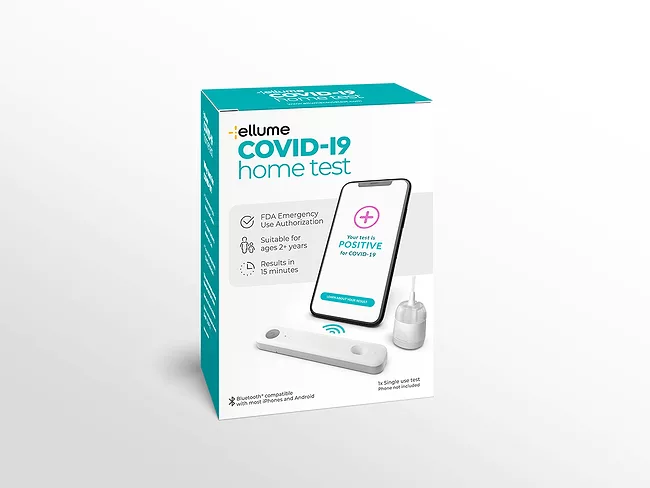
The FDA categorized the recall of more than 2.2 million Ellume Pty Ltd. COVID-19 Home Tests that began Oct. 5 as a class I recall, “the most serious type of recall.” While the agency has received significant criticism lately about ambiguity in recalls that often leaves consumers uncertain about their seriousness, the FDA eliminated all doubt on this one saying, “use of these tests may cause serious adverse health consequences or death.” The FDA said it received 35 reports of false positives associated with the antigen test. No deaths have been reported.
The FDA’s device center has revisited the 2005 guidance for the content of premarket submissions for device software functions, a document that puts much more emphasis on risk compared to the legacy 2005 guidance.
U.S. President Joe Biden on Nov. 12 announced his intent to nominate former FDA Commissioner Robert Califf to return to the regulator’s top job. He would take the place of Janet Woodcock, acting commissioner of the agency since Jan. 20.
 RSS
RSS