Regulatory snapshots, including global submissions and approvals, clinical trial approvals and other regulatory decisions and designations: Fluidigm, Inova, Jointechlabs, Natera, Surgentec.
The latest global regulatory news, changes and updates affecting biopharma, including: Apotex, Auspex, Glenmark, Johnson & Johnson, Sandoz, Teva, Taro.
Regulatory snapshots, including global drug submissions and approvals, clinical trial approvals and other regulatory decisions and designations: 3Sbio, Alimera, Hansa, Hifibio, Catalyst, Kye, Revive, TLC.
The latest global regulatory news, changes and updates affecting biopharma, including: Department of Health and Human Services, Drug Enforcement Administration, FDA, Health Canada, National Center for Advancing Translational Sciences, SK Biopharma.
HONG KONG – Stempeutics Research Pvt Ltd. received the green light from the Drug Controller General of India (DCGI) to launch its Stempeucel therapy to treat critical limb ischemia (CLI) due to Buerger’s disease and atherosclerotic peripheral arterial disease.
Regulatory snapshots, including global submissions and approvals, clinical trial approvals and other regulatory decisions and designations: B. Braun, Gyroscope, Philips, Sientra.
DUBLIN – Ipsen SA is on track for an NDA filing for palovarotene in fibrodysplasia ossificans progressiva (FOP), an ultra-rare disease characterized by the gradual replacement of skeletal muscle and connective tissue with bone, following an interim analysis of phase III data which indicates that the drug may have a substantial effect on the disease process.
The idea of patent pools such as the COVID-19 Technology Access Pool (C-TAP) created by the World Health Organization a few months ago has drawn a lot of support from low- and middle-income countries and a handful of wealthier ones, but not so much from industry.
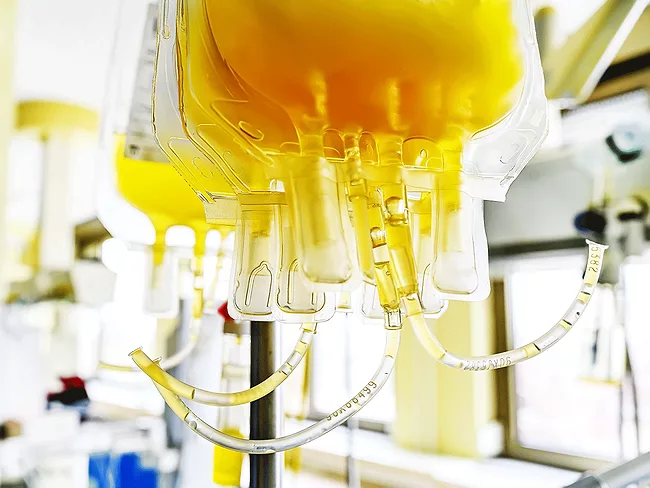
As of Aug. 13, more than 90,000 patients hospitalized in the U.S. with COVID-19 already had been given access to convalescent plasma through a national expanded use protocol (EAP) sponsored by the Mayo Clinic. The FDA’s decision Sunday to grant emergency use authorization (EUA) for the potential therapy will further expand access to convalescent plasma for hospitalized patients throughout the country at a time when fully approved COVID-19 treatments are nonexistent and even EUAs are few and far between.

 RSS
RSS