For the second time this year, the U.S. CDC’s Advisory Committee on Immunization Practices (ACIP) canceled a scheduled meeting due to a federal judge’s stay that keeps the panel from meeting with its current membership. Typically, ACIP meets three times a year – in February, June and October. The 2026 June meeting was slated for June 23-25. Whether the adcom meets in October will be up to the courts and how far Health and Human Services Secretary Robert Kennedy digs in his heels to maintain a hand-picked committee tilted toward his view of vaccines.
The eighth version of the Prescription Drug User Fee Act (PDUFA) is up for renewal next year, but the bulk of the negotiations between the drug development industry and the U.S. FDA is largely complete. At the BIO International Convention, representatives from the industry and trade organization provided an overview of what was agreed upon during the 127 negotiating sessions that were needed to arrive at the commitment letter, which will be sent to Congress later in 2026.
Ascletis Pharma Inc. has received IND clearance from the FDA for ASC-35, a once-monthly subcutaneously administered GLP-1 receptor (GLP-1R)/GIP receptor (GIPR) dual peptide agonist, for the treatment of obesity.
Unixell Biotechnology Co. Ltd. has obtained IND clearance from the FDA for UX-DA003, its allogeneic induced pluripotent stem cell (iPSC)-derived therapy for Parkinson’s disease. IND approval was also gained in China earlier this month, enabling concurrent clinical development in both China and the U.S.
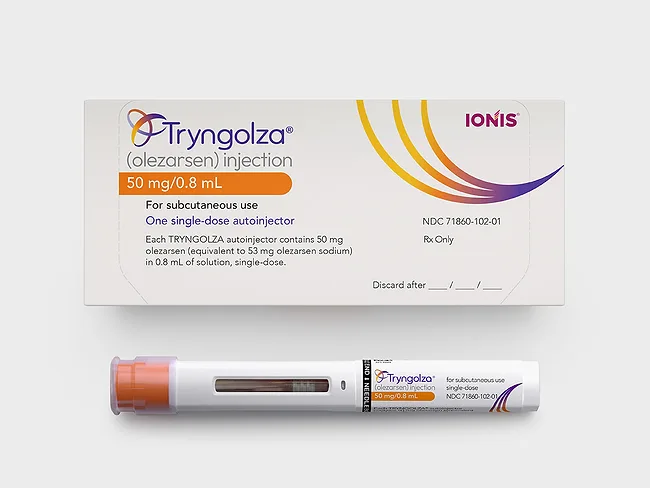
As expected, and following impressive phase III data released last September, Ionis Pharmaceuticals Inc. won U.S. FDA approval of Tryngolza (olezarsen) for adults with severe hypertriglyceridemia, unlocking a larger indication and one that held both priority review and breakthrough therapy designations.
When it comes to vaccines and preparedness, platform delivery technologies can be both a boon and a barrier. On the one hand, an existing platform can speed development of a vaccine targeting an unexpected viral scare such as the recent Bundibugyo Ebola and Andes hantavirus outbreaks. On the other hand, the intellectual property (IP) protecting that platform adds to the economic hurdles facing smaller vaccine developers, Douglas Bucklin, a life sciences patent attorney with Volpe Koenig, told BioWorld.
The U.S. FDA approved 24 drugs in May 2026, the busiest month of the year so far. Up from April’s 14, it brings the year-to-date total to 84 approvals. Through May, the agency has cleared 20 new molecular entities, a pace that, if sustained, would put 2026 on track to approach or exceed several recent years.
With increasing competition from China and other countries, the U.S. Department of Health and Human Services is rolling out Operation Trailblazer, a department-wide strategy to once again make the U.S. the go-to destination for early stage drug development.
China’s National Medical Products Administration approved Carsgen Therapeutics Holdings Ltd.’s NDA for satricabtagene autoleucel (satri-cel, CT-041), marking the first global approval of a CAR T therapy for solid tumors. The autologous Claudin18.2-targeted CAR T was approved for patients with Claudin18.2-positive, HER2-negative advanced gastric/gastroesophageal junction adenocarcinoma who have failed at least two prior lines of therapy.
 RSS
RSS