The U.S. FDA has finalized two guidances dealing with class II tests that are subject to Medicare regulations, including the so-called dual CLIA waiver guidance. The agency said it will hold an April 14, 2020, webinar to go over both guidances, allocating 90 minutes to deal with questions about the two documents.
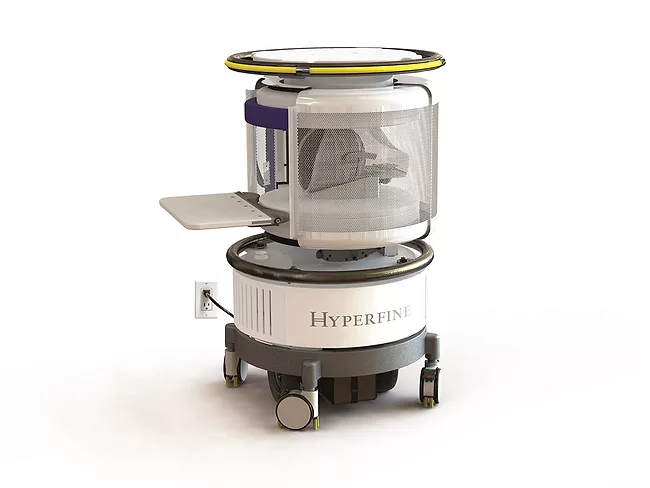
Guilford, Conn.-based Hyperfine Research Inc. has received the U.S. FDA’s nod for a bedside magnetic resonance imaging (MRI) system and is eyeing this summer for shipments. The portable system can be wheeled directly to the patient’s bedside and plugs into a standard electrical wall outlet.
Biointellisense Inc. received good news from the U.S. FDA, which gave its nod to the company’s Biosticker on-body sensor for scalable remote care. The Biosticker allows for continuous monitoring of vital signs and actionable insights, delivered to clinicians from patients in the home setting. The goal is to help in the early detection of potentially avoidable complications.
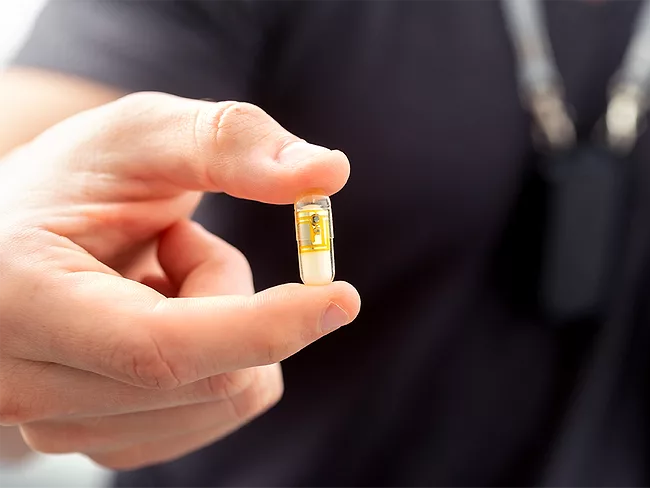
Gainesville, Fla.-based startup Etectrx Inc. has secured an FDA clearance for its ingestible event marker system, the ID-Cap system. The startup is following in the footsteps of Redwood City, Calif.-based Proteus Digital Health Inc., which pioneered the category.
Gainesville, Fla.-based startup Etectrx Inc. has secured an FDA clearance for its ingestible event marker system, the ID-Cap system. The startup is following in the footsteps of Redwood City, Calif.-based Proteus Digital Health Inc., which pioneered the category. The Etectrx approach, however, obviates the need for a skin-worn patch to monitor a signal from an ingestible sensor delivered with medication that’s been taken. It is the first to transmit a signal directly from within the body to a receiver that’s worn on a lanyard.
Dublin-based Medtronic plc reported Wednesday that the U.S. FDA has given the green light to its Stealth Autoguide system. The company said it is the first cranial robotic platform that integrates with its enabling technology portfolio to create an end-to-end procedural solution.
Toronto-based Moleculight Inc. has received U.S. FDA 510(k) clearance for its i:X hand-held fluorescence imaging device for use in detecting bacteria in wounds at the point of care. The milestone comes a little over a year after the agency granted de novo clearance for the device in August 2018 and lends additional credence to the device’s benefits in wound evaluation and management. “The granting of our 510(k) clearance by the FDA for the i:X hand-held fluorescence imaging device is very exciting and is a further validation of the growing clinical evidence supporting the utility of our imaging platform,” said Anil Amlani, Moleculight’s CEO.
The FDA’s safety and performance-based pathway for 510(k) devices promises to streamline premarket filings, and the FDA’s Jason Ryans said on a recent webinar that any changes to the related product-specific guidances would be applicable only prospectively. Ryan made no mention of a grace period for impending applications, however, suggesting that any such devices may have to be reworked or resubmitted into a more conventional premarket channel if they do not meet the new requirements.
The U.S. FDA's overhaul of the 510(k) program continues apace with the recent final guidance for the special 510(k) mechanism. However, a member of the FDA staff said clerical errors account for a conspicuous number of conversions of these applications to traditional 510(k)s than any other problem. The agency posted the final guidance for the special 510(k) program in September with features seen in the draft that drew opposition from device makers.
Los Altos, Calif.-based Heartvista Inc. has received the U.S. FDA's nod for its One Click autonomous MRI acquisition software for cardiac exams. The company said that One Click is the first artificial intelligence (AI)-assisted solution designed specifically with the goal of enhancing the performance and results of cardiac MRI scans.
 RSS
RSS