The latest global regulatory news, changes and updates affecting medical devices and technologies, including: Advamed urges administration to communicate on DPA; FDA posts third-party report for Q1, FY 2021.
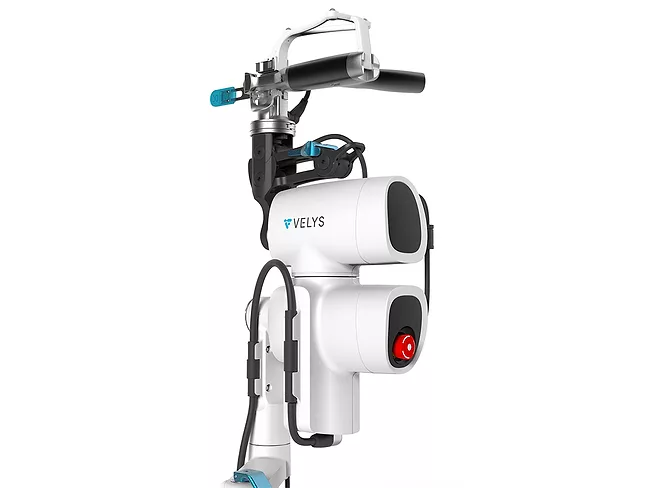
Johnson & Johnson has been looking to make a big splash in robotics. Now, its Depuy Synthes unit has made progress on this front, gaining U.S. FDA clearance for the Velys robotic-assisted solution designed for use with the Attune total knee system. The solution aims to help simplify surgeons’ existing workflow around total knee replacement.
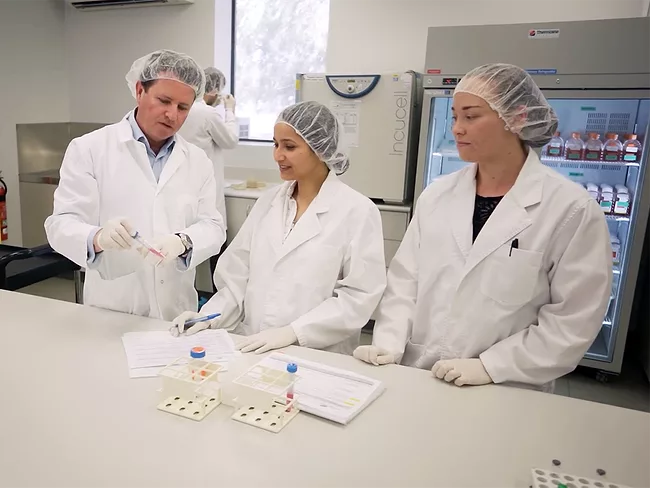
PERTH, Australia – Perth-based regenerative medicine company Orthocell Ltd. saw its shares rise 27% on the heels of its first U.S. approval for its collagen medical device for dental guided bone and soft tissue regeneration applications. “It’s an important milestone for us, and one that came quicker than I was expecting it to come,” Orthocell CEO Paul Anderson told BioWorld. The company submitted its 510(k) application to the FDA in May, and he was expecting approval by the middle of 2021.
Helix Opco LLC, a company specializing in population genomics, has received de novo marketing authorization from the U.S. FDA for its whole exome sequencing platform, which covers roughly 20,000 genes. The San Mateo, Calif.-based company also picked up 510(k) clearance from the FDA for the first test to run on the Helix Laboratory Platform, a genetic health risk application for late-onset Alzheimer’s disease. That test has been cleared for over-the-counter use in conjunction with the Helix Laboratory Platform.
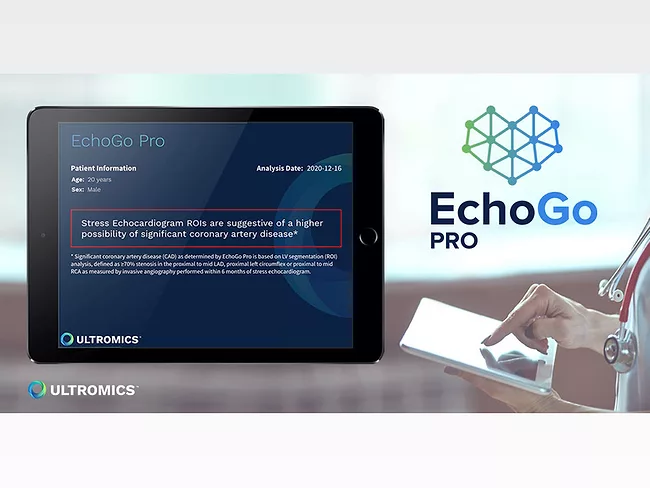
Ultromics Ltd. received U.S. FDA 510(k) clearance for its artificial intelligence-driven decision support tool for the diagnosis of coronary artery disease (CAD). Used in conjunction with a clinician's assessment, Echogo Pro's algorithms improve disease prediction and support more accurate diagnosis. Echogo Pro is a stress-Echo module in the Oxford, U.K.-based company's Echogo suite for CAD diagnosis.
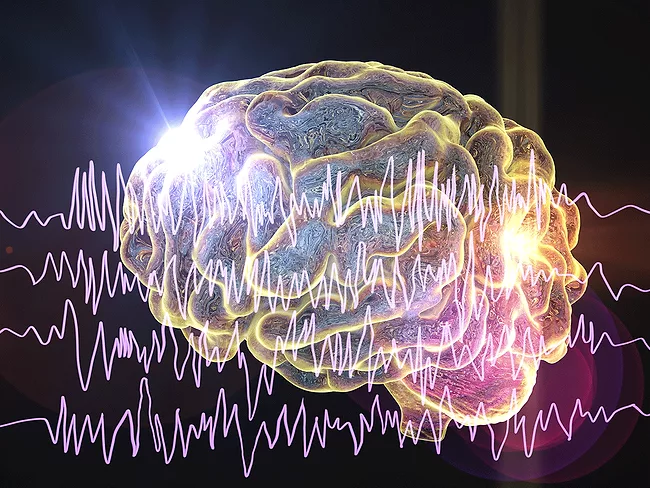
Bioserenity SAS has gained U.S. FDA clearance for the Neuronaute electroencephalography (EEG) system and Icecap EEG wearable device, which aim to help physicians remotely monitor and assess electrical brain activity of people with epilepsy. The company noted that the Icecap and Neuronaute system will facilitate access to care in a variety of settings, including rural and remote environments.
Airehealth Inc.'s management took a deep breath on hearing that the company's Vitalmed nebulizer received U.S. FDA 510(k) clearance after waiting nearly 11 months. The portable, electronic, vibrating mesh nebulizer will connect to the Orlando, Fla.-based company's diary companion app early next year as part of an integrated suite of products designed to help individuals with chronic respiratory issues track symptoms and better manage their care.
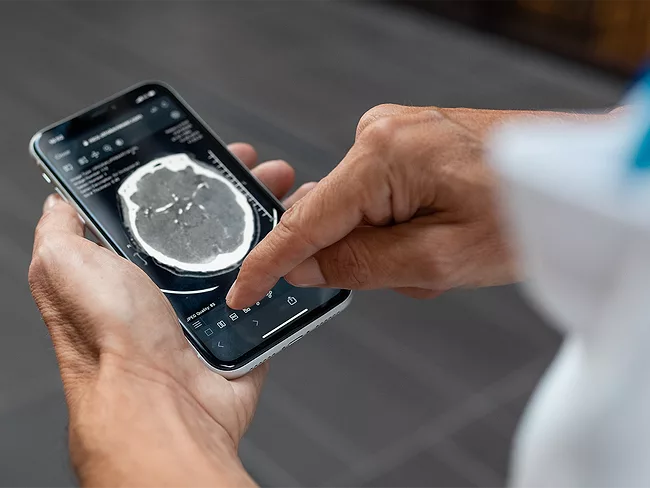
For the 795,000 Americans who suffer a stroke each year, time is brain. The U.S. FDA granted 510(k) clearance to a solution the developer says could cut time-to-treatment in stroke by an hour, preserving 3.6 years of healthy life. Nico.lab’s artificial intelligence-based CT scan analyzer, Strokeviewer LVO, uses an algorithm that enables faster triaging of stroke patients and enables physicians to see the location of occlusions in minutes.
The U.S. FDA has granted 510(k) clearance to Siemens Healthineers AG for AI-Rad Companion Organs RT, the newest module in its platform of artificial intelligence-based software assistants. The radiation therapy planning aide joins earlier AI-Rad Companion modules for interpreting magnetic resonance imaging (MRI) studies of the brain and prostate, as well as one for chest computed tomography (CT) studies.
The U.S. FDA cleared Alivecor Inc.'s Kardia AI V2 interpretive electrocardiogram (ECG) algorithm for use in its personal ECG app and devices. Currently, the Kardia line permits consumers to take a 30-second medical grade ECG at home and instantly see whether they are exhibiting symptoms of atrial fibrillation, bradycardia, tachycardia or have normal heart rhythm.

 RSS
RSS