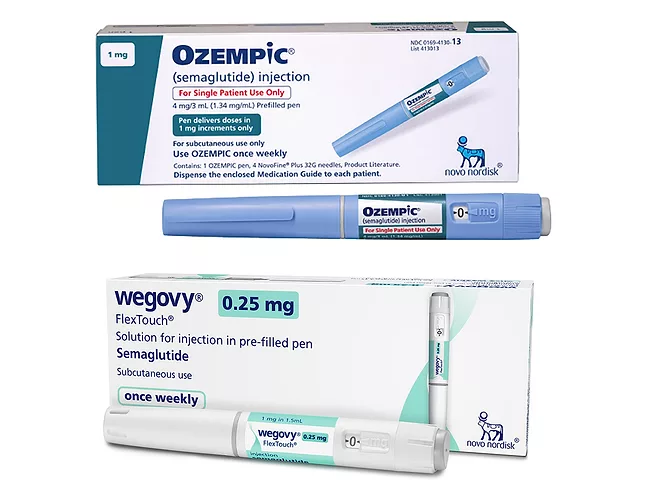
Given the demand for Ozempic and Wegovy and the revenue the GLP-1 drugs are generating for Novo Nordisk A/S in the U.S., a lot of generic companies are clamoring to cash in on the drugs’ current popularity. And there are some U.S. lawmakers more than willing to oblige.
The U.S. Court of Appeals for the Fifth Circuit revived the Pharmaceutical Research and Manufacturers of America’s (PhRMA) constitutional challenge to the Medicare price negotiations, sending it back to a federal court in Texas for a do-over.
The ever-contentious issue of drug pricing creates a tug-of-war between biopharma’s innovation machine and the general population’s need for accessible and affordable drugs. BioWorld has covered the issue of drug pricing from insulin caps and the early days of the IRA to failed legal challenges and the recent rollout of the Centers for Medicare & Medicaid Services’ negotiated prices. Read our collection of 2024 stories.
While the Biden administration continues applauding the savings it claims will be delivered by the first round of Medicare negotiations, many U.S. patients and their families are worried about the cost of the biopharma price-setting program – a cost they measure not in dollars and cents, but in worsening illness and lives that may be lost to a downturn in innovation and an upturn in barriers to access.
“For us geeks, this is the trailer. This isn’t the movie,” John Stanford told BioWorld as he reacted to the prices the U.S. Centers for Medicare & Medicaid Services announced Aug. 15 for the 10 drugs selected for the first round of negotiations under the Inflation Reduction Act. While the prices are generally in line with what was expected, Stanford said they raise more questions than answers. The rationale for those prices, which must be released by March 1, will be part 1 of the movie as it should provide some insight into the price setting, said Stanford, the executive director of Incubate, a coalition of investors in the early stage life sciences sector.
The U.S. Department of Health and Human Services (HHS) is 6-1 so far in blocking court challenges to the Medicare price negotiation program mandated by the Inflation Reduction Act (IRA). The department’s latest victory came July 31 when a federal district judge in New Jersey tossed a complaint filed by Novo Nordisk A/S, citing a lack of jurisdiction on the court’s part and the company’s lack of standing.
In denying Medicaid patients with sickle cell disease or transfusion-dependent beta-thalassemia access to Vertex Pharmaceuticals Inc.’s fertility preservation program, which is intended to counteract a side effect of the company’s gene-editing therapy, Casgevy, “the federal government now stands as the barrier between thousands of predominantly Black Americans and the necessary medical care that would protect their basic right to have biological children,” Vertex said in a lawsuit filed July 15.
The U.S. Medicare outpatient draft for 2025 is rich with applications for pass-through payment, but the draft also would boost payment for radiopharmaceuticals, a proposal that drew the applause of industry and physicians alike. The outpatient draft for CY 2025 tackles the implications of some new technologies for the pass-through payment program, but nestled in the draft rule is a proposal to pay separately for diagnostic radiopharmaceuticals.
The U.S. Department of Health and Human Services (HHS) and the FDA already are getting a glimpse of the post-Chevron world and how the Supreme Court’s June 28 unwinding of the 40-year-old Chevron deference could rein in agency policies that defy Congress’ expressed intent.
The U.S. Centers for Medicare and Medicaid Services (CMS) is rethinking its proposed “stacking rule” for determining best price in the Medicaid program.
 RSS
RSS