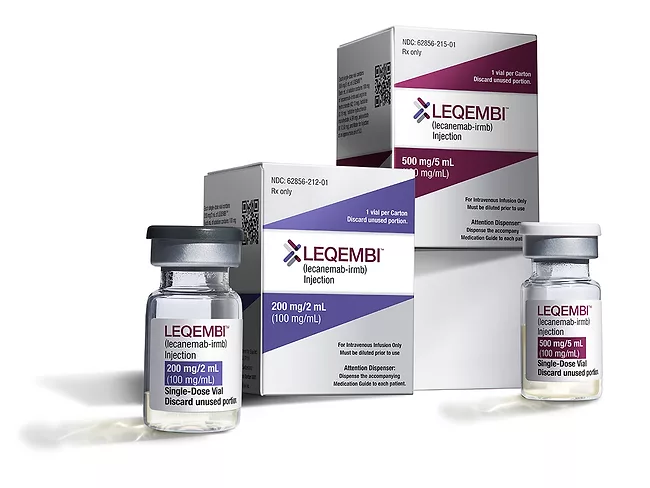
As the clock ticks toward the “full,” or traditional, approval date for Biogen Inc./Eisai Co. Inc.’s Alzheimer’s drug, Leqembi (lecanemab), the U.S. Centers for Medicare & Medicaid Services (CMS) is facing increasing pressure to get the structures in place to ensure Medicare beneficiaries have access to the drug when the approval comes.
Despite congressional concerns about accelerated approval, the U.S. FDA’s use of the pathway is not slowing down. If anything, it’s picked up pace since Congress gave the agency stronger authority last year to monitor drugs approved based on a surrogate endpoint and to ensure that confirmatory trials are progressing in a timely way.
The U.S. Centers for Medicare and Medicaid Services’ years-long musing over a streamlined coverage policy specifically for breakthrough medical devices is now taking a toll on breakthrough medications that could provide a cure or arrest the progression of debilitating diseases.
U.S. Centers for Medicare & Medicaid Services (CMS) Administrator Chiquita Brooks-LaSure made her first appearance April 26 before the House Energy and Commerce’s Subcommittee on Health, ostensibly to discuss legislative solutions to increase transparency and competition in health care. But member after member, regardless of political party, demanded answers about why CMS continues to severely restrict access to Eisai Co. Ltd.’s Alzheimer’s drug, Leqembi (lecanemab), especially since another government agency is covering it for all veterans that meet the labeling requirements.
The U.S. Centers for Medicare & Medicaid Services (CMS) has scaled back the list of Medicare Part B drugs facing the new inflation rebate under the Inflation Reduction Act for the first quarter of 2023.
The Biden administration’s budget proposal for the U.S. federal government’s 2024 fiscal year is undergoing the usual vetting in Congress, and one hearing each in the House and Senate suggest the proposal will gain little or no traction on Capitol Hill. However, supporters of the National Institutes of Health (NIH) may be cheered by the fact that one of President Biden’s own party, Rep. Rosa DeLauro (D-Conn.), blasted the proposal for offering only a 2% increase in the NIH budget, a sign that the agency will receive a substantial boost in monies yet again in FY 2024.
The U.S. Veterans Health Administration (VA) is being applauded for doing what Medicare has refused to do – provide coverage for Leqembi (lecanemab) in the early stages of Alzheimer’s disease. Under the March 13 VA decision, the Eisai Co. Ltd. drug, which was partnered with Biogen Inc. and granted accelerated approval in January, will be listed as a nonformulary therapy that must be prescribed by a VA-board certified neurologist, geriatric psychiatrist or geriatrician who specializes in treating dementia.
Despite pleas from patient advocacy groups and bipartisan pressure from the U.S. Congress, the Centers for Medicare & Medicaid Services (CMS) isn’t budging on its national coverage determination for amyloid-targeting monoclonal antibodies approved to treat Alzheimer’s.
Now that the U.S. FDA has granted accelerated approval for Biogen Inc./Eisai Co. Ltd.’s early Alzheimer’s drug, Leqembi (lecanemab), the Centers for Medicare & Medicaid Services (CMS) is being pressured to rethink its coverage of amyloid-targeting monoclonal antibodies.
A trio of proposed Medicare drug payment models that made a Feb. 14 debut in the U.S. is playing to mixed reviews. Two of the models to be tested by the U.S. Centers for Medicare & Medicaid Services (CMS) Innovation Center seem to “address the real problems underlying prescription drug pricing – patient out-of-pocket expenses and better payment systems that reward the value a medicine brings to the patient and the overall health care system,” said John Murphy, chief policy officer for the Biotechnology Innovation Organization. But he called the third model, which is expected to restrict Medicare payment for some Part B drugs that have indications with accelerated approval, “an attack on the accelerated approval pathway,” which Congress mandated to spur investment and innovation in areas of unmet medical need.
 RSS
RSS