The U.S. FDA said postmarketing reports of neutralizing antibodies to ADAMTS13, including one reported patient death, have prompted an investigation into Takeda Pharmaceutical Ltd.’s Adzynma (apadamtase alfa), a recombinant protein product approved in 2023 for use in adults and pediatric patients with congenital thrombotic thrombocytopenic purpura.
Otsuka Pharmaceutical Co. Ltd. filed an NDA with the U.S. FDA for centanafadine (formerly EB-1020), a new nonstimulant therapy for treating attention-deficit hyperactivity disorder (ADHD) in children, adolescents and adults. Centanafadine is a norepinephrine, dopamine and serotonin reuptake inhibito formulated as a once-daily extended-release capsule.
Phrontline Biopharma Suzhou Co. Ltd. closed a $60 million pre-A+ financing round led by Lapam Investment, with participation from nine other investors. The funds raised will support Phrontline’s development of next-generation antibody-drug conjugate (ADC) candidates.
More than six years after Novartis AG’s Zolgensma was approved for children under 2 with spinal muscular atrophy (SMA) with biallelic mutations in the survival motor neuron 1 gene, the U.S. FDA cleared a new version, under the brand name Itvisma (onasemnogene abeparvovec), for those 2 and older, including teens and adults with the same mutation.
It’s been a decade since Sandoz Inc. launched Zarxio, referencing Amgen Inc.’s Neupogen (filgrastim), as the first biosimilar in the U.S. Zarxio was expected to be the beginning of a biosimilar boom that would deliver big savings by finally providing direct competition for costly biologics. Neither the pipeline nor the uptake of biosimilars has lived up to expectations, as only 6% of the 313 biologics approved by the FDA’s CDER have been targeted by biosimilars and fewer than 5% are actually competing with the follow-ons.
The U.S. FDA cleared 20 drugs in October 2025, up from 17 in September, 18 in August and 17 in July, bringing the year’s total to 181 approvals through the first 10 months. Two new molecular entities (NMEs) gained U.S. approval in October: Boehringer Ingelheim GmbH’s Jascayd and Bayer AG’s Lynkuet.
A new oral HER2-directed breast cancer therapy from Bayer AG, and its companion diagnostic from Thermo Fisher Scientific Inc., have been approved by the U.S. FDA. Hyrnuo (sevabertinib), a reversible tyrosine kinase inhibitor, was greenlit by the agency for adults with locally advanced or metastatic non-squamous advanced HER2-mutant non-small-cell lung cancer.
U.S. and European organ-on-a-chip specialty biotechnology companies are driving development of organ-on-a-chip technologies, fueled by the U.S. FDA’s decision to phase out animal testing for investigational new drugs.
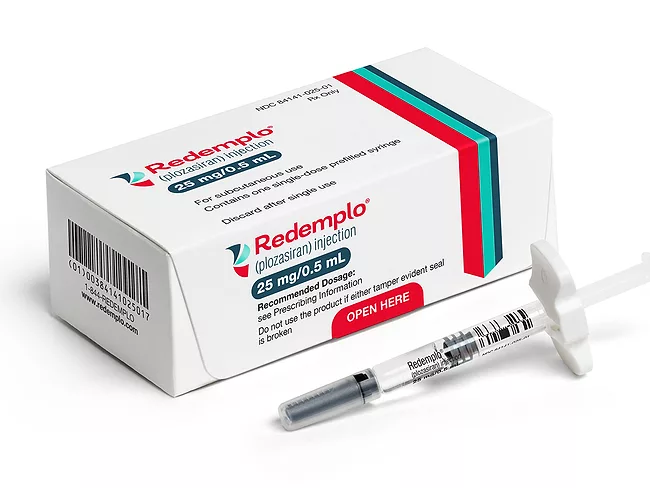
Arrowhead Pharmaceuticals Inc. won U.S. FDA approval of plozasiran in familial chylomicronemia syndrome (FCS), the second drug to gain clearance for use in the rare genetic disease following the late 2024 nod for Ionis Pharmaceuticals Inc.’s Tryngolza (olezarsen), setting up a battle in the marketplace even as the firms wage a patent dispute regarding the two RNA-based therapies.
Shanghai Henlius Biotech Inc. and Organon & Co. announced Nov. 17 that the U.S. FDA cleared Poherdy (pertuzumab-dpzb) as the first and only interchangeable biosimilar to Perjeta (pertuzumab, Genentech Inc./Roche Holding AG).

 RSS
RSS