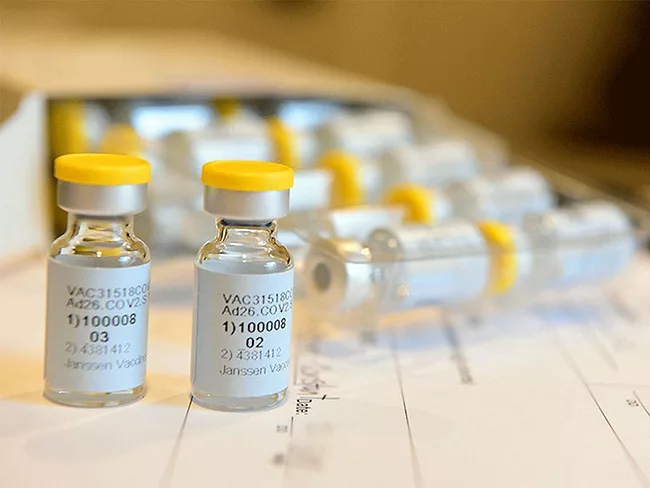
As expected, the FDA’s Vaccines and Related Biological Products Advisory Committee (VRBPAC) looked favorably upon the latest COVID-19 entry: Ad26.COV2.S, a one-shot product that emerged from the same Johnson & Johnson (J&J) platform, AdVac, that let the firm devise an Ebola vaccine cleared in Europe last year.
Test developers and the U.S. FDA are scrambling to meet the testing needs of the American public, however, it's somewhat unclear what the agency's priorities are for the emergency use authorization (EUA) program. Jeffrey Shapiro, of Hyman Phelps & McNamara, made the case that the FDA’s Center for Devices and Radiological Health (CDRH) should be more transparent about its priorities for EUA review.
As expected, the FDA granted an approval for Amondys 45 (casimersen), a new Duchenne muscular dystrophy (DMD) therapy developed by Sarepta Therapeutics Inc.
Drug and device companies dragging their feet on diversifying late-stage clinical trials could conceivably get a wake-up call in court or in FDA approval delays. A final guidance the FDA released in November suggests that the days of ignoring segments of the intended treatment population until safety signals flare in real-world use are coming to an end.
The U.S FDA’s response to the pandemic has been all-consuming, but epidemiologist Michael Mina of Harvard blasted the agency’s handling of rapid testing. Mina said the agency is in possession of emergency use authorization filings for rapid antigen tests that should be acceptable, but that the FDA is “the only bottleneck” in the rapid antigen testing pipeline.
Briefing documents released by the FDA related to the Vaccines and Related Products Advisory Committee meeting slated for Friday suggest that the COVID-19 vaccine from Johnson & Johnson (J&J) will sail smoothly to an emergency use authorization.
HONG KONG – Hansoh Pharmaceutical Group Co. Ltd. picked up the greater China rights to Scynexis Inc.’s lead candidate, ibrexafungerp. Hansoh will take charge of the development, regulatory approval and commercialization of the antifungal in exchange for a $10 million up-front payment and as much as $112 million in milestones.
Pfizer Inc. and Biontech SE submitted new data to the FDA showing its COVID-19 vaccine’s stability can be maintained at temperatures often found in pharmaceutical freezers and refrigerators: -13°F to 5°F (-25°C to -15°C).
The latest global regulatory news, changes and updates affecting medical devices and technologies, including: OIG: Noridian overpaid for facet-joint injections; Hill-Rom patient lift recalled; New legislation directed to heart valve disease.
The U.S. FDA has given a green light to Brainlab AG for two new additions to its robotic surgery systems. The agency granted 510(k) clearances for the Loop-X mobile imaging robot and the Cirq Robotic Alignment module for spine procedures, paving the way for U.S. market entry.
 RSS
RSS