Asieris Pharmaceuticals Co. Ltd. has described indole phthalocyanine compounds acting as fluorescence imaging agents with high contrast reported to be useful for the diagnosis of bladder cancer.
Sunshine Lake Pharma Co Ltd. has identified pyrimidopyridine compounds acting as GTPase KRAS (G12D mutant) inhibitors reported to be useful for the treatment of cancer.
B&A Oncomedical SAS has synthesized solute carrier family 12 member 2 (SLC12A2; NKCC1) inhibitors reported to be useful for the treatment of cancer, schizophrenia, autistic spectrum disorders, fragile X syndrome, Rett syndrome, Down syndrome, Parkinson’s disease and temporal lobe epilepsy, among others.
Genesis Therapeutics Inc. has disclosed phosphatidylinositol 3-kinase α (PI3Kα) (H1047R mutant) inhibitors reported to be useful for the treatment of cancer.
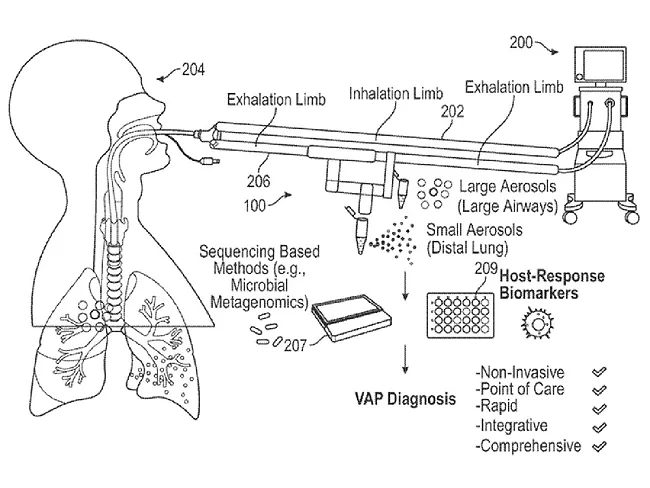
Researchers from the University of Pittsburgh have developed a device designed to collect exhaled respiratory aerosols from mechanically ventilated patients. Their device is designed to be non-invasive, highly efficient and can be readily placed in the exhalation line of ventilators without interfering in the functions of the ventilator.
Kymera Therapeutics Inc. has described salts of IL-1 receptor-associated kinase 4 (IRAK-4) degradation inducers and their crystalline forms reported to be useful for the treatment of autoimmune diseases and inflammatory disorders.
Scientists at Centre Hospitalier Regional Universitaire de Lille, INSERM and University of Lille have divulged diphenylpyrazole compounds acting as β-amyloid (Aβ) production inhibitors and autophagy marker ratio modulators reported to be useful for the treatment of Alzheimer’s disease.
Sanwa Kagaku Kenkyusho Co. Ltd. has synthesized imidazole derivatives acting as α1A-adrenoceptor agonists reported to be useful for the treatment of orthostatic hypotension and urinary incontinence.

 RSS
RSS