PERTH, Australia – Cynata Therapeutics Ltd. has regained rights to its Cymerus mesenchymal stem cell (MSC) product, CYP-001, for graft-vs.-host disease (GVHD) from former licensee Fujifilm Corp., with the two companies negotiating a new partnership under which Fujifilm will manufacture the product.
Japan’s Ministry of Health, Labour and Welfare approved Takeda Pharmaceutical Co. Ltd.’s Alofisel (darvadstrocel) to treat complex perianal fistulas in patients with non-active or mildly active luminal Crohn’s disease. This marks the first allogeneic stem cell therapy to be greenlighted in the country.
PARIS – M.A. Med Alliance SA (Medalliance), along with its Japanese partner MDK Medical, has completed enrollment following acceptance of a clinical trial notification from the Japanese Pharmaceutical Products and Medical Device Agency (PMDA) in June 2020.
PERTH, Australia – Cynata Therapeutics Ltd. has regained rights to its Cymerus mesenchymal stem cell (MSC) product, CYP-001, for graft-vs.-host disease (GVHD) from former licensee Fujifilm Corp., with the two companies negotiating a new partnership under which Fujifilm will manufacture the product.
Japan’s Ministry of Health, Labour and Welfare approved Takeda Pharmaceutical Co. Ltd.’s Alofisel (darvadstrocel) to treat complex perianal fistulas in patients with non-active or mildly active luminal Crohn’s disease. This marks the first allogeneic stem cell therapy to be greenlighted in the country.
Astellas Pharma Inc. and Seagen Inc. received approval through a priority review from Japan's Ministry of Health, Labour and Welfare for Padcev (enfortumab vedotin) to treat radically unresectable urothelial carcinoma that has progressed after chemotherapy. The green light for the antibody-drug conjugate is based on the global phase III EV-301 clinical trial, which included sites in Japan.
Nec Corp. is branching out into new health care and life science businesses, which will make use of artificial intelligence (AI) and other digital technologies. It is targeting a business value of ¥500 billion (US$4.56 billion) for these new areas by 2030. “Nec already announced this in our Mid-term Management Plan 2025 and is creating this health care and life sciences business to help drive future growth. As to why we chose 2030, it relates back to our Nec 2030VISION outlined in the plan,” an Nec spokesperson told BioWorld.
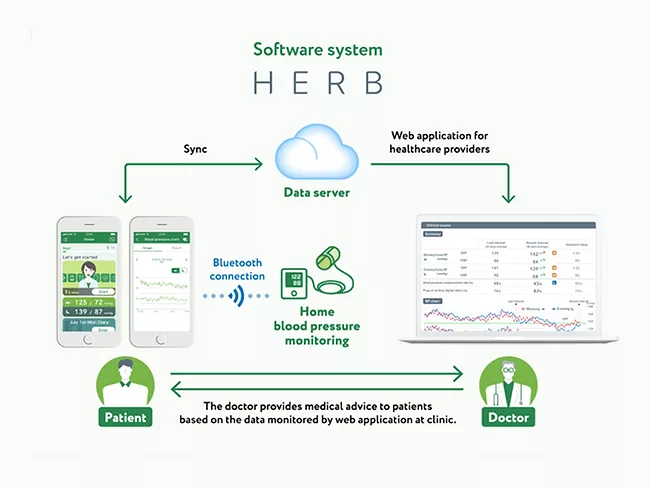
Cureapp Inc. is ready to take the next step for its digital therapeutic app (DTA) for hypertension, after completing a late-stage clinical trial and publishing the results. The company said it is the first global trial for a therapeutic app, conducted to seek regulatory approval in the field of hypertension.
PARIS – Researchers at the Institute for Surface Technologies and Photonics in Weiz, Austria, and the Institute of Scientific and Industrial Research Osaka University, Japan, have invented new ultra-flexible health monitoring patches that use harvested bio-mechanical energy. “These new devices represent a wireless e-health patch for accurate pulse and blood pressure monitoring,” Andreas Petritz, from the Institute for Surface Technologies and Photonics (the materials research unit of Joanneum Research FmbH), told BioWorld.
The Tokyo University of Science (TUS) has developed a self-powered diaper biosensor that can monitor urine sugar levels, which could be a boon for both diabetic patients and their caregivers. Caregivers at nursing homes currently open patients’ diapers every few hours to check for urination, thus increasing the caregivers’ workload. The psychological impact on the patient is also increased, for example when their sleep is disturbed.

 RSS
RSS