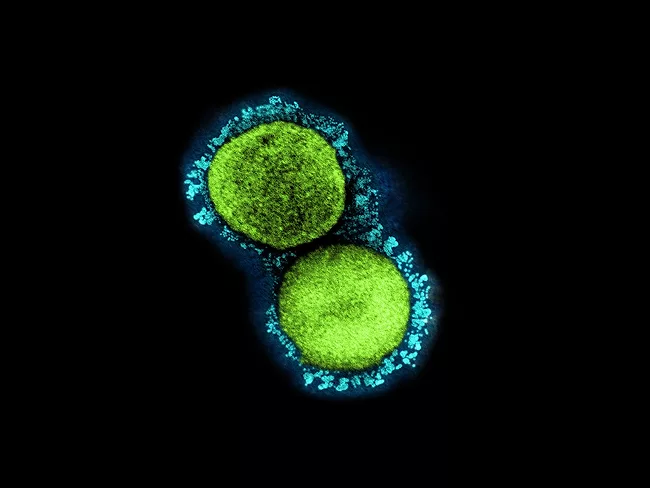
Shemyakin Institute of Bioorganic Chemistry has synthesized perylenylethynylphenol derivatives acting as photosensitizers for photodynamic therapy reported to be useful for the treatment of SARS-CoV-2 infection (COVID-19).
Researchers from the Institute for Basic Science of Korea and collaborating institutions have designed a new class of peptide-based inhibitors targeting a crucial interface within the SARS-CoV-2 replication complex, offering a potential new avenue for antiviral therapy.
Scientists at the Institute of Organic Chemistry and Biochemistry of the Czech Academy of Sciences have synthesized nonstructural protein 14 (NSP14) (coronavirus) inhibitors reported to be useful for the treatment of coronavirus acute respiratory syndrome.
Consejo Superior de Investigaciones Científicas (CSIC) has synthesized antiviral compounds reported to be useful for the treatment of coronavirus acute respiratory syndrome.
After more than three years of discussion, the World Health Organization’s Intergovernmental Negotiating Body (INB) has agreed on a proposal to prevent, prepare and respond to a pandemic. The plan is born, the INB proposal said, out of inequities around the world that slowed timely and equitable access to health products to respond to the COVID-19 pandemic.
At the recent European Society of Clinical Microbiology and Infectious Diseases (ESCMID) meeting in Vienna, Longhorn Vaccines & Diagnostics LLC presented data on the neutralizing antibody responses of LHNVD-202, an unconjugated composite peptide vaccine.
Yeda Research and Development Co. Ltd. has divulged broad-spectrum coronavirus entry inhibitors reported to be useful for the treatment of SARS-CoV-2 infection (COVID-19), SARS-CoV infection and Middle East respiratory syndrome coronavirus (MERS-CoV) infection.

 RSS
RSS