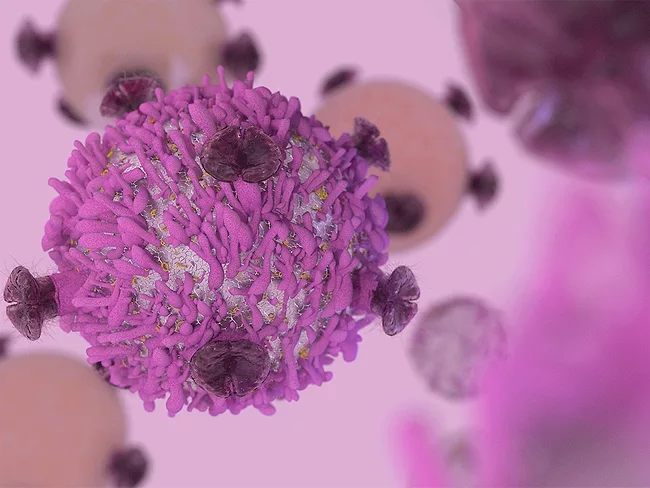
Astrazeneca AB has reported new antibody-drug conjugates (ADCs) comprising an antibody or antigen-binding fragment covalently linked to cytotoxic drug potentially useful for the treatment of cancer.
T-cell engagers (TCEs) drive synthetic antitumor immunity by bypassing endogenous T-cell priming and directly inducing tumor cell killing. In prostate cancer, targeting prostate-restricted antigens such as STEAP2, combined with CD8-guided TCE formats that favor cytotoxic T-cell engagement, offers a strategy to reduce cytokine release while maintaining antitumor activity.
Evolveimmune Therapeutics Inc. has announced the nomination of a development candidate against a solid tumor target as part of its ongoing partnership with Abbvie Inc., triggering an $18 million milestone payment to Evolveimmune.
Cervical cancer (CaCx) remains one of the most frequent female malignancies, causing over 300,000 deaths every year. Persistent infection with high-risk human papillomaviruses (HPV), particularly HPV16 and HPV18 strains, drives oncogenesis and tumor maintenance through continual expression of HPV oncogenes E6 and E7. A potential strategy to overcome limitations of current treatments is the development of targeted therapies that exploit alterations in gene expression in CaCx.
A joint Ajax Therapeutics Inc. and Dana-Farber Cancer Institute Inc. patent divulges new JAK2 degradation inducers intended for use in the treatment of polycythemia vera, myeloid leukemia and essential thrombocythemia.
AN2 Therapeutics Inc. has synthesized boron heterocycle-containing compounds acting as ectonucleotide pyrophosphatase/phosphodiesterase family member 1 (ENPP1) inhibitors. They are designed for potential use in the treatment of cancer, hypophosphatasia, infections, metabolic, autoimmune and autoinflammatory diseases.
Gilead Sciences Inc. has identified new GTPase KRAS G12D mutant inhibitors and proteolysis targeting chimeras (PROTACS) comprising an E3 ubiquitin ligase-binding moiety covalently linked to a GTPase KRAS G12D mutant-targeting moiety potentially useful for the treatment of cancer.
Bristol Myers Squibb Co. (BMS) has disclosed new Ikaros family zinc finger protein 1 (IKZF1, Ikaros), IKZF2 (Helios), IKZF3 (Aiolos) and/or IKZF4 (Eos) degradation inducers potentially useful for the treatment of cancer.
Researchers from Hangzhou DAC Biotechnology Co. Ltd. reported preclinical efficacy data for DXC-016, a next-generation, subcutaneously administered, dual-payload c-Met-targeting antibody-drug conjugate (ADC) derived from the DXA-016 anti-c-Met nanobody.

 RSS
RSS