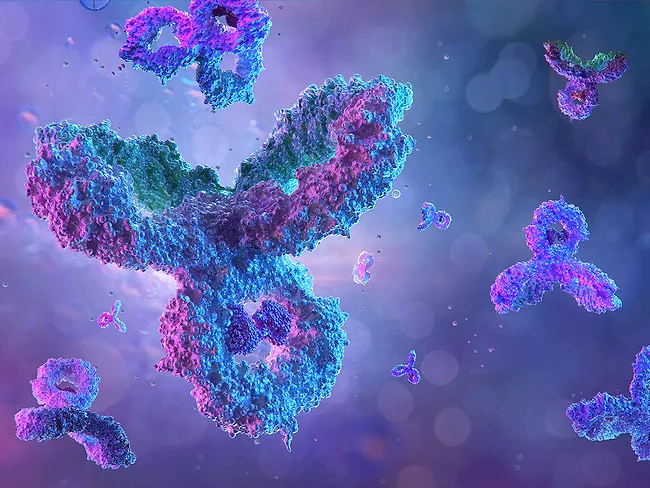
Granite Bio AG has emerged from stealth with $100 million in series A and B funding and a focus on developing first-in-class antibodies that target the root causes of a variety of inflammatory, autoimmune and fibrotic conditions.
Hepaitech (Beijing) Biopharma Technology Co. Ltd. has described Mas-related G-protein coupled receptor member X4 (MRGPRX4; SNSR5; SNSR6) antagonists reported to be useful for the treatment of anemia, fungal infections, HIV infections, renal disorders, liver diseases, psoriasis, pruritus and urticaria, among others.
Aclaris Therapeutics Inc. has gained IND clearance from the FDA for ATI-052, a bispecific anti-thymic stromal lymphopoietin (TSLP)/interleukin-4 receptor (IL-4R) monoclonal antibody being developed to treat certain immuno-inflammatory diseases. A phase Ia/Ib trial, including a proof-of-concept portion in an undisclosed indication, will begin in the current quarter.
CC chemokine receptor 6 (CCR6) is a G-protein coupled receptor involved in guiding immune cells through the body and the hallmark receptor for T helper 17 (Th17) cells, and is also expressed in other immune cell populations, such as B cells and innate lymphoid cells, among others.
Shanghai Pharmaceuticals Holding Co. Ltd. has identified C-C chemokine receptor type 4 (CCR4) antagonists reported to be useful for the treatment of asthma, allergic rhinitis, atopic dermatitis, cancer, systemic lupus erythematosus, rheumatoid arthritis and drug-induced rash.
Resvita Bio Inc.’s RVB-003 has been awarded orphan drug designation by the FDA for the skin disorder Netherton syndrome. RVB-003 was previously granted rare pediatric disease designation.
At this week’s American Chemical Society Spring meeting, Galderma SA reported the discovery of novel, oral and selective macrocyclic inhibitors of protein kinase C θ (PKCθ) for the potential treatment of atopic dermatitis (AD) and psoriasis.
Researchers from Anew Therapeutics Pte Ltd. recently detailed the discovery of novel oral IL-17A small-molecule inhibitors as candidates for the treatment of psoriasis.
Atopic dermatitis (AD) is mainly triggered by immune dysregulation, barrier dysfunction and inflammation propagation, and chronic itching increases the susceptibility to infections.
 RSS
RSS