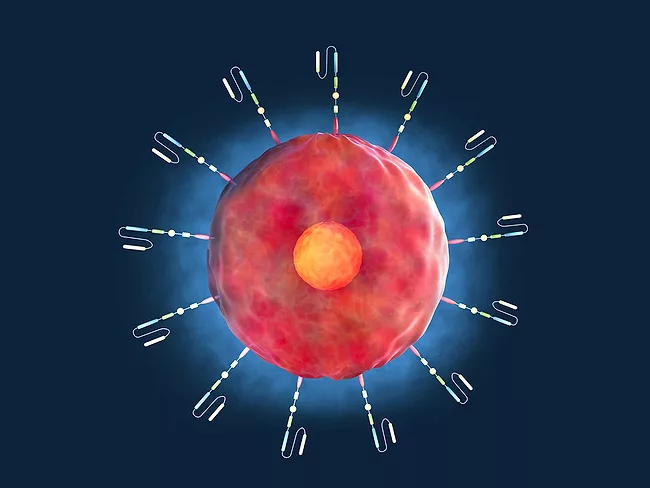
As the many challenges facing cell therapies are being addressed, the CAR T field continues to evolve beyond its original design of T cells engineered to target hematological malignancies. During the 32nd Annual Congress of the European Society of Gene and Cell Therapy (ESGCT), held in Seville Oct. 7-10, several studies showed how this technology is being redefined as programmable and adaptable immune cells with expanded functional versatility.
When Robert Kennedy Jr. announced the cancellation of 22 projects related to mRNA vaccines and the end of new investments in that technology, the U.S. Secretary of Health only mentioned their use against respiratory viruses, without referring to other applications. The vaccines whose safety and effectiveness Kennedy is questioning are based on the same molecular principles as cancer vaccines under development. “Continued investment in mRNA technology is essential to fully realize its potential in oncology and ensure that promising strategies like neoantigen-based vaccines reach clinical application.” Kazuhiro Kakimi, professor at the Department of Immunology at Kindai University Faculty of Medicine, told BioWorld.
In August, a press release from HHS announced the cancellation of 22 vaccine research projects based on mRNA, the latest available technology aimed at developing therapies for viral infections, cancer, and genetic conditions. What happens to mRNA innovation when funding dries up? This series explores how reductions in funding could impact mRNA technology, affecting innovation, research and future therapies.
A little-known tissue composed of a cluster of immune cells could offer novel insights into the development of neurological disorders. Meninges' immune system changes with age and neurodegeneration. Are they protecting the brain or fueling disease?
An experimental gene therapy based on the prime editing technique could become an effective treatment for alternating hemiplegia of childhood, a severe and currently incurable rare disease. David Liu’s lab at the Broad Institute, the inventor of this gene edition methodology, together with scientists from The Jackson Laboratory, successfully reversed the effects of five mutations associated with this disorder in a mouse model.
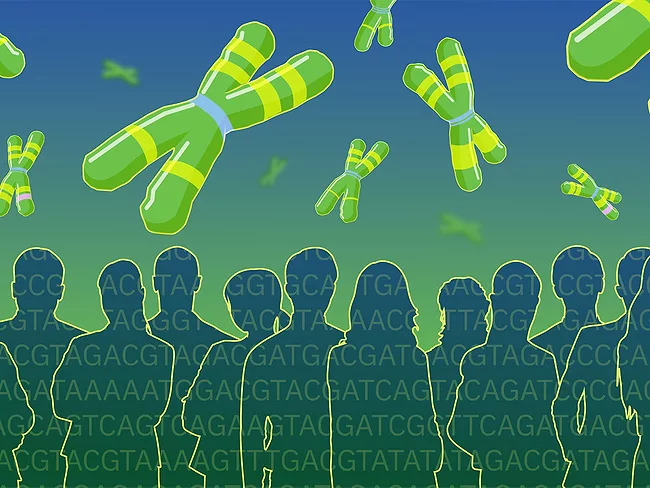
The human genome has yielded another round of secrets with the publication of two back-to-back papers in Nature on July 23, 2025. Both studies re-sequenced probands from the open-access 1000 Genomes Project, which was one of the first projects to sequence individuals from diverse populations. While one paper “goes very deep and tries to reconstruct a few genomes to basically near completion,” the other specifically looked at structural variants in a larger number of genomes. Together, they give new insights into genome variation.
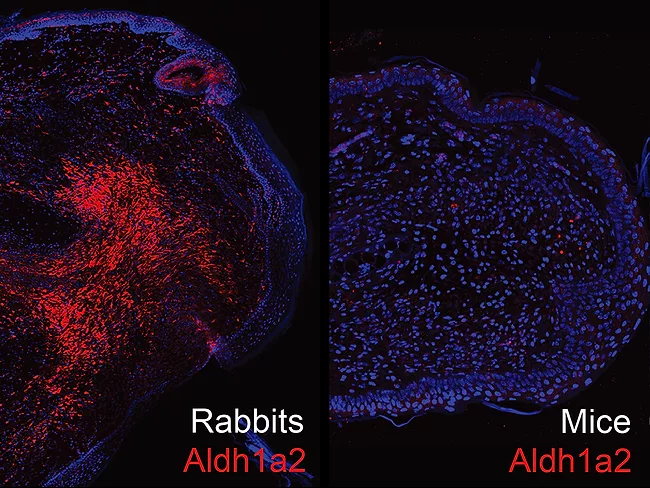
Lizards, zebrafish, salamanders and tritons can regrow a tail, a fin, or even an entire limb after amputation. Cut a planarian into pieces, and you will end up with a bunch of them. Researchers at the National Institute of Biological Sciences in Beijing have discovered a genetic switch linked to vitamin A. After activating this pathway, they managed to regenerate the ear pinna of a mouse, an animal that previously lacked this ability.
Using a customized gene editing therapy, researchers at the Children’s Hospital of Philadelphia have reported success in treating an infant with a severe metabolic disorder. Kiran Musunuru, Barry J. Gertz Professor for Translational Research in the University of Pennsylvania’s Perelman School of Medicine, presented the case at the American Society of Gene and Cell Therapy’s 2025 annual meeting. The case study was simultaneously published in The New England Journal of Medicine.
“I’m a pediatrician in metabolic diseases, and every day in my clinical work I’m confronted with our lack in effective therapies for our patients.” That was the sobering introduction by Sabine Fuchs in her talk at the 2025 Congress of the European Association for the Study of the Liver in Amsterdam this week. The nature of metabolic diseases makes it difficult to develop treatments for them. “There are over 1,500 diseases known by now, and it is just very difficult to develop therapies for each and every individual rare disease.”
Researchers from Pretzel Therapeutics Inc. and the University of Gothenburg have published new insights on how mutations in the POLG gene affect its functionality and are tied to PolG diseases. They have also presented a compound for its potential treatment, PZL-A. They published their results in Nature on April 9, 2025.

 RSS
RSS