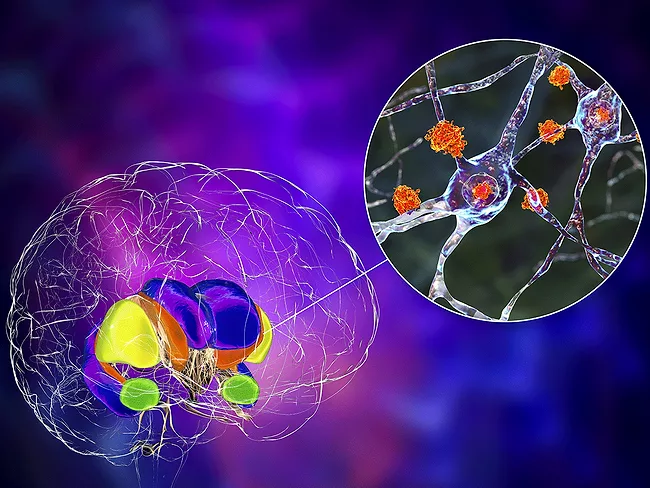
The gene for Huntington’s disease “was cloned in 1993, and everyone thought there was going to be a treatment right around the corner,” Sarah Tabrizi told the audience at the 2023 Annual Meeting of the Society for Neuroscience. Then, “it took 25 years for the first trial targeting the Huntington gene.”
Investigators at the Chinese Academy of Sciences have generated a chimeric monkey by injecting an embryonic stem cell into the morula, which is an extremely early embryo consisting of 16 to 32 cells. The animal survived for only 10 days, and it is not the first live birth of a chimeric primate. But it is the first such chimera with contributions from an embryonic stem cell, and that stem cell contributed a far higher proportion of cells in the newborn than have been achieved in previous attempts at creating chimeras.
The largest genetic analysis of abdominal aortic aneurysm (AAA) carried out to date has identified almost 100 new risk variants linked to the disorder. The study also highlighted a possible therapeutic target for this pathology that, at the moment, has no treatment. AAA affects 4% of people over 65 years of age in the U.S. and causes 41,000 deaths per year. The incidence is three to four times higher in men than in women.
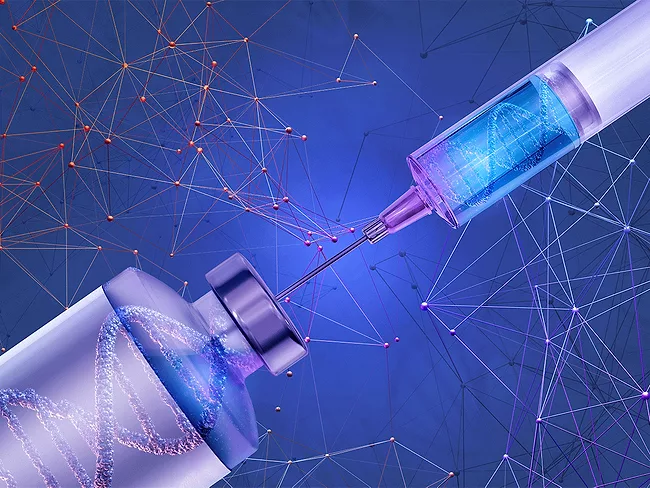
At the 30th Annual Congress of the European Society for Gene and Cell Therapy in Brussels this week, researchers presented both preclinical and clinical strategies for applying gene therapy to a functional HIV cure. At a Wednesday session on Infectious Diseases & Vaccines, Alessio Nahmad, of Tabby Therapeutics Ltd., described using B cells edited to express broadly neutralizing antibodies (bnAbs) 3BNC117 to deliver high titers of antibodies in mice.
The Congress of the European Society of Medical Oncology (ESMO) held in Madrid from Oct. 20 to 24, 2023, could well add the letter W to its acronym after the four sessions on gynecological cancer that could represent a milestone in the lives of all women who suffer from cervical, ovarian, or endometrial cancer.
Some cancers with a poor prognosis have had no new treatments in decades. Advances in the genetic characterization of these tumors now offer a range of possibilities for the development of new therapies that could completely change the quality of life and survival of these patients.
Cancer treatments for targeting tumor amplifications lag behind those targeting point mutations – and part of the reason may be that amplifications often reside on extrachromosomal DNA (ecDNA). Since ecDNA was first described back in 1965 as minute chromatin bodies in brain cancer cells, the use of large-scale DNA sequencing techniques has revealed the presence of ecDNA across a wide range of cancer types. “The circular structure of ecDNA is associated with increased proto-oncogenic capacity in comparison to linear amplifications. Another key feature is that ecDNA does not contain centromeres,” Roel Verhaak, from Yale School of Medicine, told the audience in a session at the 2023 AACR-NCI-EORTC Conference on Molecular Targets and Cancer Therapeutics in Boston.
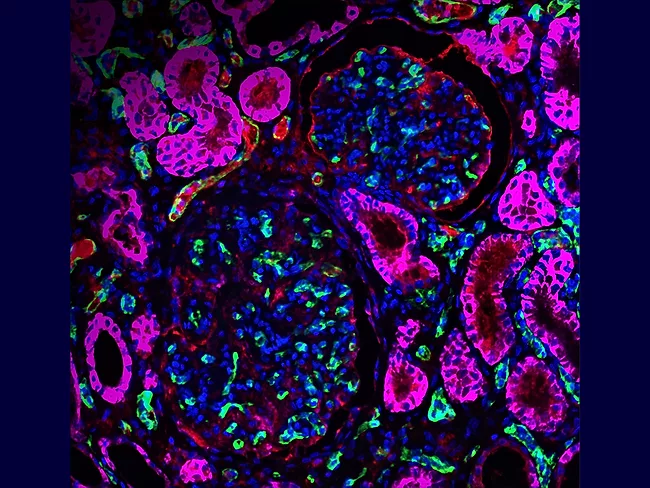
Scientists at Egenesis Inc. have transplanted kidneys from genome-edited pigs into cynomolgus monkeys that remained functional for long periods after transplantation. The monkeys, whose own kidneys were removed during the surgery, survived for a median of 176 days after receiving one pig kidney. Maximal survival was just over 2 years. The data were published today in Nature. Egenesis CEO Mike Curtis told reporters that the study has achieved the longest survival to date “using clinically translatable immunosuppression … longer survival has been achieved using really aggressive immunosuppression that really isn’t clinically translatable.”
For most psychiatric illnesses, the precipitating event is mysterious. Many conditions are thought to result from a mix of genetic risk and environmental factors, but the specific trigger remains unknown. In post-traumatic stress disorder (PTSD), the environmental trigger is usually clear. In many cases, it is all the affected individuals can think about. “Intrusive reliving” of the triggering situation is one of the core features of PTSD.
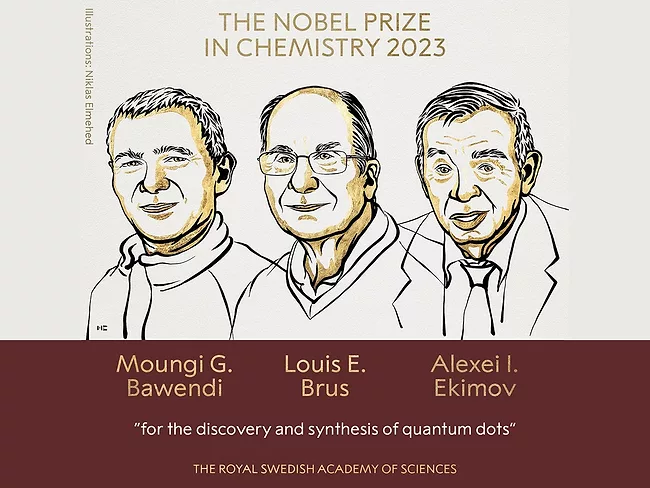
Quantum dots, a phenomenon in quantum physics that alters the energy of electrons and changes the properties of particles, caught the attention of the Royal Swedish Academy of Sciences (KVA) for the 2023 Nobel Prize in Chemistry. Alexei Ekimov and Louis Brus received the award for their discovery; Moungi Bawendi, for developing its applications. With their work, “in equal shares,” said the Secretary General of KVA Hans Ellegren, the three scientists have laid the foundations of nanotechnology, a tool that we see today in our homes, on televisions and LED lamps, or in laboratories and hospitals for designing new drugs or new strategies against cancer.
 RSS
RSS