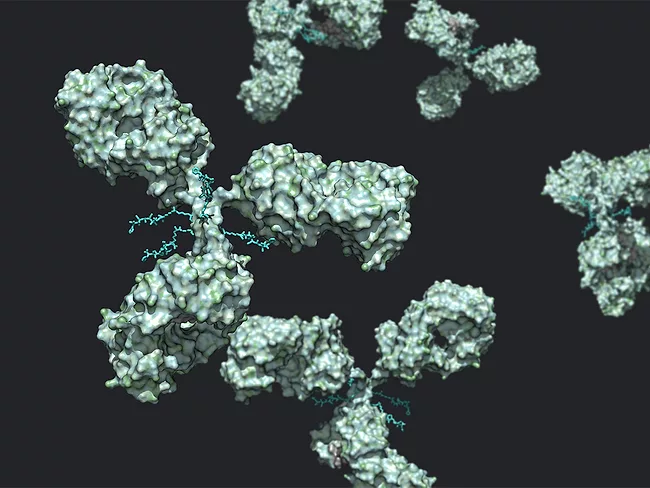
Essential Pharma Ltd. is paying up to £70 million (US$88.7 million) to acquire Renaissance Pharma Ltd., taking ownership of Hu14.18, a treatment for high-risk neuroblastoma. The antibody has completed a 64-patient phase II trial conducted by St Jude’s Children’s Research Hospital, in which it showed an improvement in overall survival of around 50% compared to currently available therapies.
A day after investing $40 million in China’s D3 Bio Inc., London-based venture capital firm Medicxi is investing $25 million to co-found a new U.K.-based company called Petalion Therapeutics Ltd. that will focus on an early stage oncology asset from Australia’s Starpharma Holdings Ltd. to develop novel dendrimer-based treatments.
Sino Biopharmaceutical Ltd. and Boehringer Ingelheim International GmbH are partnering to develop innovative cancer therapies in mainland China. They will jointly develop and commercialize three clinical Boehringer assets, including brigimadlin, zongertinib, BI-764532, and other unnamed early stage assets.
Investors might not have been overly excited, but Genmab A/S executives enthused about the “complementarity” of its proposed acquisition of antibody-drug conjugate (ADC) specialist Profoundbio Inc. for $1.8 billion in cash. The deal, expected to close in the first half of 2024, marks the biggest by far for the Copenhagen, Denmark-based biopharma and the latest transaction for the red hot ADC space.
Jumping in for the first time to the hot antibody-drug conjugate (ADC) space, Paris-based Ipsen SA pulled in exclusive global rights to a preclinical ROR1-targeting candidate from Sutro Biopharma Inc. in a deal worth up to $900 million. STRO-003, the first ADC to join Ipsen’s portfolio, contains an anti-ROR1 human IgG1 antibody (SP-11385) conjugated to an exatecan warhead, or payload.
South Korean confectionary giant Orion Holdings Inc. has completed the acquisition of antibody-drug conjugate developer Ligachem Biosciences Inc., which recently changed its name from Legochem Bioscience Inc.
South Korean biosimilar-focused Alteogen Inc. said on March 27 that Chung Hye-shin, former chief strategy officer (CSO) and co-founder, sold 1.6 million of Alteogen shares for ₩316.4 billion (US$234.24 million) to foreign institutional investors.
In a potential watershed moment for South Korea’s Hanmi Group, a hair-splitting vote at the 51st shareholder meeting favored the two sons of the late founder and Chairman Lim Sung-ki, effectively halting a merger between Hanmi and OCI Holdings Co. Ltd.
Xilio Therapeutics Inc. retreated with its lead oncology IL-2 drug, XTX-202, after phase II data indicated stable disease was the best response, prompting the company to reprioritize its pipeline and cut its workforce by 21% – but investors focused more on a $647.5 million IL-12 program deal the company signed with Gilead Sciences Inc., as well as an $11.3 million private placement financing.
Nuvation Bio Inc. said on March 25 it will acquire Anheart Therapeutics Ltd., a U.S.- and China-based precision oncology company, in an all-stock transaction, adding Anheart’s ROS1-inhibiting lung cancer drug, taletrectinib (AB-106), to its pipeline.

 RSS
RSS