The U.S. FDA’s recent switch toward more routine use of generalist field investigators might be seen in some quarters as an attempt to do more with less, but a session on the topic at the Food and Drug Law Institute’s annual enforcement conference in Washington seems to suggest that this reversal of historic practice presents at least as many problems as solutions for industry.
Disorganization resulting from last-minute changes to voting questions involving new recommendations for hepatitis B virus vaccines created a moment of déjà vu Dec. 4 when the CDC’s Advisory Committee for Immunization Practices (ACIP) voted 6-3 to once again delay its votes on whether the current recommended birth dose should be pushed back.
One of the sessions at this year’s Food and Drug Law Institute’s enforcement conference dealt with the use of AI for FDA compliance activities, but the question of AI legislation also arose. The problem with AI legislation, said Nathan Brown of Akin Gump, is how to manage the details of any legislation, which presents enough drag that federally preemptive legislation stands a faint chance of passage anytime soon.
The U.S. FDA granted accelerated approval for the Biologics License Application for Axogen Inc.'s Avance, an acellular nerve allograft that serves as a scaffold for nerve regrowth, for treatment of patients with sensory, mixed and motor peripheral nerve discontinuities. The company expects Avance to be commercially available in the second quarter of 2026.
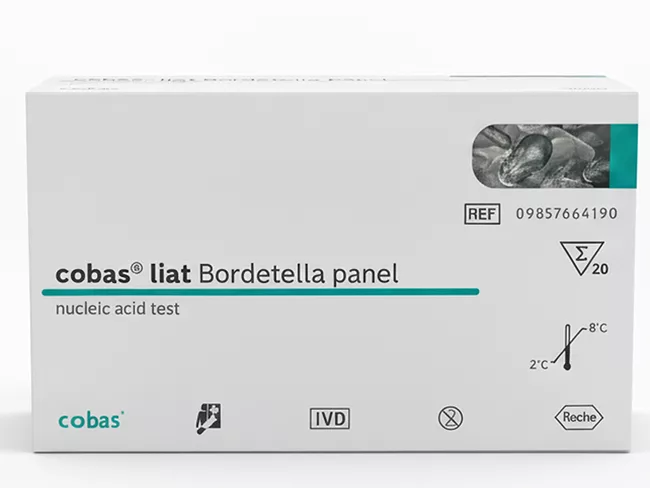
Roche AG received regulatory clearance from the U.S. and European authorities for a new diagnostic test that detects Bordetella infections, including whooping cough, as cases surge globally. The point-of-care test, which delivers PCR-accurate results in just 15 minutes, will help health care providers to quickly identify infections and act to prevent severe complications, onward transmission and deaths.
The FDA’s Center for Devices and Radiological Health (CDRH) will have its hands full with the roll-out of the overhauled quality management regulation, but this will have ripple effects on industry as well. Keisha Thomas, associate director for compliance and quality at CDRH, told an audience in Washington DC that risk management will be a big focus in FDA oversight and inspections in 2026, a point of emphasis that could lead to more routine compliance and enforcement action.
So much for stability at the U.S. FDA. Three weeks after accepting the position as director of the FDA’s CDER, Richard Pazdur has informed the agency of his intention to retire at the end of the year.
The U.S. Centers for Medicare & Medicaid Services has posted the home health final rule for calendar year 2026 and has established a framework for competitive bidding for products such as continuous glucose monitors, a move that is struggling to find support among stakeholders.
The U.K. National Institute for Health and Care Excellence announced an increase in the cost effectiveness thresholds for its health technology assessment program, but this new threshold falls far short of where the figure should be when adjusting for inflation.
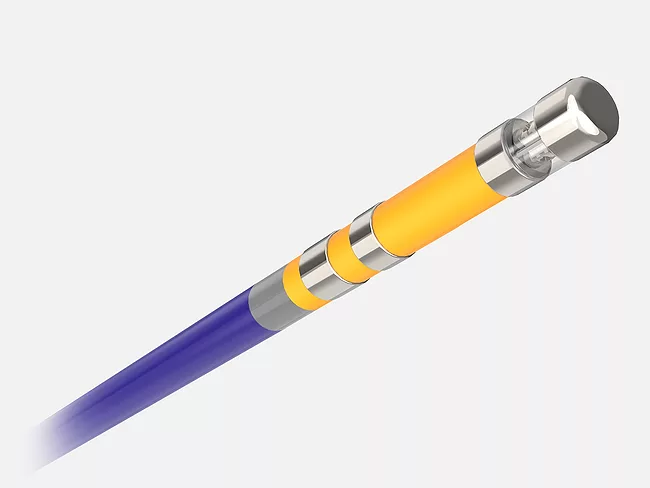
Proving its latest addition to the Farapulse pulsed field ablation (PFA) platform is no turkey, Boston Scientific Corp.'s Farapoint PFA catheter received CE mark as the U.S. celebrated Thanksgiving. Farapoint is indicated for ablation of the cavotricuspid isthmus, specifically to treat right atrial flutter.

 RSS
RSS