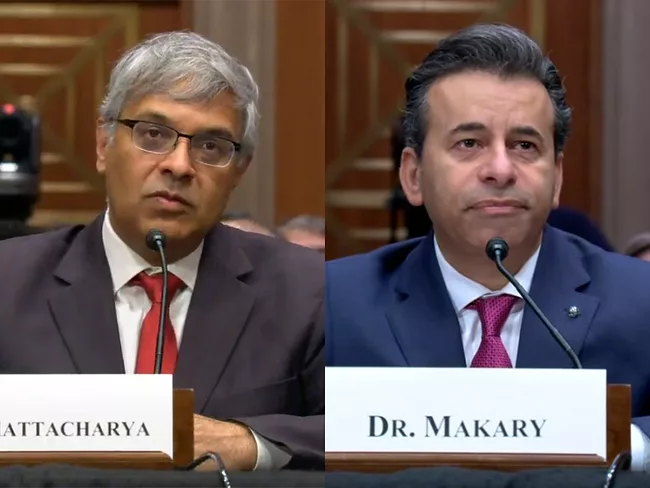
As expected, the U.S. Senate Health, Education, Labor and Pensions Committee voted March 13 to send the nominations of Jay Bhattacharya as NIH director and Martin Makary as FDA commissioner to the Senate floor for confirmation. Bhattacharya received a narrow 12-11 party-line vote, but Makary picked up some Democratic support to secure a 14-9 vote.
Shortly before the Senate Health, Education, Labor and Pensions Committee was to hold the first ever confirmation hearing for a U.S. CDC director March 13, it issued a statement saying the hearing was canceled due to the White House withdrawing its nomination of Dave Weldon, a physician and former congressman from Florida.
Med-tech happenings, including deals and partnerships, grants, preclinical data and other news in brief: Helius, Liquid Biosciences, Lucid, Mainz, Olympus, Revelation Neuro, Ziosoft.
Regulatory snapshots, including global submissions and approvals, clinical trial approvals and other regulatory decisions and designations: Ecential Robotics, Femasys, Lifeward, Paragonix Technologies, Perfuze, Spineart.
After scrapping plans for an IPO in 2022, Hinge Health Inc. is taking a more favorable view of going public given the increased support seen for health care and med-tech stocks in recent months. The San Francisco-based company, a digital provider of physical therapy services, filed a form S-1 with the U.S. SEC stating it plans to offer an unspecified number of shares of class A common stock on the New York Stock Exchange this year.
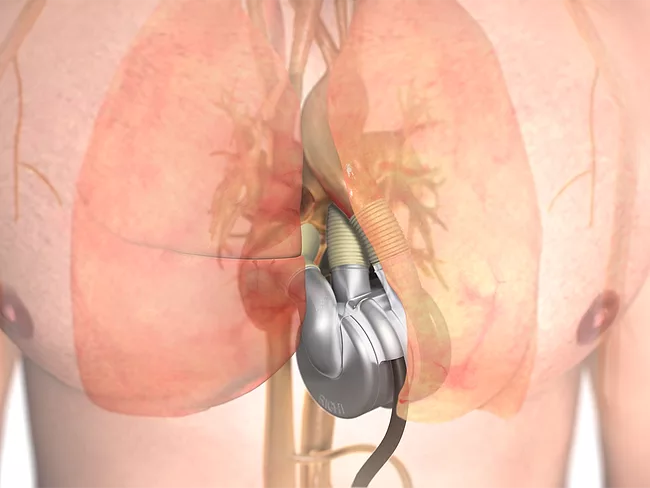
An Australian man in his 40s with severe heart failure was implanted with a Bivacor Inc. total artificial heart (TAH) and has been discharged from the hospital. He remained at home with the artificial heart for 100 days until he received a transplant earlier this week.
The U.S. FDA’s January 2025 draft guidance for test validation in public health emergencies drew only six responses, but pointed responses they were, indeed. As an example, the Association for Molecular Pathology (AMP) said the draft’s recommendation for the use of 30 positive and 30 negative (30/30) samples for validation of lab-developed tests is likely to hamper test availability in an emergent situation, a time when samples are likely to be difficult to obtain.
Looking to shave $65 million from its annual expenditures while streamlining the first stage of its two-level grant review process, the U.S. NIH is proposing to centralize the peer review of all applications for grants, cooperative agreements and R&D contracts within its Center for Scientific Review.
 RSS
RSS