Neuracle Medical Technology Co. Ltd. is seeking a Shanghai IPO that could make it China’s first publicly listed invasive brain-computer interface (BCI) company, months after winning approval for the country’s first invasive BCI system.
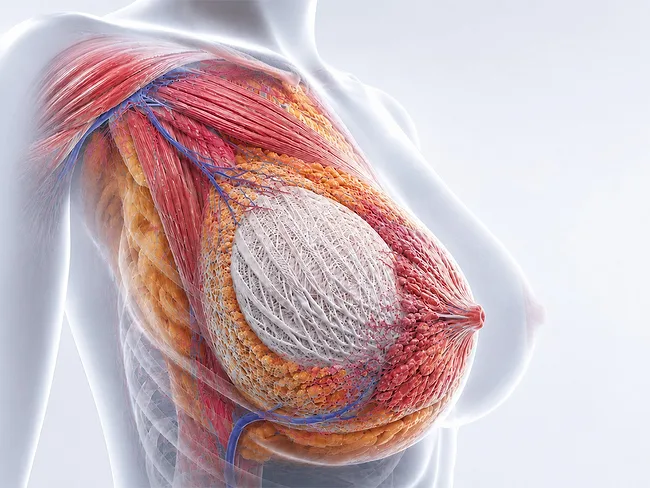
Regenerative medicine company Bellaseno GmbH is accelerating development of its absorbable breast scaffold, with a pivotal Australian trial recruiting faster than expected and a newly announced licensing deal with Johnson & Johnson subsidiary Mentor Worldwide LLC positioning the technology for global commercialization.
Neuracle Medical Technology Co. Ltd. is seeking a Shanghai IPO that could make it China’s first publicly listed invasive brain-computer interface (BCI) company, months after winning approval for the country’s first invasive BCI system.
Total med-tech financing through the first half of 2026 reached $12.28 billion, landing between 2024’s $13.94 billion and 2023’s $10.75 billion over the same period and trailing 2025’s $17.56 billion. The figure reflects a sector that is holding well above the low years of 2022 and 2023.
Regardless of whether the Republicans or Democrats come out on top in November’s midterm congressional elections, some of the state primaries in the U.S. have already guaranteed major shuffles in key House and Senate committees overseeing national health issues.
Zimmer Biomet Holdings Inc.’s deal to buy Pacira Biosciences Inc.’s Iovera system for up to $140 million and Eurobio Scientific SA’s acquisition of Caredx Inc.’s lab products business for $171.2 million are symptomatic of a broader trend among med-tech and diagnostics companies using targeted acquisitions to strengthen specific areas of their portfolio.
Deep brain stimulation (DBS) through implanted electrodes has enabled fundamentally new ways of treating certain disorders. More than 100,000 severely ill patients have received an implant to treat Parkinson’s disease, which is DBS’ greatest success story.
Roche Holding AG is looking to take a share of Illumina Inc.’s dominance in the gene sequencing market with the launch of Axelios 1, its next-generation sequencing (NGS) platform designed for accuracy, speed, flexibility, scalability and cost efficiency. The move signals a potential shift in the sequencing landscape as the technology aims to address critical bottlenecks in genomics.
Ready or not, the future has arrived. Novel AI and brain-computer interface (BCI) systems are no longer confined to the realm of science fiction. As an increasingly intertwined human-machine model moves closer to adoption in real-world clinical and military practice, technological advances are sparking concerns over public health, ethics and national security.
 RSS
RSS