The FDA program for third-party review of 510(k) applications was designed to take some of the load off the agency’s review staff and thus allow the agency to focus on more complex filings, but recent data suggest that the program has had only a modest effect on the FDA’s workload. The number of third-party reviews for the current and two previous fiscal years only modestly exceed the numbers from fiscal years 2018 and 2019, a conspicuous trend given the distractions at the FDA’s device arising from its work to manage the COVID-19 pandemic.
For the second time in four years, the FDA has issued a draft guidance for cybersecurity in premarket applications, just one of several actions undertaken recently by the U.S. federal government in connection with cybersecurity.
Pfizer Australia Holdings Pty Ltd. has made an offer to acquire digital health company Resapp Health Ltd. in all cash offer worth AU$100 million (US$74.25 million). The two companies have entered into a binding scheme that is contingent upon shareholder agreement and regulatory clearances in Australia. Shareholders will vote on the proposed acquisition in June, and directors have unanimously recommended that shareholders vote in favor of the acquisition.
Regulatory snapshots, including global submissions and approvals, clinical trial approvals and other regulatory decisions and designations: Biocardia, Boston Scientific, Novacyt, Transit Scientific.
Med-tech happenings, including deals and partnerships, grants, preclinical data and other news in brief: APR Medical, Assure Holdings, Bearpac Medical, Cline Scientific, Eaglepicher, Exergen, Infandx, Lifespin, Masimo, Resonetics, Sound United.
Telix Pharmaceuticals Ltd. has in-licensed Eli Lilly and Co.’s olaratumab antibody, agreeing to pay $5 million up front for exclusive worldwide rights to develop and commercialize radiolabeled forms of the antibody for the diagnosis and treatment of human cancers.
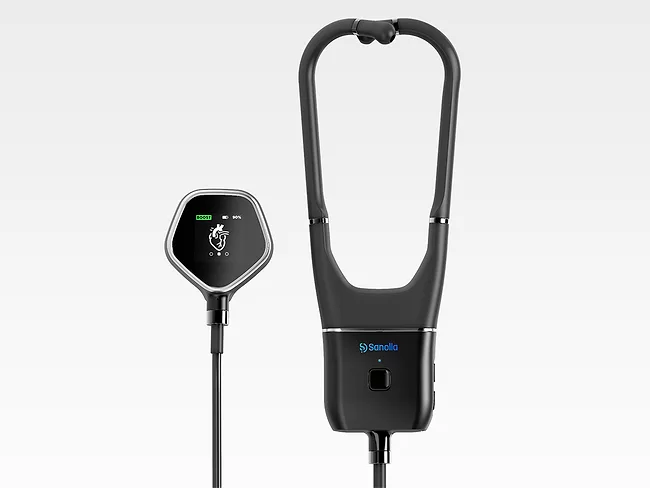
Israeli startup Sanolla Ltd. won U.S. FDA 510(k) clearance for its smart-infrasound stethoscope Voqx. The artificial intelligence (AI)-based device is the first stethoscope cleared by the U.S. FDA to detect infrasound and audible information to identify clinical conditions. The auscultation capabilities are designed to support early assessment of cardiopulmonary conditions.

 RSS
RSS