Innovent Biologics Inc. unveiled for the first time safety and efficacy data of IBI-354, an HER2 monoclonal antibody-camptothecin derivative conjugate that shows promising efficacy signals across a range of advanced solid tumors, during the European Society of Medical Oncology (ESMO) 2024 Congress. An HER2-targeted antibody-drug conjugate developed using Innovent's topoisomerase inhibitor NT3 platform, IBI-354 combines a hydrophilic linker design with a hydrophobic payload to enhance the bystander effect, targeting adjacent antigen-low or negative tumor cells.
Both the biotech industry and Hong Kong have become strategic points for China as the People’s Republic of China works to lay a biotech “belt and road” through Asia to expand global influence.
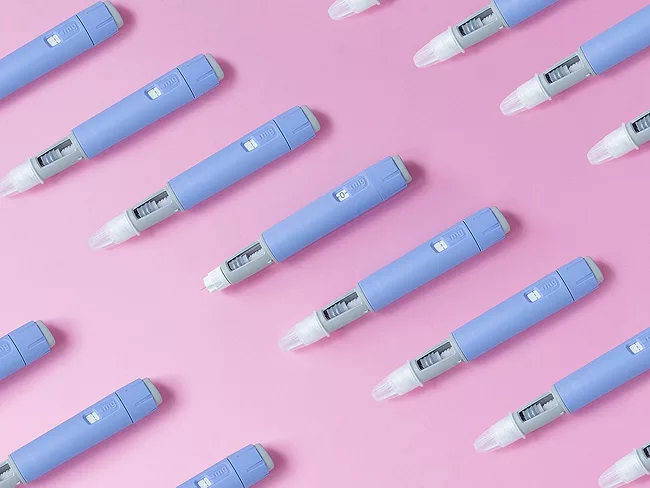
Two leading glucagon-like peptide-1 (GLP-1) receptor agonists for obesity and type 2 diabetes – Novo Nordisk A/S’s semaglutide (Wegovy/Ozempic) and Eli Lilly and Co.’s tirzepatide (Mounjaro/Zepbound) – are advancing in China after taking the U.S. market by storm.
As Novo Nordisk A/S and Eli Lilly and Co. go head-to-head in the U.S. and Chinese glucagon-like peptide-1 receptor agonists (GLP-1RA) market for diabetes and obesity, Novo Nordisk is in innovator gear once more with leading studies of GLP-1s in Alzheimer’s disease.
Chinese pharmaceutical and biotech companies are leading development of glucagon-like peptide-1 receptor agonists as Novo Nordisk A/S and Eli Lilly and Co. edge closer to launching blockbuster therapies in China. At the heart of the GLP-1 boom is a nationwide obesity problem driven by a confluence of factors, including the rise of a modern, sedentary lifestyle, according to Clarivate. Despite the rising prevalence of obesity and type 2 diabetes, the gap in obesity therapeutics is “substantial and leaves a solid market opportunity for weight loss drugs,” Karan Verma, principal analyst of healthcare research & data analytics at Clarivate, said.
Despite heightened political tensions, both Chinese and U.S. industry officials are working to strengthen ties in the health care and biotech sector, including launching strategic initiatives to foster Sino-U.S. biotech investment and M&A deals. As one of the initiatives, representatives from Hong Kong, China and the U.S. convened at the Bio Hong Kong 2024 conference to launch a global health care M&A and financial investment alliance, along with fostering company and talent growth in Hong Kong.
The Stock Exchange of Hong Kong is “all ears” to foster local biotech IPOs, speakers said at the Bio Hong Kong 2024 conference Sept. 11, and more than 60 companies have jumped on board since the introduction of the Chapter 18A listing regime in 2018.
Immvira Group Co.’s oncolytic herpes simplex virus product, MVR-T3011, showed early efficacy via intravesical administration in patients with high-risk BCG-failure non-muscle invasive bladder cancer.
With an eye on shutting down national security threats and securing American innovation, the U.S. House overwhelmingly passed the Biosecure Act Sept. 9 with a vote of 306-81. The next stop on the bill’s path to enactment is a Senate vote and, if it gets that, then on to the president’s desk.
As geopolitical tensions rise between the U.S. and China, building cross-border relationships is more important than ever, said panelists during the Chinabio Partnering Forum in Shanghai Sept. 10.
 RSS
RSS