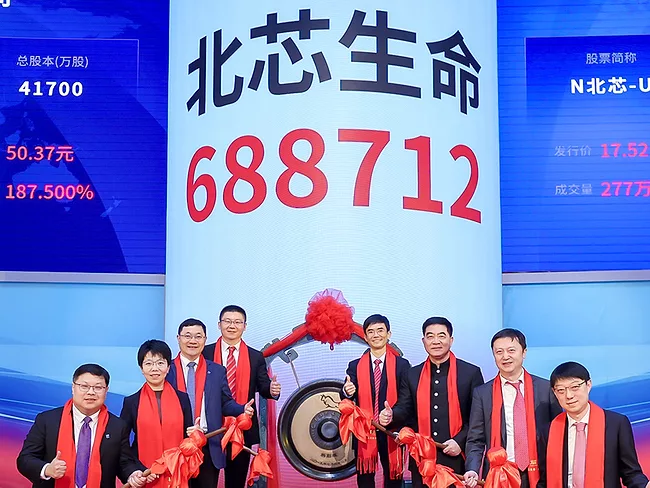
Insight Lifetech Co. Ltd. listed on the Shanghai Stock Exchange’s STAR market via an unprofitable biotech track reinstated last year, with the Feb. 5 IPO raising ¥998.64 million (US$143.93 million).
After raising $61 million in a series B round, Vibrant Therapeutics Inc. is gearing up to begin a U.S. phase I trial with its lead program, VIB-305, a masked T-cell engager (TCE) for treating EGFR-positive solid tumors.
Total biopharma financings rose to $10.79 billion in January 2026, up from $9.08 billion in December. The monthly total nearly matched the January 2024 record of $10.9 billion, far exceeding the $6.82 billion average monthly haul in 2025.
Regulatory snapshots for biopharma and med tech in Asia-Pacific, including global submissions and approvals, and other regulatory decisions and designations: Akeso, Astrazeneca, Daiichi Sankyo, Everest Medicines, Kelun-Biotech, Neurophet.
Biopharma and med-tech happenings in Asia-Pacific, including deals and partnerships, and other news in brief: 48Hour Discovery, Advancell, Arctic Vision, Biodexa, Biomica, Eisai, Eli Lilly, Everest Medicines, Evogene, Golden Age Health, Henlius, Lishan, MDCO Technology, Micot, Newsoara, Otsuka, Phase Scientific, Tenacia, Vtv, Zonsen Peplib.
Amgen Inc. quit a development deal with Kyowa Kirin Co. Ltd., returning global rights for rocatinlimab, Kyowa Kirin’s T-cell rebalancing therapy being investigated for moderate to severe atopic dermatitis.
 RSS
RSS