Masimo Corp. selected Catherine (Katie) Szyman, an industry leader with deep med-tech roots, to guide the company as it seeks to rebuild its reputation and revenues following a gritty two-year battle for control. Current CEO Michelle Brennan will serve as chairman of the Masimo board. Brennan stepped up to lead Masimo after founder and former CEO Joe Kiani resigned following a shareholder vote that ousted him from his position of board chair as part of a protracted proxy battle between Kiani and Politan Capital Management LP.
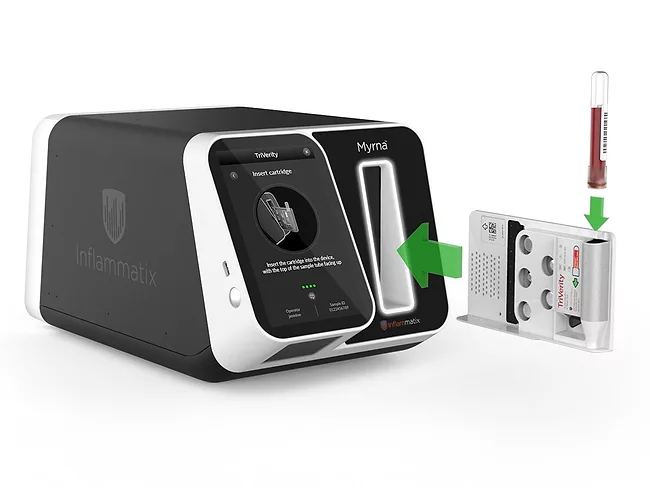
Just a few weeks later than expected, Inflammatix Inc. secured U.S. FDA clearance of the Triverity test system for use in emergency triage of patients with suspected acute infection or sepsis. The molecular blood test is the first to identify bacterial and viral infections and provide an all-cause risk evaluation of the likelihood of developing severe illness.
At least half of women experience urinary incontinence at some point in their lives but few discuss the condition with their physicians. In part, that’s because most women believe few effective treatments exist for urinary leakage – and until recently, they were right. Several advances in 2024, however, offer new hope.
The sedate uptake of pulsed field ablation (PFA) in Europe failed to presage the enthusiasm that drove the technology’s extraordinarily rapid adoption in the U.S. in 2024. Used to treat atrial fibrillation, PFA received its first U.S. FDA approval in Dec. 2023. At the time, Clarivate estimated that PFA had 7% of the global cardiac ablation market. By year-end 2024, it had 20% and Boston Scientific Corp. projected that PFA would represent up to half of the market by the close of 2025.
Timing is everything. Just days after confirming a pause in the U.S. rollout of its Varipulse pulsed field ablation (PFA) catheter, Johnson & Johnson’s electrophysiology program received an epic reprieve from European regulators who granted the company’s dual-energy Thermacool Smarttouch SF catheter CE mark.
Johnson & Johnson halted the limited rollout of its Varipulse pulsed field ablation system on Jan. 5 to “investigate the root causes of four reported neurovascular events in the U.S. external evaluation.” So far, just 130 cases have been completed in the U.S. since the company received U.S. FDA approval in November for use in paroxysmal atrial fibrillation.
In early validation of widespread predictions of a robust year for M&A activity, Boston Scientific Corp. signed a definitive agreement to acquire the 74% of Bolt Medical Inc. it doesn’t already own for $443 million up front and up to $221 million in contingent milestone payments.
With more than 60 acquisitions completed in the last decade, Stryker Corp. shows little fear in committing to offers that allow it to obtain the companies and technologies that have driven its impressive growth in stock price – up from $92 in Jan. 2015 to $356.70 in Jan. 2025. Still, the definitive agreement to buy Inari Medical Inc. for $4.9 billion comes in at the upper range, along with the $4 billion acquisition of Wright Medical Group NV in 2020 ($5.4 billion with debt included), $3 billion for Vocera Communications in 2022, and $2.8 billion for Sage Products in 2016.
For more than a decade, HIV remained the only sexually transmitted infection (STI) with U.S. FDA approval of at-home sample collection, but a growing number of tests for sexually transmitted infections have received the regulatory greenlight for patients to swab themselves in the privacy of their own homes in recent years. With STIs reaching levels not seen in decades, regulators and physicians hope that the move will increase diagnostic rates and reduce disease spread by overcoming stigma and access barriers.
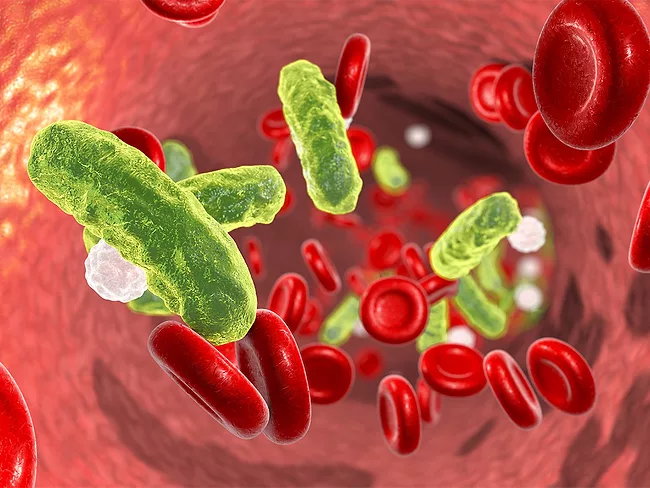
When every hour’s delay in treatment increases the risk of death 8%, dialing down time to diagnosis takes on acute urgency for clinicians and regulators. When the disease being treated kills 20% of the global population and 33% of hospitalized patients in the U.S., the market opportunity attracts investors. And when the technology makes breakthroughs possible that cut the time to targeted treatment from days to hours or even minutes, the number of products in development explodes, as the keen competition in sepsis diagnostics covered by BioWorld in 2024 demonstrates.