In a move that put Ekso Bionics Holdings Inc. on a path to walk over other firms developing exoskeletons, the company acquired the Human Motion and Control (HMC) business unit from Parker Hannifin Corp. The deal expands Ekso’s lower-limb exoskeleton line to include the Indego Personal and Indego Therapy devices, which like its own exoskeleton platform, help patients recovering from stroke or spinal cord injuries walk again. The transaction also includes the development of related robotic-assisted orthotic and prosthetic devices.
The board of General Electric Co. officially approved the tax-free spin-off of the company’s health care business, which will be called GE Healthcare Technologies Inc. The new company will begin trading on the Nasdaq on Jan. 4, 2023, under the ticker symbol “GEHC.”
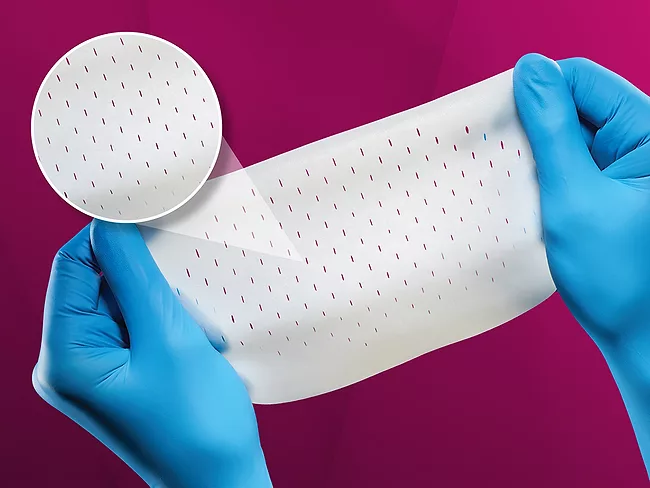
Integra Lifesciences Holding Corp. agreed to acquire Surgical Innovation Associates Inc. (SIA) in a deal that could be worth $140 million, the companies reported. Integra will pay $50 million on closing, expected by the end of the year. The company will pay an additional $90 million contingent on achievement of certain revenue and regulatory milestones through 2026.
Results from the largest trial yet in transcatheter valve replacement continues to demonstrate strong results for Edwards Lifesciences Corp.’s Evoque system. A late-breaking presentation at the PCR London Valves 2022 meeting provided one-year follow-up results from the Triscend study showing better than 90% survival and 99% freedom from heart failure hospitalization. Further, 97.6% of patients maintained mild or trace tricuspid regurgitation.
While other large med-tech companies are slimming their portfolios, Boston Scientific Corp. plans to beef its up considerably with the acquisition of Apollo Endosurgery Inc. for $10 per share for the 41.7 million shares outstanding. Including the debt assumed, the all-cash deal has an enterprise value of $615 million. The $10 per share price represents a 67% premium to yesterday’s $6 close for Apollo shares. The companies expect the transaction to close in the first half of 2023.
While other large med-tech companies are slimming their portfolios, Boston Scientific Corp. plans to beef its up considerably with the acquisition of Apollo Endosurgery Inc. for $10 per share for the 41.7 million shares outstanding or $417 million. Including the debt assumed, the all-cash deal has an enterprise value of $615 million. The $10 per share price represents a 67% premium to the Nov. 28, 2022, $6 close for Apollo shares. The companies expect the transaction to close in the first half of 2023.
While NASA gets the glory for exploration of the vast unknown of space, Bionaut Labs Ltd. hopes to reap similar fame by transforming travel through the brain with Bionauts, microrobots designed to deliver therapeutic payloads across the blood-brain barrier. To help achieve that mission, the company raised $43.2 million in a series B financing round led by Khosla Ventures.
In an interview with BioWorld, Ceros Financial Services CEO Mark Goldwasser predicted significant changes in the financing market for med-tech companies in the coming year. While special purpose acquisition company (SPAC) deals are not anticipated to return to 2022 levels, Goldwasser expects “we’re going to see a lot of transactions out of big strategics” and a rally in the equity market in the first half of 2023.
Medtronic plc guided investors’ expectations lower for the balance of its fiscal year, citing pummeling from foreign exchange rates, continued delays in elective procedures and ongoing supply chain issues. In response, the stock (NYSE:MDT) dropped from its close at $82.43 on Monday to open at $76.91 Tuesday. The company reported $7.59 billion in revenue for the first half of its fiscal 2023. That represented a 3% drop on a year-over-year basis, missing consensus expectations of $7.7 billion, in part because of a $457 million foreign currency hit.
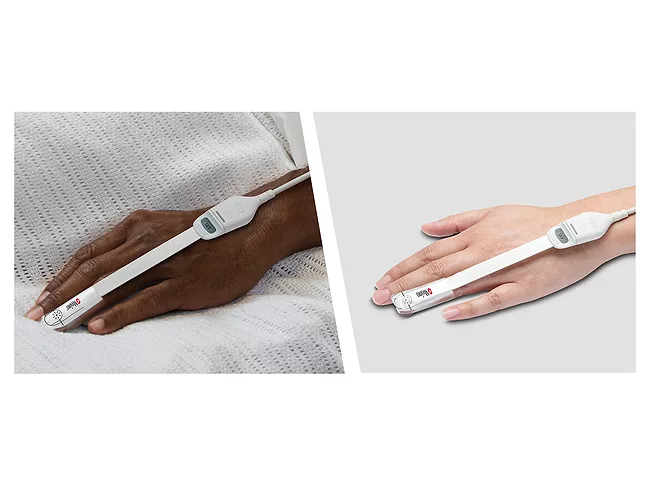
Masimo Corp.’s pulse oximetry technology avoids the dangerous under-recognition of low oxygen levels in people of color that plagues many pulse oximeters on the market, a peer-reviewed study in the Journal of Clinical Monitoring and Computing found. By integrating four additional signal processing engines to the standard algorithm, the Masimo Signal Extraction Technology (SET) system provides equally clinically accurate readings for patients of all skin tones even with movement and at low perfusion.