Ultromics Ltd. secured a strategic investment from the American Heart Association's Go Red for Women Venture Fund to advance the use of its technology to help clinicians better identify women suffering from heart failure with preserved ejection fraction (HFpEF). The condition goes undiagnosed in millions of women, who are disproportionately affected by HFpEF. Ultromics’ Echogo Heart Failure software analyzes routine ultrasound scans to quantify heart function and identify patterns that signal HFpEF.
Siemens Healthineers AG became the latest company to sign a licensing agreement with Alzpath Inc. to use its pTau217 antibody in the development of a blood-based diagnostic assay for Alzheimer's disease. Alzpath previously signed deals with the likes of Roche AG and Beckman Coulter Diagnostics Inc. to use its pTau217 antibody to create diagnostic tests based for early detection and monitoring of Alzheimer's.
Companion Spine SAS received premarket approval from the U.S. FDA for its DIAM spinal stabilization system, for treatment of degenerative disc disease. The approval comes as the company recently completed the acquisition of a number of assets from Xtant Medical Holdings Inc., including Paradigm Spine GmbH, as it continues to strengthen its position in providing solutions to treat spinal degenerative conditions.
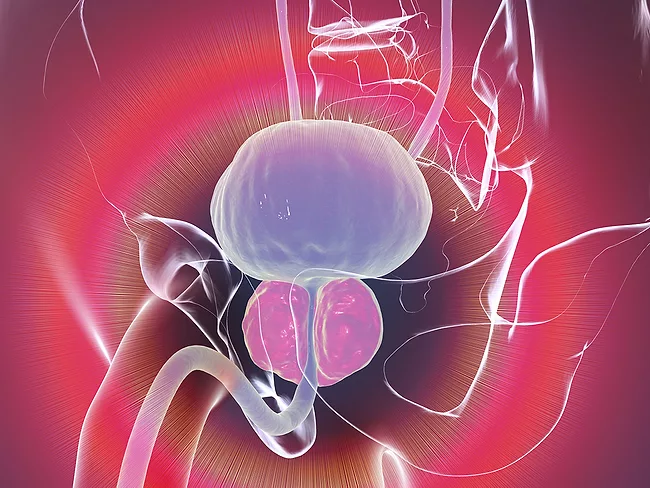
The U.S. FDA recently cleared two new medical devices to treat benign prostatic hyperplasia, offering men with enlarged prostates additional treatment options which are minimally invasive. The approvals include Proverum Medical Ltd.’s Provee System and Zenflow Inc.’s Zenflow Spring Implant and Delivery System, both are first-line interventional therapeutic options which offer relief to the millions of men living with the condition.
Ebenbuild GmbH is hoping that its digital twin technology platform that combines AI and physics-based computational models tailored to individual patients will transform respiratory care. From drug development to optimizing mechanical ventilation in critical care, the company’s software-based solutions aim to reveal what is happening in the ‘black box’ of the lungs, helping clinicians to improve outcomes and reduce mortality.
Flow Neuroscience AB received U.S. FDA 510(k) approval for its Flow at-home brain-stimulation device to treat major depressive disorder. The wearable headset uses mild electrical current to stimulate specific areas of the brain to reduce depressive symptoms in as little as three weeks.
Roche AG received CE mark for its cobas Bacterial Vaginosis/Candida Vaginitis assay, which will help to improve accuracy in detecting vaginitis in women. The molecular test identifies specific bacteria and yeast responsible for BV and CV from vaginal samples collected using the cobas PCR Media proprietary tube.
Levron Medical Ltd. recently exited stealth mode to advance its cardio-respiratory physiology assist technology, designed to treat heart failure by synchronizing the heart and lungs. The approach harnesses the natural ‘respiratory pump’ to assist cardiac function and create what the company claims to be a new category of heart failure treatment.
The U.S. FDA’s clearance of Medtronic plc’s Hugo robotic-assisted surgery (RAS) system is certainly a boon for the company which is betting on the unit to be a key growth driver. While the soft tissue robotics market is dominated by Intuitive Surgical Inc.’s da Vinci system, the space is growing, and Medtronic has the scale, resources and market presence to make headway but there are also a plethora of smaller, versatile and cost-effective systems looking for a piece of the pie.
The first procedure to treat benign prostatic hyperplasia with Boston Scientific Corp.’s next-generation Rezūm EVO Console was successfully completed in the U.K. The device, which recently received CE mark, is intended to be used with the Rezūm Water Vapor Therapy, a minimally invasive treatment that uses water vapor to reduce prostate tissue.