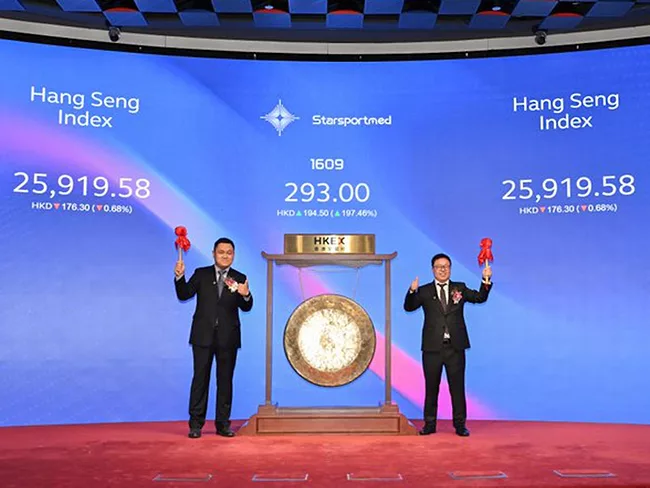
Star Sports Medicine Co. Ltd. debuted on the Hong Kong Stock Exchange with an HK$829.55 million (US$105.86 million) IPO May 5, with shares closing about 118% higher on the first day.
Curacle Co. Ltd. inked a potential $1.07 billion deal with U.S.-based “newco” Memento Medicines on May 10, granting the latter exclusive global rights to develop and commercialize preclinical TIE2/VEGF-directed bispecific antibody MT-103 for retinal disorders.
Singapore’s Communicable Diseases Agency on May 7 said that it isolated two residents for hantavirus testing after the individuals disembarked from an Atlantic cruise ship on May 2 and May 6, respectively. The measure comes in response to the cluster of cases from the cruise ship, MV Hondius, that has resulted in three deaths so far.
Metis Techbio Co. Ltd. is seeking a potential HK$2.11 billion (US$270 million) raise through a stock sale May 13, marking the largest biotech raise on the Hong Kong Stock Exchange this year to date. Hangzhou, China-based Metis is an AI-based nanoparticle drug formulation and delivery-focused company. Synthetic lethality-based cancer drugmaker Impact Therapeutics Inc., of Shanghai, plans to debut on the same day with a US$117 million IPO.
Curacle Co. Ltd. inked a potential $1.07 billion deal with U.S.-based “newco” Memento Medicines on May 10, granting the latter exclusive global rights to develop and commercialize preclinical TIE2/VEGF-directed bispecific antibody MT-103 for retinal disorders.
Curacle Co. Ltd. inked a potential $1.07 billion deal with U.S.-based “newco” Memento Medicines on May 10, granting the latter exclusive global rights to develop and commercialize preclinical TIE2/VEGF-directed bispecific antibody MT-103 for retinal disorders.
Singapore’s Communicable Diseases Agency on May 7 said that it isolated two residents for hantavirus testing after the individuals disembarked from an Atlantic cruise ship on May 2 and May 6, respectively. The measure comes in response to the cluster of cases from the cruise ship, MV Hondius, that has resulted in three deaths so far.
Star Sports Medicine Co. Ltd. debuted on the Hong Kong Stock Exchange with an HK$829.55 million (US$105.86 million) IPO May 5, with shares closing about 118% higher on the first day.
Three decades of trial-and-error, and the resulting safety data, in the oligonucleotide-based therapeutic space have paved way for the present-day innovations and the promise of “programmable,” precision medicine for patients, speakers at Bio Korea 2026 said April 28.
Regulatory uncertainty that dominated the life science sector in 2025 is transitioning into an execution framework for biotechnology companies, provided companies can tailor regulatory strategies early, and across the entire development cycle.