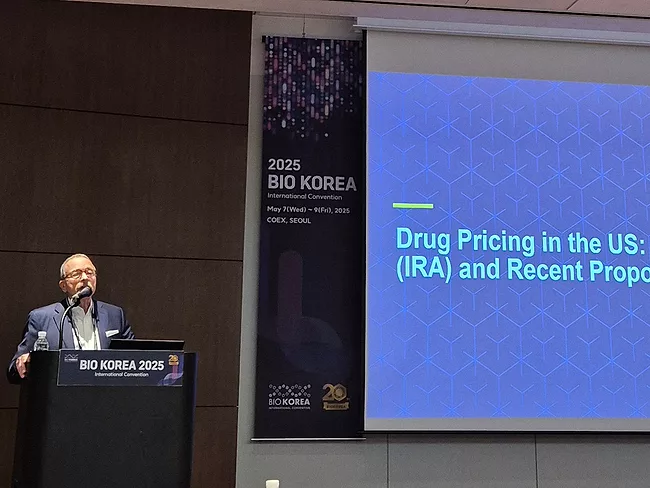
Ongoing policy issues in the U.S., including the Inflation Reduction Act and recent proposals under President Donald Trump’s administration, have wide ranging implications for the global biopharmaceutical industry, speakers at Bio Korea 2025 said May 8, including a heightened need for all biotechs to draft regulatory strategies.
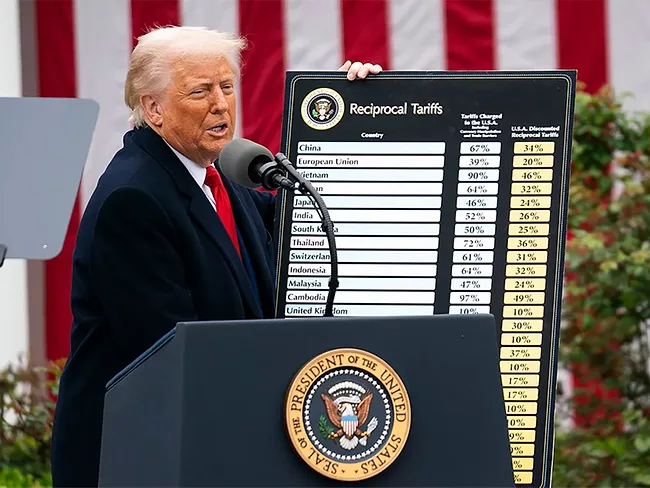
South Korean government and biopharmaceutical industry representatives urged American policymakers May 7 to refrain from imposing tariffs on pharmaceutical imports, and to spare allies if pharma tariffs are deemed necessary. Both Korea’s Ministry of Health and Welfare on May 4 and the Korea Biotechnology Industry Organization on May 6 submitted comments to the U.S. Department of Commerce in response to its ongoing investigation of pharmaceutical imports.
South Korea’s Ministry of Food and Drug Safety approved 18 biosimilar products in 2024, making it a record year for domestic biosimilar approvals since the agency’s first nod of Celltrion Inc.’s Remsima, a reference product of Remicade (infliximab), in 2012.
Among three Korean biotech companies slated to sell shares on the Korea Exchange this month, Immuneoncia Therapeutics Inc. is the latest to price a ₩33.9 billion (US$24 million) Kosdaq IPO for May 19. Regenerative cell therapy maker Organoid Sciences Ltd. and antibody-drug conjugate specialist Intocell Inc. are also gearing up for respective Kosdaq listings starting next week.
Among three Korean biotech companies slated to sell shares on the Korea Exchange this month, Immuneoncia Therapeutics Inc. is the latest to price a ₩33.9 billion (US$24 million) Kosdaq IPO for May 19. Regenerative cell therapy maker Organoid Sciences Ltd. and antibody-drug conjugate specialist Intocell Inc. are also gearing up for respective Kosdaq listings starting next week.
South Korea’s Ministry of Food and Drug Safety approved 18 biosimilar products in 2024, making it a record year for domestic biosimilar approvals since the agency’s first nod of Celltrion Inc.’s Remsima, a reference product of Remicade (infliximab), in 2012.
Jiangsu Hengrui Pharmaceuticals Co. Ltd. is the latest mainland China pharmaceutical company to seek a capital raise on the Hong Kong stock exchange, winning clearance April 28 from the China Securities Regulatory Commission to float new H-shares.
Tightening of U.S. regulation and capital is leading Chinese biotechs to alternative and new models of financing, ranging from cross-border licensing deals, M&As, the so-called newco model and overseas listings.
Europe was a bigger counterpart to China in pharmaceutical dealmaking than the U.S. last year, speakers at Chinabio Partnering Forum said April 23, and the trend is likely to continue in 2025 with the shuttering of U.S. capital and volatility ailing global markets.
Orum Therapeutics Inc. on April 26 pulled the plug on a U.S.-based phase I study of ORM-5029, its lead oncology degrader antibody conjugate (DAC) asset, a decision that came months after the company first reported a patient death in November 2024.