“The association between air pollution and lung cancer is not new,” Charles Swanton told the audience at the European Society of Medical Oncology (ESMO) 2022 Congress. But as with so many associations, causation has been hard to establish, partly due to the puzzling absence of mutations.
Novartis AG’s attempt to repurpose its immunology drug canakinumab as an oncology therapy was always considered a long shot. Now, the chances of success have receded further after another phase III failure in lung cancer. The phase III Canopy-A study, which tested the drug as adjuvant treatment in adults with stages II-IIIA and IIIB completely resected non-small-cell lung cancer failed to meet its primary endpoint of disease-free survival vs. placebo.
Novartis AG has had another setback in its attempt to get canakinumab to work in oncology, after the interleukin-1beta (IL-1β) inhibitor flunked a phase III trial in first-line advanced lung cancer.
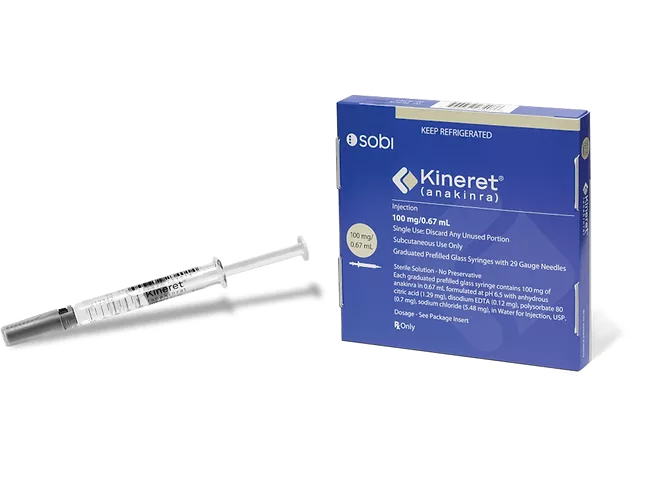
Where Ilaris (canakinumab) failed, can Kineret (anakinra) succeed? Swedish Orphan Biovitrum AB is reporting that an investigator-initiated phase III study of its interleukin-1 (IL-1) blocker, Kineret, in 594 hospitalized COVID-19 patients with moderate or severe pneumonia, who had a poor prognosis, uncovered what appear to be dramatic benefits.
DUBLIN – Canakinumab, an interleukin-1 beta (IL-1beta) inhibitor, has joined a growing list of immunomodulatory therapies that have failed to demonstrate efficacy in COVID-19. Novartis AG said that an interim analysis showed the drug did not meet the primary endpoint of clinical response.
Four years after the EMA first approved Novartis AG's Ilaris (canakinumab) for the treatment of adult-onset Still’s disease (AOSD), the FDA has followed suit, giving it a green light in the indication following a priority review. The rare rheumatic condition usually affects younger adults and can occur as infrequently as once, but also intermittently or chronically.