The U.K.’s main research funding agency is looking to put more public money into proof of concept and pre-seed funding of putative university spinouts, to make them more investible and improve relations between academics and investors. The move by UK Research and Innovation, which in 2026 will allocate £9.22 billion (US$12.58 billion) of taxpayer money across all fields of research, is in response to a government edict that the agency prioritizes outputs over inputs.
The U.K.’s main research funding agency is looking to put more public money into proof of concept and pre-seed funding of putative university spinouts, to make them more investible and improve relations between academics and investors. The move by UK Research and Innovation, which in 2026 will allocate £9.22 billion (US$12.58 billion) of taxpayer money across all fields of research, is in response to a government edict that the agency prioritizes outputs over inputs.
Four years after they were first mooted, the finishing line is in sight for new U.K. clinical regulations, which will come into force on April 28. In the first major update since 2004, about 20% of lower-risk studies are expected to be approved by a fast track, and the Medicines and Healthcare products Regulatory Agency will introduce a 14-day assessment route for phase I healthy volunteer trials, amongst other measures to streamline approvals.
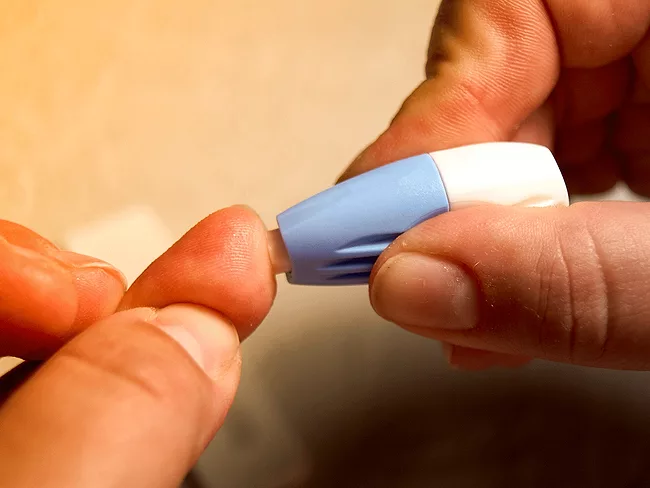
A team of international researchers is investigating whether a finger-prick blood test could be used to help diagnose Alzheimer’s disease before symptoms appear. With current diagnostic methods relying on expensive brain scans and invasive lumbar punctures, the trial is exploring whether the simple test could offer a faster, cheaper, and more accessible route to identifying the disease.
The U.K. Medicines and Health Care Products Regulatory Agency provided an update of its guidance for clinical investigations for medical devices and is offering a temporary waiver of the fees for registration of clinical studies to small manufacturers.
The long-running dispute over rebates on sales of drugs that the pharma industry must pay to the U.K. government took a turn for the worse at the start of 2025, when it transpired that the rate would be going up from 15.3% to 22.9%. The row continued for most of the rest of the year before a truce of sorts was called in December.
Brainomix Ltd. reported the publication of a prospective real-world study demonstrating that its AI imaging platform, Brainomix 360 Stroke, significantly increased rates of endovascular thrombectomy (EVT) treatment, a minimally invasive surgical procedure for patients with large vessel occlusion stroke, and reduced delays in patient triage and transfer.
The U.K. Medicines and Healthcare products Regulatory Agency is calling for unified standards to harmonize microbiome research, after revealing major inconsistencies in the results when labs around the world analyzed identical reference samples of gut bacteria.
It’s the biological resource that keeps on giving, and now UK Biobank has released the final tranche of data on the levels of 249 metabolites in the blood of its half a million participants.
It’s the biological resource that keeps on giving, and now UK Biobank has released the final tranche of data on the levels of 249 metabolites in the blood of its half a million participants.