The U.S. Centers for Medicare & Medicaid Services (CMS) has pulled off the gloves when it comes to spending on skin substitutes in the draft Medicare physician fee schedule for 2026, proposing a payment methodology that would slash spending by 90%. However, the doc fee draft also proposes to simplify the process by which telehealth coverage is provided for a physician service, a move that may significantly expand the types of services that can be handled without an in-office visit.
A June 25 hearing in the U.S. House of Representatives highlighted some of the health care spending benefits of remote patient monitoring, but Medicare payment is seen as deficient – a problem that may be resolved by pending legislation.
The latest continuing resolution (CR) for the U.S. budget funds government operations through the end of the fiscal year, which in modern times may come across as an achievement. However, Medicare telehealth also won in the CR, which extends some temporary measures for telehealth as Congress continues to mull over the question of a permanent expansion of Medicare telehealth benefits.
Researchers from Cornell University are seeking protection for their invention of a low-cost artificial intelligence (AI)-based platform that analyses low resolution electrocardiogram data and/or photoplethysmography data to accurately and objectively assess pain.
The COVID-19 pandemic reset expectations of Medicare telehealth coverage, prompting a letter from dozens of members of Congress to Capitol Hill leadership asking for legislation that will memorialize telehealth benefits. But concerns over spending, fraud and abuse still hang over the discussion.
Makers of devices and diagnostics face a new set of policy questions following the 2024 U.S. general elections, but many of the impending changes at the executive branch seem directed more toward drugs and vaccines, seemingly leaving the device and diagnostics industries largely out of harm’s way.
In what represents the first patenting to emerge from Braincapture ApS, its chief executive officer, Tue Lehn-Schiøler, describes the development of a low-cost, portable electroencephalogram device designed to enhance neurological diagnostics in underserved communities around the world.
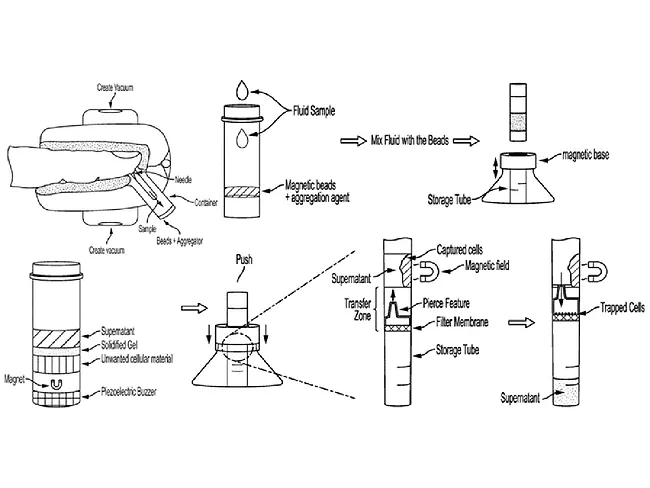
In the first patenting to have been published in the name of Lo Biosciences Inc., the company’s co-founder and CEO Sasank Vemulapati seeks further protection for their development of a device and method that helps eliminate time, distance, and cost as barriers between patients and their next blood test, by allowing patients to collect laboratory quality blood samples at home without the assistance of any health care professionals.
South Korean digital health care firm Seers Technology Co. Ltd. is targeting a ₩22.1 billion (US$16.2 million) IPO on the Korea Exchange, after upping the offering price of its 1.3 million shares to ₩17,000 per share on June 4.
South Korean digital health care firm Seers Technology Co. Ltd. is targeting a ₩22.1 billion (US$16.2 million) IPO on the Korea Exchange, after upping the offering price of its 1.3 million shares to ₩17,000 per share on June 4.