Generative AI has largely escaped the U.S. FDA’s regulatory purview up to now, but OpenAI seems poised to create a new source of regulatory angst for the agency. The company unveiled its ChatGPT Health Jan. 7, a large language model that when used professionally could land the company in the FDA’s regulatory crosshairs.
The International Medical Device Regulators Forum (IMDRF) has issued a draft guidance for predetermined change control plans for software as a medical device. The problem for advocates of regulatory harmonization is that the IMDRF draft overlaps awkwardly with the FDA’s approach, which has issued separate policies for the AI subset of device software functions and a separate guidance for all other devices, including non-AI software.
Roche Holdings AG received CE-mark for the Kidney Klinrisk algorithm, an AI-based tool developed in collaboration with Klinrisk Inc. to stratify risk and assess the progressive decline in kidney function. The software will help clinicians to make more informed decisions when accessing adults with chronic kidney disease as well as individuals with diabetes or hypertension who are at elevated risk of kidney function decline.
The U.S. FDA issued a pair of final guidances this week, including one that outlines the criteria for authorizing emergency use of unapproved in vitro diagnostic tests during future public health emergencies and another on software assurance in computer and data processing systems for medical device production.
At the four-day KIMES 2025 exhibition, more than 35,000 products and prototypes were on display. In the clamor, BioWorld engaged with three promising neurological disease-focused companies – Readycure Inc., Neurive Co. Ltd. and Vuno Inc. – that showcased innovative technology for conditions like Alzheimer’s disease and tinnitus at the Seoul-based event.
The €1.6 million (US$1.7 million) in seed funding that MSInsight SAS recently raised is vital for the next phase of growth of the company, Arnaud Cutivet, president and co-founder, told BioWorld. MSInsight is developing a software, MSIcare, which uses sequencing technology to detect microsatellite instability (MSI) in solid tumors and liquid biopsies.
South Korean medical software firm Coreline Soft Co. Ltd. said it gained U.S. FDA 510(k) clearance for its artificial intelligence-based coronary artery calcification assessing solution, Aview CAC, while raising ₩18 billion (US$13.33 million) in a private placement.
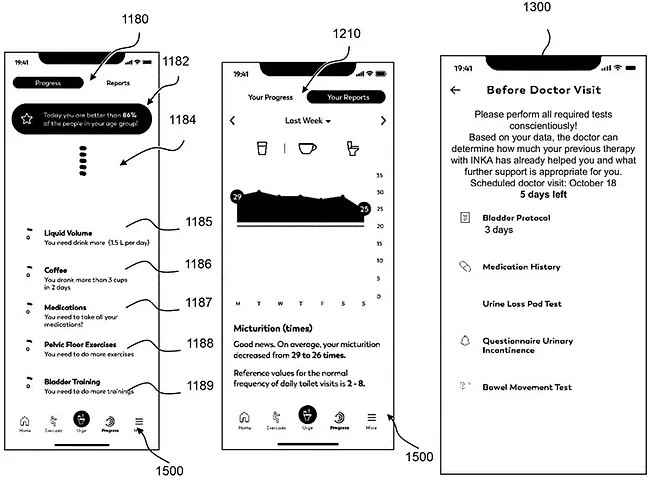
Dr. Pfleger Arzneimittel GmbH is seeking patent protection for a system and a corresponding computer program product for assisting in alleviating overactive bladder syndrome and incontinence symptoms, particularly reduction of micturitions and reduction of urine loss. The system is particularly suited for being implemented and distributed as a smartphone app which may be operated by the user.
Virtually all regulatory systems present at least some ambiguity as to the respective regulatory status of software when installed in hardware for medical purposes, and the European Commission’s (EC’s) Medical Device Coordination Group (MDCG) has attempted to provide clarity on these questions.
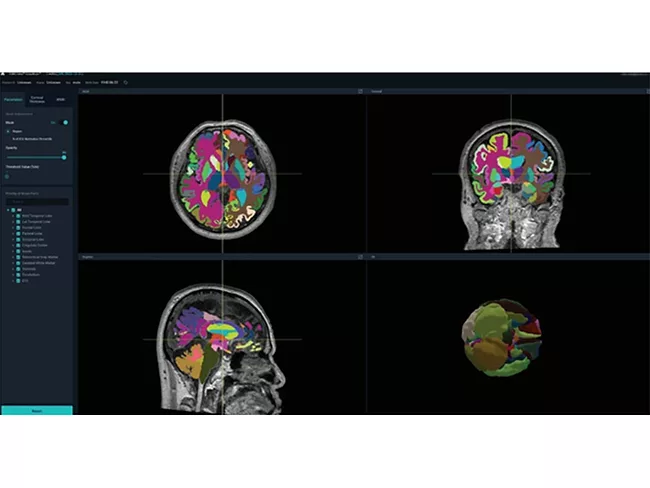
Vuno Inc. gained a U.S. FDA’s 510(k) clearance for its artificial intelligence (AI)-powered brain quantification device, Vuno Med-Deepbrain, to diagnose possible dementia in patients “even before mild cognitive impairment.”